Thursday, August 19, 2021

BEST FILMS OF THE DECADE: Vol. 1 - 1930s


The Film Sufi: “City Lights” - Charlie Chaplin (1931)

I am sadly one of those people who loves lists a bit too much...even if they can often be an arbitrary exercise. A lot of the time, I feel like if I make a list for something such as Favorite Movies or Plays or TV Shows that I am often missing a handful of shows that I would want to talk about....or my mind may change and I want to have a do-over.

This is the beginning of both a do-over and also something entirely brand new. On my original blog, I did a series of posts outlining what I considered to be the best films from each decade beginning with the 1960s up to the 2010s. I will be redoing those decades but this time around, I will also be tackling the 30s-50s. I have a rather erratic history with these decades...and I will certainly address what my feelings are with each post.

Going in chronological order, first up will be the 1930s.

As a decade, the 30s are primarily known for one thing: The Great Depression. When it comes to cinema, Hollywood often went the approach of "escapism" so you have a lot of films that are big and glossy...even those that take on a more dramatic approach.

The other interesting thing about the 30s is how the filmmaking is of two different worlds. In the first half of the decade, you have a Hollywood system that was more free-thinking which allowed for films with more scandalous themes...at least as much as the 30s could allow. Then post-1934, you have the introduction of the Hays Code which was the precursor to the MPAA Rating System. This code, which is too extensive to go into here, was somewhat crippling in the manner of which a lot of films could tell stories. I would say the complexity of some of the films from this time were more "black and white" when it comes to morality/immorality and at times, filmmakers would have to find ways to suggest someone might be, for example, a prostitute without blatantly saying they are a prostitute. Also, villainous or even just somewhat immoral characters would have to face some sort of comeuppance for their actions. Oh, and you couldn't cast people of different races together as a romantic couple because "GASP!" how scandalous! THAT sorry rule led to some horrific cases of blackface and, particularly yellowface between the 30s and the 50s...and hell, even to the 60s for no apparent reason when Blake Edwards cast Mickey Rooney as the Japanese neighbor in Breakfast in Tiffany's, a real dark spot in an otherwise good film.

So, the 1930s are a decade where certain films have gotten a lot of attention in decades following but I feel like some of the films I liked are the ones that might've gotten less attention then and have grown in esteem in recent years. 

Let's see what you think!

____________

#10-All Quiet on the Western Front (1930)

Directed by Lewis Milestone

All Quiet on the Western Front (1930); A Time To Love and A Time To Die  (1958) | The Lumière Reader

As the third film to win the Academy Award for Best Picture, All Quiet on the Western Front is kind of remarkable in how it presents its story and also for the fact that basically every film that won the award in the years surrounding it were not only weak, but some of the worst, if not THE worst, films to ever win the prize...and that's saying something when you look at some of the dreck that has won the award in the last couple of decades.

First off, the film revolves around WWI which I often feel like is overlooked in film (though we recently got Sam Mendes' 1917). 

Secondly, this film benefits from coming out at a time before the true rise of Adolf Hitler and the Nazi Movement. I feel like the portrayal of the German soldiers in this film is layered rather than painting them as the all-out bad guys...and frankly, this is also where coming out pre-Hays Code benefitted the storytelling.

Had this come out just 5 years later, this film could've ended up becoming American Propaganda with Schmaltz to the max. Instead, we get a film that truly says "War is hell" and dares to hint that maybe we shouldn't be doing it.

In many ways, All Quiet on the Western Front is very progressive for its time.

_________

#9-The Testament of Dr. Mabuse (1933)

Directed by Fritz Lang

ObjectsInFilm: Object #19 - The Cut-out Silhouette - The Testament of Dr.  Mabuse (1933)

When mentioning the rise of the Nazi Movement when discussing the previous selection, the horror of that regime also deeply affected the masterful German Expressionist movement that began in the 1920s with the likes filmmakers such as F.W. Murnau (1922's Nosferatu) or Fritz Lang.

Not enough people talk about Fritz Lang these days but what he could accomplish with his film's aesthetic, tone, and concept is nothing short of astonishing.

The Testament of Dr. Mabuse is not as well known as some of Lang's other films (SPOILER ALERT: Another film of his will be featured higher on this list which is perhaps his most well known) but when discussing the synopsis, it is remarkable how the story sounds as if he could've been written anytime in the last 40-50 years...and of course that is when talking about Hollywood. They wouldn't have dared to make a movie like this until, at least, the 1970s.

The film is actually a sequel of Lang's silent 1922 film Dr. Mabuse the Gambler and revolves around the titular Mabuse who was a former doctor/hypnotist who went mad and began writing out detailed versions of criminal acts that are now being performed by a group of gangsters.

It has been said that Lang, a devout and fervent hater of Hitler, purposefully wrote the character of Mabuse with Hitler in mind. 

So yes, Lang was ANTIFA. Deal with it...haha...

____________

#8-I Am a Fugitive From a Chain Gang (1932)

Directed by Mervin LeRoy

I Am a Fugitive from a Chain Gang (1932) | MUBI

Once again, we have pre-Code film from Hollywood that actually made many people in our country think about something and how we should try to fix it. In this case, that would be our criminal justice/prison system.

I Am a Fugitive from a Chain Gang tells the story of James Allen (Paul Muni), a veteran of WWI who is suffering from what would eventually be termed as PTSD. While traveling the country aimlessly looking for a job and a sense of self, he goes to a diner with an acquaintance who suddenly pulls a gun on him and accosts him to participate in a robbery. When the police show up, his acquaintance is shot and killed while Allen tries to make a run for it.

The film doesn't try to make a case as to why no witness would come forward to defend Allen, but instead he is sentenced to prison and is put to work on a chain gang. The film shows the cruelty given to both white and black chain gang workers (the black prisoners being segregated) and frankly showed more sympathy to the prisoners in a way that feels more akin to something you might see in a project today.

The film's release also led to the release of Robert Burns, on whom the Allen character was based, and several others who were on a chain gang for rather frivolous reasons. Meanwhile, the warden on whom the film's warden was based, sued the filmmakers for $1 million claiming it was a "vicious and brutal" attack on him and the system.

Oh, what a pity....

_____________

#7-Trouble in Paradise (1932)

Directed by Ernst Lubitsch

Film Forum · TROUBLE IN PARADISE

And now for something completely different...

After discussing war and crime and the prison system, we will now delve into the world of pre-code Romantic Comedies!

Ernst Lubitsch as a writer/director is often credited for having a style of writing known as "The Lubitsch Touch". In the simplest of terms, he tried to find ways to subvert expectations and would often milk a joke out of a moment where one might not have been prepared for one.

In this outing, which was one of Lubitsch's personal favorites, the story revolves around a male thief and a lady pickpocket who join forces to con a beautiful woman who owns a perfume company.

The film's devilishly delicious tone has inspired many artists over the years and was seen as the inspiration for Wes Anderson's opus The Grand Budapest Hotel...but the crazy thing, yet again, is how being pre-Code in Hollywood hurt the film's longevity at first.

Once the Code came to be, it was decided that the film wouldn't be re-issued for re-release in theaters. Keep in mind, this was the 1930s...so there was no TV or VHS or DVD or Blu-Ray or streaming services. Trouble in Paradise essentially went missing and was not seen again by audiences until 1968 when the MPAA created the rating system (its own flawed beast) that we still have today.

The moral of the story is that Hollywood essentially shot themselves in the foot time and time again. 

____________

#6-Modern Times (1936)

Directed by Charlie Chaplin

The INCspotlight - The INCspot

Chaplin is timeless in a lot of ways...and I feel like despite a film like this coming out after the creation of the Hays Code, his message was still heard loud and clear.

Modern Times is fascinating in how it takes on the horrors of industrialization and how many people couldn't survive on the wages they made doing such hard labor...and on top of that, you have the irony of the fact that Chaplin's Little Tramp is struggling to keep up in a modern society while also acting in a Silent film. By this point, silent films were essentially obsolete but despite the sense that the film would flop due to that, it managed to receive a positive response from both critics and audiences.

Chaplin was also the master of pathos onscreen. There can often be nothing more annoying than an artist trying hard to make you laugh and cry at once...or feel sentimental. Chaplin has yet to be topped in that department in my opinion and at the end of this film when the Tramp tells Ellen (his real life wife Paulette Goddard) to smile as they face an uncertain future, you can't help but sort of smile yourself even if you really don't know where these two will end up. The final shot of them walking off towards the morning sunrise seems cliche by today's standards but it was certainly fresh by 1936 standards.

__________

#5-Grand Illusion (1937)

Directed by Jean Renoir
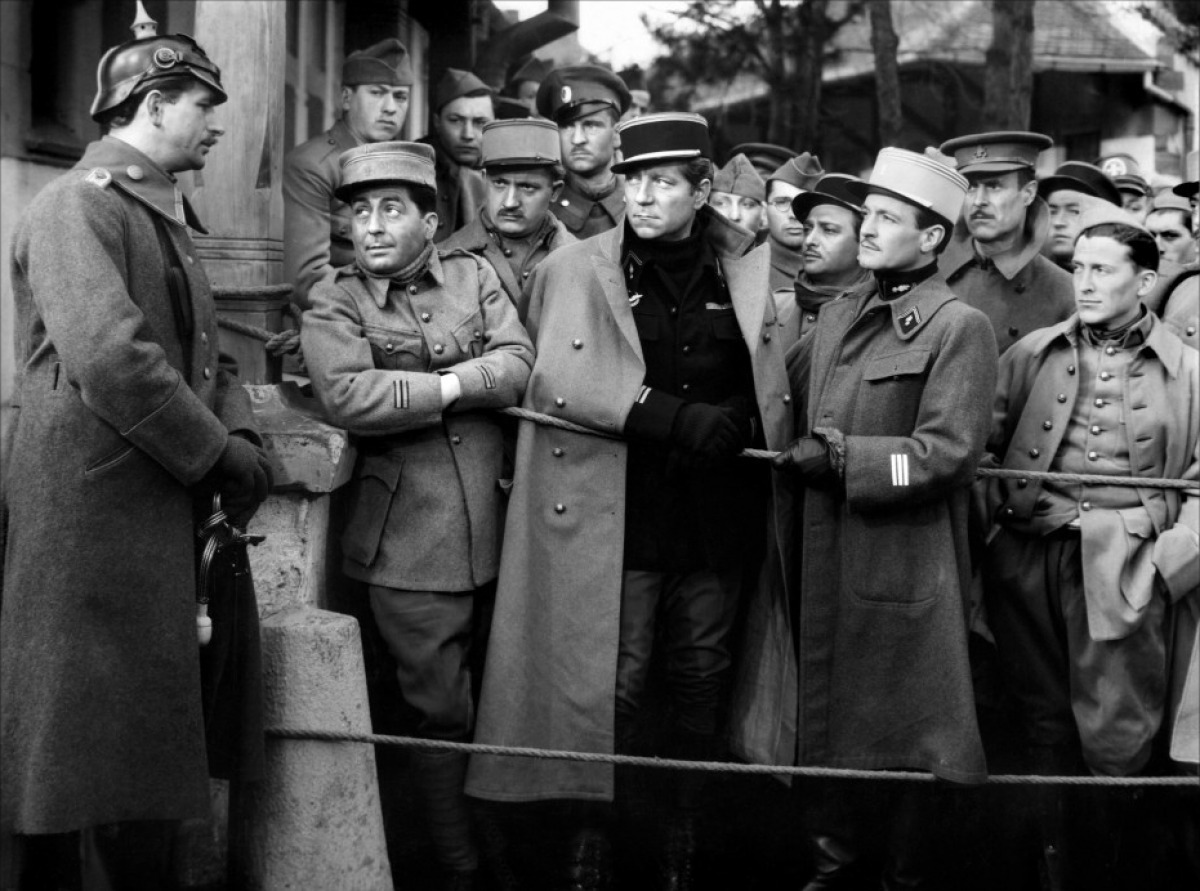
La Grande Illusion (1937) | Film review

Among film historians, Jean Renoir is usually listed as not just a major director that influenced many of the directors we know and love today, but he is often considered one of the first true "auteurs" of the cinematic art form who is among the top 10 ever to direct/conceive a film.

Grand Illusion holds the distinction of being the first foreign language film to be nominated for Best Picture at the Academy Awards...and it remained the only one to do so until Z was nominated in 1970.

Once again dealing with WWI just like All Quiet on the Western Front or in a roundabout way like I Am a Fugitive from a Chain Gang, this offering from Renoir tells the story of a group of French soldiers who are being held prisoner and are plotting their own escape. 

It is rather remarkable that the Academy chose to even nominate the film considering their rather biased tastes and preferences at that time, but as is to be expected, they gave Best Picture to the far inferior film adaptation of Kaufmann & Hart's You Can't Take It With You. 

Typical. 

_____________

#4-The Wizard of Oz (1939)

Directed by Victor Fleming

The subversive messages hidden in The Wizard of Oz - BBC Culture

Have any of you heard of this one? I know, it's very obscure.

However, I do want to acknowledge Victor Fleming as he has the distinction of directing both The Wizard of Oz and also, in the very same year, directing and winning the Oscar for Gone With The Wind (and no, Gone with the Wind will not be on my list!). However, Fleming is still not a director that is really discussed or revered in modern film circles...even if he did direct what is still the biggest film of all time and also perhaps the film that has been seen by more people than any other: The Wizard of Oz.

Due to the overwhelming popularity of this film, I don't feel the need to go into it much. I think most people do share a love and a warmth for it and I think that its legend speaks for itself.

_____________

#3-The Rules of the Game (1939)

Directed by Jean Renoir

Movie Micah : The Rules of the Game (1939)\

And just like that, we are back to Jean Renoir. While Grand Illusion is just hair behind, I do think The Rules of the Game is his masterpiece and is also one of the best films of the 1930s.

While Grand Illusion is a more dramatic affair, you consider this offering as being more of a comedy of manners.

The film depicts the upper class of French society while also shining a light on their servants. This is a theme that would be delved into in such offerings as the British series Upstairs, Downstairs; Robert Altman's Gosford Park; and Julian Fellowes' series (who also wrote Gosford Park) Downton Abbey.

We watch as a lot of these snooty well-to-do French circle act as if they don't have a care in the world but that facade will soon fade as they succumb to their own betrayals among each other.

When the film was first released, it was actually a critical and financial disaster in France and was deemed as a film that had the potential to be an improper influence over the youth of France.

As often is the case, the film grew in esteem with critics and audiences alike and upon the creation of the respected Sight & Sound decennial poll in 1952, The Rules of the Game has remained the only film to have a placement somewhere on the top 10 films of all time every time the poll is released. 

Not even a film like Citizen Kane has managed to do that.

______________

#2-City Lights (1931)

Directed by Charlie Chaplin

City Lights (1931) | MUBI

I don't even want to call this film a "romantic comedy" but if I were going to stick to giving a film a label, that would make City Lights the greatest romantic comedy ever made. 

I would also go as far to say that it has my favorite ending to a film ever as well.

As another silent film outing by Chaplin right when the art form was seen as horrendously outdated, the results make for a film that has stood the test of time far more than some of the outings that the Hollywood studio system dished out and pushed for awards consideration.

For example, that year's Best Picture winner was a Western called Cimmaron. Have you heard of it? It wouldn't shock me if you haven't, but if you were to actually watch it, you would be viewing what I consider the second-to-worst Best Picture winner of all time. 

*Side note: my vote for the worst Best Picture winner of all time is 1933's Calvacade.*

City Lights has a story that doesn't seem fresh by today's standards but that is because City Lights is THE standard.

Chaplin's Tramp befriends a wealthy benefactor who also has a penchant for drinking. When sober, this guy wants nothing to do with the Tramp but when he's drunk, he is his new best friend. While hanging out with his newfound friend, he falls in love with a blind girl who sells flowers on the street.

If you were simplify the conceit of this film, it would be "Would this girl still love the Tramp knowing who he is as opposed to thinking he is wealthy?" 

It's a tale as old as time basically...but it leads to that ending which is still very potent even in today's cynical world.

___________


#1-M (1931)

Directed by Fritz Lang

Fritz Lang's M: the blueprint for the serial killer movie | BFI

Let's say you are going to the movies with a group of friends and one of them suggests that they want to see a movie about a serial killer who only targets children. 

You might think: Damn, that's dark! Who made the film? Ari Aster? Robert Eggars? Bong Joon ho?

How about Fritz Lang in 1931 Germany?

The fact that a film like M got made in 1931 has had me fascinated since I first discovered the film as a fairly young child when I began researching films through those old Microsoft Cinemania CD-ROMs that were released throughout the 1990s.

I watched the film once when I was a pre-teen and it stuck with me for years and then when I was sent home from work back in March of 2020 due to the quarantine, I began revisiting a lot of the foreign films that inspired me as a young cinephile...this was one of them.

M is dark and gritty and uncomfortable. It isn't necessarily graphic as a lot of the gruesome details are left to the imagination but it is that stark Expressionist style with the shadowy images and intense detail being paid to the emotional content that still wow me...especially when you consider that 2021 is this film's 90th anniversary.

This film was also the introduction of Peter Lorre to American audiences, who played the mentally insane killer Hans Beckert. Even though the film would mostly typecast him as a villain in the years to come, Lorre would manage to escape Nazi Germany soon after and would become one of the most beloved character actors of all time.

With the one-two punch of M and City Lights, I have to commend 1931 as a great year for cinema as you also get the iconic film adaptations of Dracula and Frankenstein along with The Public Enemy, La Chienne, Limite, and Little Caesar).

________________

IN CONCLUSION:

I am often harsh on what is called "The Golden Age of Hollywood" which usually considered the 1930s-1950s but there are always exceptions to the rule. There were undoubtedly some fantastic films that came out at that time, but as you could sort of see with this list (and will see even more so when we proceed into the 40s and 50s), I find myself praising the chances that directors took who weren't based in Hollywood but rather Europe and eventually in Asia.

Writing this list up was actually more of a joy for me than I expected to be so I feel driven to continue this project as we next dive into the more melodramatic era that was the 1940s.

Thanks for reading!


Saturday, August 7, 2021

What Are SNL's 20 Greatest Sketches?

Jan Hooks: Her Top 5 Most Memorable 'SNL' Sketches | Decider

**EDIT: Not all of the video links seem to pop up if you view this post from a cell phone. If you view it under the “web version” or on an iPad or laptop/desktop, they should appear!**

With the long-running variety series inching close to its 50th anniversary, I have been thinking a lot about my own nearly life-long love of SNL...and that love certainly comes with a lot of baggage. SNL is a show that has a very troubled history in how it has dealt with women and race while also going through periods where the writing greatly suffers and certain cast members wear out their welcome to the point where you welcome their departure from the cast.

One thing that I think many people who don't follow the history of the show realize is that even in the show's darkest periods, there were great sketches that could be classified as "diamonds in the rough". What I am going to attempt to do now is list 20 of my favorite SNL sketches and these will be a mix of sketches that are fairly well known but I also have a few deep cuts as they say. I am going to try to shine a light on sketches that may be less known or perhaps take chances that aren't necessarily laugh-out-loud funny but more cerebral or even bittersweet. 

I am only really keeping this to sketches, although I will make an exception and include two of the pre-taped sketches the show has done over the years. These also won't be ranked but rather in alphabetical order, so without further ado, here they are!

________________

-All My Luggage (Season 16 - 1990) Featuring Phil Hartman, Susan Lucci, and Kevin Nealon

When I met Susan Lucci, I admittedly didn't have much to say about her iconic and legendary role of Erica Kane on All My Children. I was never any kind of avid viewer of the daytime soaps and I usually preferred the soapy drama that aired in primetime. However, the one thing I commended on Ms. Lucci on was her SNL hosting stint in which she did everything from greatly mocking her legendary Emmy losing streak, playing Erica Kane as a lecherous game show contestant who makes a fool of the geeky character played by the late and brilliant Jan Hooks, and the piece de resistance: All My Luggage.

This is one of those sketches that SNL loves to do when they have a host who is known for a very specific role/show/film...so here we have Susan Lucci; a woman who had been playing the ultimate daytime diva on All My Children since its inception, which was already for 20 years at that point. What is a situation where you can put a very pampered and spoiled woman in that could make for good comedy? 

SNL chose losing her luggage at a Las Vegas airport...and why is that bad? Because she changes her clothes multiple times a day...and it is all told in an over-the-top soap opera fashion. Lucci's work in this sketch is perfection as she knows how to nail in on how to make her soap opera style dip over into the absurd. 


                         ______________________

-Bad Clams (Season 5 - 1980) Featuring Yvonne Hudson. Garrett Morris, and Gilda Radner

Season 5 of SNL represented the last season to feature the majority of the original cast and it was often plagued by a sense of burnout and an emptiness that was brought on by the departures of Dan Aykroyd and John Belushi the previous season.

Cast member Garrett Morris (whom I did an essay on a few months ago; check it out!) was not really someone who was close knit with the cast and crew at this point, but he did get a chance to have one of his wishes come true which was having a woman of color to play opposite from which led to the hiring of Yvonne Hudson whom, not surprisingly and rather insultingly, remained uncredited other than during her brief tenure in season 6.

As for "Bad Clams", I would say it is a moment in SNL history where they take what is essentially one joke (Gilda Radner's Lucille Ball being subjected to something so heinous she can't help but do some crying and mugging to the camera) and they make it work. It might be a bit too slight for some but I have to admire the randomness of the talk show theme and also the great comedic work of Gilda Radner.


                               ---------------------

-Brenda the Waitress (Season 15 - 1990) Featuring Alec Baldwin, Nora Dunn, Phil Hartman, Jan Hooks, and Kevin Nealon

Back in 2014, I was sitting outside of Rockefeller Center having coffee with a date of mine when I got the news that Jan Hooks had passed away. I remember feeling so sad by the news and then sort of bowled over by the fact I was sitting outside of the building where she was consistently gave us so many great performances on SNL. She was easily one of the greatest cast members the show has had in its nearly 50 years on the air.

Jan Hooks is featured in a few of the sketches I will be mentioning on this list, mostly offering support to other leads like Dana Carvey but this particular sketch is the one I have always singled out as being my favorite Jan Hooks moment on SNL...and while this may not be a ranked list, this one would easily be in contention of being my favorite sketch SNL ever did.

It has moments that make you chuckle for sure but this sketch just feels like something that would never be done on SNL today and, frankly, during many of SNLs eras. It isn't a controversial subject, but it just feels so character driven and the writing feels so sharp and witty. 

Hooks acts opposite her castmates Nora Dunn, Phil Hartman, and Kevin Nealon but it is her chemistry with then first-time host Alec Baldwin that is simply off the charts. Baldwin's debut hosting stint is one of the greatest episodes in SNL history and his work on this episode is simply fantastic. Aside from a role like Beetlejuice which had comedic elements, Baldwin had been known for his more intense work in films like The Hunt for Red October or his rather sinister turn as Joshua Rush on Knots Landing which still remains one of my favorite roles he has played....a role, I might add, that was often so erratically written that it was amazing to see how strongly he could commit to it.

This episode also contains the classic Greenhilly sketch in which Alec Baldwin passionately kisses most of the cast...and a dog puppet along with another great sketch that Jan Hooks excelled in as the reclusive Greta Garbo who, at one point, takes a ride on her chandelier.

But I digress....in regard to "Brenda the Waitress": Please watch this one. If you choose not to watch some of these clips, I would love if this is one of the few you make an exception for.

I do want to single out one line that might be one of my favorite lines ever in an SNL sketch. It's smart and witty and delivered to perfection by Hooks: "Look at him sitting there on that stool like he's doing it a favor!"


                                                  ________________________

-The "Buckwheat Buys the Farm" Series (Season 8 - 1983) Featuring Mary Gross, Eddie Murphy, and Joe Piscopo

-I've said it before and I will say it again: WITHOUT THE POWER AND TALENT AND CHARISMA OF EDDIE MURPHY, SNL WOULD HAVE DIED IN THE EARLY 80s! That is no groundbreaking statement but it always bears repeating.

The interesting thing about the years in which Murphy was a part of the cast (1980-1984) were that they were all under the reigns of the only two producers to run the show (as of this writing) other than Lorne Michaels: the infamous Jean Doumanian and Dick Ebersol. While Doumanian's tenure only lasted 12 episodes (yikes), Ebersol stayed with the show for the four seasons following. 

The Ebersol years were known for being a little less risky and perhaps an era where some of the more flawed writing couldn't have been covered up by the cast, whom many were either not given as many chances to shine as Murphy or Joe Piscopo or they just didn't have the same kind of charisma that Murphy had.

Of the many characters that Murphy created on SNL, his homage to the Our Gang character Buckwheat was one of the most beloved. While I am not sure I have a favorite character of his (he basically excelled in nearly every sketch he did during his tenure), I think one of the greatest bits he ever devised was him choosing to have Buckwheat be assassinated outside of 30 Rock in a manner which closely resembled that of the attempted assassination of Ronald Reagan. 

In what would be a 3 part series of sketches (though the third part was not up to par and is basically unavailable to share here), we watch Piscopo's Ted Koeppel (a rather meh impersonation) break the news that Buckwheat is shot...complete with the footage being shown over and over again.

Sadly, I cannot find part 1 of this runner and for some reason, part 2 wouldn't upload like the above sketches so I do have the link below that you can copy and paste. It is a series of sketches that have really stood the test of time and frankly seem more relevant and biting today...which isn't a common attribute when discussing the Ebersol era.

https://www.youtube.com/watch?v=zaDToc8CsOE

                                                     ________________________

-Dukakis After Dark (Season 14 - 1988) Featuring Nora Dunn, Jon Lovitz, Matthew Modine, etc...

While not exactly known as a classic impersonation, Jon Lovitz's Michael Dukakis did have a couple of particularly memorable moments...especially in the classic debate sketch when he referred to his parents as "little swarthy people" or that he "can't believe [he's] losing to" George H.W. Bush in the polls.

This sketch, modeled after swanky cocktail parties held by the likes of Hugh Hefner, was put on the show once it was realized that Dukakis was going to take a beating in the election to Bush after his rather disastrous performance during the debate in which he, a man staunchly against the Death Penalty, answered rather bluntly that he would not support killing a man who hypothetically raped and murdered his wife Kitty.

It isn't a sketch that necessarily aims for big laughs, but it does feel like an incredibly fresh idea on how to present a losing presidential candidate. This is especially apparent when you watch a lot of the political sketches that have been put on SNL in the last couple of years; those damn Alec Baldwin/Trump sketches...and pretty much 98% of anything political has been overtly tired.

I think a lot of what made the political sketches of the late 80s/early 90s rather fantastic all comes down to headwriter Jim Downey who, in a twist that would probably never happen today, was a Republican. He seemed to be the writer who found the right blend of satirizing liberals but also his own party. 

Here, he manages to have Nora Dunn as Joan Baez sing a song that basically contains lyrics that are a Conservative's Nightmare as to what a Liberal is and then you have Dana Carvey doing a rather comical take on Jimmy Carter, a man who knew all too well how to lose an election in a relative landslide.


                                                    _____________________________

-Ed Glosser: Trivial Psychic (Season 18 - 1992) Featuring Phil Hartman, Kevin Nealon, Adam Sandler, Rob Schneider, Chris Rock, Julia Sweeney, and Christopher Walken

-I have always been fascinated by Christopher Walken and even as a kid, I was drawn to him as an actor...but I particularly loved his hosting stints on SNL. You can't talk about Walken on SNL without talking about the iconic Continental sketches in which he is hosting a female guest at his apartment only for him to have her running for the door any second she has a chance to go...all while doing the sketches talking directly to a camera and no one else.

However, I thought it would be easier to single out this hilarious bit which parodied his performance in the film The Dead Zone. In that movie, he was in a horrific car accident that left him a coma for 5 years but once he woke up, he had the ability to see the future of a person by simply touching them. Here, he has the same capability but it is because he was stuck in a tanning bed during a power outage.

Also, in the film, he warns people of rather dangerous and life-altering events but here, it is the stuff of banality such as leaving a cup of coffee in a cab: "You're wasting coffee!!"


  ________________________

-The Exorcist II (Season 1 - 1975) Featuring Jane Curtin, Laraine Newman & Richard Pryor

The 7th episode of SNL hosted by the legendary Richard Pryor was considered a turning point in the show's history based on the content and its presentation...and while the iconic "Word Association" sketch between Pryor and Chevy Chase gets the attention it deserves, I have always loved this parody of The Exorcist in which Pryor goes toe-to-toe with the demonically possessed Laraine Newman.

While some of the effects and timing of the sketch are a little rough by today's standards, I still think this was a prime example of how the early years offered a certain charm even when it dealt with a subject matter such as demonic possession...haha.

                                        https://www.youtube.com/watch?v=B8dKnFU5LUE
                                                    __________________________

-A Gumby Christmas: Merry Christmas, Damnit! (Season 8 - 1982) Featuring Gary Kroeger, Julia Louis-Dreyfus, Eddie Murphy, and Joe Piscopo

We are back in Eddie Murphy land again and here, we see his reinvention of the famous claymation character of Gumby. His Gumby is modeled after the Borscht-Belt/Catskills comics that basically had no filter or a sense of compassion...and in this sketch, that cynic nature clashes with the joys of a cheesy animation special that would be on par with that of Andy Williams. Don't tell him I said that though; he may throw me out into the freezing cold to go search for the warmth of Andy Williams. 

Perhaps the most iconic moment of this sketch belongs to Gary Kroeger and the one and only Julia Louis-Dreyfus as Donny & Marie Osmond who sing a rather...umm...uncomfortable and incestuous rendition of Blue Christmas.

The fact this sketch wasn't immediately available online was rather shocking to me but if you haven't seen it and would like to, please copy and paste the link below. It is a full recording of that particular episode but if you skip to the 11:11 mark, you will be right at the start of the sketch.

            https://archive.org/details/saturday-night-live-s-08-e-09-eddie-murphy-lionel-richie

                                                ____________________________

-Hi-C & Turkey (Season 21 - 1996) Featuring Danny Aiello, David Koechner, and Nancy Walls-Carell

Season 21 of SNL was one of those years in which the show had to essentially rebuild from scratch after two mostly disastrous seasons prior to it in which the show seemed to suffer from a major burnout from the majority of the cast and the writers. 

This was the season in which we would first be introduced to the likes of Will Ferrell, Darrell Hammond, and Cheri Oteri but before they would add Ana Gasteyer and Tracy Morgan to the proceedings, we had Nancy Walls-Carell (the wife of Steve) and David Koechner (The Office's Todd Packer among many other roles). They would only last for the season and particularly in the case of Koechner, that was a shame.

Irreverent concepts can be a joyous thing but they have to be presented in a very precise way...and this is one of those times. SNL has always had a history of doing a great job with a certain kind of hot-headed character actor type as guest hosts like Alec Baldwin, Bruce Dern, John Goodman, Christopher Walken, and Christoph Waltz...and included in that group is one-time host Danny Aiello who committed to his role in this sketch in such an unapologetic way.

The premise is Aiello is an insurance salesman pitching to a couple played by Koechner and Carell but he seems to have no social grace and he cannot go on without asking for his two favorite things to consume: HI-C and Turkey...and don't even bother offering him anything else.

Once again, this sketch wasn't available on YouTube but I found a link below. If you are really into irreverent absurdity, this sketch is for you.                                        

                                        https://www.bitchute.com/video/jT5u1HYigPUA/

                                                 ___________________________

-Household Hints (Season 1 - 1976) Featuring Jane Curtin & Gilda Radner

The entire original cast of SNL had their amazing qualities but there was something to be said about the rather icy, deadpan, and acidic flavor that Jane Curtin could dish up. I think Jane Curtin is a truly unsung hero from the show's history who doesn't get enough credit for bringing an amazing energy (often acting as a FANTASTIC straight man to the lunatics around her) to the proceedings.

This sketch, in which she gets to push around the late great Gilda Radner, showcases just how much this woman could dominate playing a truly strong woman.

I had the pleasure of meeting Jane Curtin a couple of years ago and it was an honor to tell her how much I admired her tenure on SNL and I mentioned this sketch to which she gave me a devilish grin in response.


                                                               ___________________

-It's a Girl: The Girl-Crazy Obstetrician (Season 12 - 1987) Featuring Nora Dunn, Phil Hartman, Jon Lovitz, and Bill Murray

WARNING: This sketch can be seen as offensive in today's society...and understandably so, but I will explain my reasonings for including it here.

Phil Hartman was often called "the glue" by his castmates. He held everything together and was the epitome of the perfect utility cast member. He often got stuck playing fathers and the straight man in sketches but he always gave every role the right tone it needed. I might even go as far to say that Phil Hartman is in contention of being the greatest SNL cast member because he could basically do anything.

He was also a true actor which isn't always common among SNL performers. In fact, the great and salty film critic Pauline Kael actually wrote in the late 80s that she felt Hartman and Jan Hooks were two of the finest comic actors she had ever seen in any medium. High praise indeed...and well deserved.

In this sketch, Hartman plays an obstetrician who is being interviewed by a People magazine reporter played by Nora Dunn. The big thing is that he has supposedly never given birth to any male babies...but then Nora Dunn realizes that he has been giving any male baby he births into the world a sex change because they are girls born with a penis and testicles.

Now...obviously this idea of someone making a claim and mutilating male infants because they feel they are actually girls is problematic in more ways than one.

However, SNL having the balls...pardon the pun...to do this sketch and have it get into the territory it does with Hartman taking it darker than an SNL sketch has rarely ever gone simply had a powerful effect on me when I first saw it over 20 years ago in a Comedy Central re-airing.

The sketch is often so controversial to some that it you won't find it on YouTube...but I did find a website who posted it 2 years ago so if you want to give it a shot, here it is:

https://newsradio540.iheart.com/content/2019-10-29-snl-throwback-girl-crazy-obstetrician-skit/

                                                        _________________________

-Jackie Rogers Jr's $100,000 Jackpot Wad (Season 10 - 1985) Featuring Jim Belushi, Billy Crystal, Christopher Guest, Mary Gross, and Martin Short

YET ANOTHER WARNING: In this sketch, Billy Crystal does his infamous blackface impersonation of Sammy Davis Jr.

Game show sketches are a major go-to in SNL history but I think my favorite might be this zany offering from season 10, which was dominated by the likes of Billy Crystal, Christopher Guest, and Martin Short. 

Jackie Rogers Jr was a character created by Martin Short that had such a manic energy that only he could provide and here, he hosts a game show which is sort of similar to the gameplay of The Pyramid game shows hosted by Dick Clark. 

I would say the highlights, aside from Martin Short's typically manic and hilarious character work, would be Jim Belushi's Captain Kangaroo not being happy with his ditsy teammate being played by Mary Gross and Christopher Guest's genius banter with Billy Crystal.

Below is the full TEN minute sketch that I found on Vimeo:

                                                        https://vimeo.com/165082041

                                            __________________________________

-Jacuzzi Lifeguard (Season 21 - 1996) Featuring Jim Carrey, Will Ferrell, and Tim Meadows

Jim Carrey's hosting stint at the end of season 21 was another classic episode and for many, it seemed to send out an even bigger signal that SNL had finally recovered from the rather paltry outings it had in seasons 19 and 20.

In this sketch, we get a character that seems right at home with Jim Carrey but what I think is amazing about the sketch is how we get to see Will Ferrell as the "straight man" to Carrey when Ferrell was mostly known for being a more brash performer. I quite admire how well he works with Carrey considering how most people probably couldn't even handle sharing a stage with someone who was that comedically insane.


                                                        ______________________________

-The McLaughlin Group (Season 16 - 1990) Featuring Dana Carvey, John Goodman, Phil Hartman, Jan Hooks, and Kevin Nealon

Dana Carvey is someone I haven't talked about too much yet and I do feel he deserves a special shout-out. As one of the most iconic cast members and impressionists the show ever had, Carvey was one of the driving forces behind SNL's renaissance in the late 80s. However, as an impressionist, he mostly worked on finding "the hook" rather than perfecting a vocal timbre per se...and a prime example of this was his impression of the conservative PBS moderator John McLaughlin. 

As a kid, I first saw this sketch on one of those SNL clip shows that NBC often aired in primetime. I only vaguely knew who McLaughlin was but I loved this sketch so much that it made try to watch the REAL McLaughlin Group....needless to say, that was the "WRONG!" decision.

Carvey carries this sketch while host John Goodman, Phil Hartman, Jan Hooks, and Kevin Nealon basically act as the straight men who barely seem to be able to contain their frustration at how Carvey's McLaughlin handles the proceedings.

                                    https://www.youtube.com/watch?v=QOLF_D7JVZM

                                                        ___________________________

-Matt Foley: Motivational Speaker (Season 18 - 1993) Featuring Christina Applegate, Chris Farley, Phil Hartman, Julia Sweeney, and David Spade

Chris Farley was someone who, for a brief moment, held a torch that symbolized him taking the show into the future. Ironically enough, I almost feel like this sketch was his last hurrah as over his next (and last) two seasons, his brash and bellowing characters wore out their welcome fast.

For this one moment in time though, Farley took a character he did at Second City and along with writer Bob Odenkirk, they gave us this classic.

This is one of those sketches that I feel like I don't even have to talk about but I will say this is Chris Farley's greatest moment of his short career.


                                               ____________________________________

-Patient's Thoughts (Season 6 - 1981) Featuring Karen Black, Denny Dillon, Gilbert Gottfried, Yvonne Hudson, Eddie Murphy, and Charles Rocket

Season 6 has always been known as an infamously horrendous year in which everything that could've went wrong actually did go wrong. The truth about that particular season is that it wasn't always bad...though when it WAS bad, it was rather atrocious.

The surprising thing about the season was that whenever it attempted to do the bittersweet "slice of life" sketches that had originally been a staple of Marilyn Suzanne Miller, this cast and writing staff actually did very well with them.

My favorite among these was this particular sketch in which an elderly Jewish man (voiced by Gilbert Gottfried...and no, he doesn't sound like Gilbert Gottfried) has suffered from a stroke. We see everything from his POV but because he can't talk, we only hear his thoughts.

The sketch has everything: laugh out loud moments, uncomfortable moments, and even a moment in which you feel like if an SNL sketch was going to make you tear up, this would be the one. 

The final moments with Denny Dillon (best known for her Theatre work and her role as Toby on Dream On) are where the tenderness really creeps in and you marvel that this took place in the same season in which some of the hackiest and offensive writing occurred.


                                                    ________________________________ 

-Shakespeare in the Slums (Season 11 - 1986) Featuring Danitra Vance

I am singling out this sketch primarily to showcase the criminally underrated Danitra Vance. You may not know who she is but she was the first African-American woman to be in the main cast of SNL (not counting Featured Player Yvonne Hudson whom I discussed in the Bad Clams and Patient Thoughts sketches)...and frankly, Vance was probably too good for SNL in a lot of ways.

A classically trained actress who was the toast of the off-Broadway circuit in NY, Vance was also a lesbian (who wasn't out publicly at that time) and she was dyslexic. The former was not a factor but the latter made things difficult for her on air in terms of reading cue cards. You never see her truly struggle though because her skills as a stage actress and covering for anything are readily apparent.

In a long history of SNL having a horrendous treatment towards people of color, a lot of the brunt certainly fell on Vance who deserved far better than she received. 

This was a woman who, when Francis Ford Coppola hosted, had him praising her talents behind the scenes as being a master at character work.

She only remained on the show for one season, the 11th, which easily one of the weakest in the show's history for its oddly mismatched cast and a surprisingly lethargic energy...and sadly she passed away from Breast Cancer in 1994.

Below is a link for a sketch in which she only helped make Shakespeare acceptable to her neighbors in Harlem.

                                         https://www.youtube.com/watch?v=sxZ7-Uqwvt4

                                                  ________________________________

-Synchronized Swimmers (Season 10 - 1984) Featuring Christopher Guest, Harry Shearer, Martin Short, and Pamela Stephenson

I am not even going to say much about this one. This is probably the greatest pre-tape segment SNL ever did and it showcases some of the greatest comedic talent...particularly that of Christopher Guest who does a prototype of his Corky character from the brilliant film Waiting for Guffman.

https://vimeo.com/353695716

                                                        __________________________

-Wake Up & Smile (Season 21 - 1995) Featuring Will Ferrell, Nancy Walls-Carell, David Alan Grier, David Koechner, and Jim Brewerm

-Much like I said with the "Brenda the Waitress" sketch, I feel like this is another one where I instantly knew it would be on my list. 

Written by then-headwriter Adam McKay who would go on to write/direct the Oscar nominated films The Big Short and Vice, this morning talk show sketch takes a very simple concept (a teleprompter breaking) and takes it to a place that may not be what one would expect.

Also, with its use of fake commercials in between segments, it rings familiar to the work of writer Jack Handy...though I am not sure if those bits were necessary in this sketch though it was primarily used as a buffer to pre-set changes to the set.

This was one of the earliest instances of an SNL audience seeing Will Ferrell going into pure insanity mode and I still think of this as his true "a star is born" moment.


                                            ________________________________________

-White Like Me (Season 10 - 1984) Featuring Eddie Murphy

Another classic pre-tape from season 10 which was featured in Eddie Murphy's big return to SNL following his cast departure and the release of his film Beverly Hills Cop. 

This is a bit that is so well known and often talked about from an analytical standpoint....so much so that when I was in college, I was shown this sketch in an Acting class, an English class, and a Sociology class. I remember being kind of amazed that three teachers all had the same thought to show this sketch but hey, I would say it was worth the praise.

Also, if anyone is offended by whiteface, they can go fuck off.....

                                            https://www.youtube.com/watch?v=l_LeJfn_qW0

                                                _____________________________________

CONCLUSION:

I feel like it was going to be hard from the get-go to choose 20 sketches. I hoped to shine a light on some sketches that maybe some of you hadn't seen or heard of, but I did include some that I feel were pretty typical of such a list (Matt Foley).

There was one sketch I really wanted to include but aside from going directly to watching the full episode in streaming, I didn't have a direct link. This sketch was from the 1980 episode hosted by husband/wife Richard Benjamin and Paula Prentiss who did a sketch written by Matt Neuman in which they meet up with their new neighbors played by Bill Murray and Gilda Radner. They have a very awkward dinner only to form a bond when they realize they share passionate and rabid love of Joey Bishop only for it to quickly end when they realize they disagree on a rather banal detail about his performance abilities. It was a fantastic example of how fandom would increase once we would enter the ComicCon era.

Please be on the lookout for more SNL related posts as well, because I also wanted to discuss more of the racial woes the show has faced and also do a post on the underrated Danitra Vance. 

Stay tuned!

SO...I Am Officially a YouTuber! (AND A POSSIBLE FAREWELL TO THE BLOG)

It has been a long time coming, but I have finally started the YouTube channel I kept wanting to create for the last several years! The chan...