Showing posts with label Best Of. Show all posts

Thursday, May 18, 2023

A 50th Anniversary Retrospective: LOOKING BACK AT THE BEST FILMS OF 1973

As we continue our journey through years and decades past, I find myself thinking more about films that I don't often talk about as much.

I have already mentioned that one of my main reasons of doing this series was to try to talk about older films that might not get a mention from me on various posts. When I do "Best of the Decade" lists, that often just singles out maybe one or two films from a specific year throughout a decade. 

When it comes to a decade like the 70s, it is unfair to leave so many films behind when they do deserve a brief discussion. Although, the sad truth to that is that there just aren't enough hours in the day to wax rhapsodic about a few dozen films made in the 70s.

Even when I did my "Best of the 1970s" list, I put down thirty honorable mentions because I wanted to at least mention the films by name despite the fact the fact I was only going to zero on 10 of them for my list to write about.

I already tackled 1978 so now we come to a very big milestone year: the 50th Anniversary for the films released in 1973.

One quick note: I will be considering Ingmar Bergman's Cries & Whispers by its original 1972 release date even though it had competed for Best Picture with films from 1973 (not an uncommon practice for foreign releases that slipped into the Best Picture race). For reference though, had it made this list, it would've been my #2 selection.

_______________________________________

THE LIST:

#10 - The Wicker Man

(Robin Hardy)


It is kind of a shame that when most people hear the title Wicker Man that their minds probably go straight to Nicolas Cage and the 2006 remake: "Oh no! My eyes!".

I am honestly very guilty of that as well.

However, the concept of "folk horror", which got a huge boost fairly recently with Ari Aster's Midsommar, can be traced back to the original Wicker Man by British filmmaker Robin Hardy.

One of the things that works so well about the film is that despite the fact you know exactly where it is heading, you still feel so immersed in the dread and the dreary atmsophere.

I can't say that the film scares me but it is certainly unsettling in how it is presented in such a stark and matter of fact manner. With the relatively low budget, it gives the film a documentary kind of feel which only adds to the uncomfortable nature...particularly in its final scene. 

It might a film that hasn't aged too well in how its presented, but even THAT helps the film maintain a sense of heightened dread.
________________________________

#9 - Paper Moon

(Peter Bogdonavich)


Peter Bogdonavich is part of the late 60s/early 70s slate of filmmakers dubbed as "New Hollywood", which also included the likes of Spielberg, Scorsese, Coppola, De Palma, and a few others...but unlike many of them, Bogdonavich never seemed to be able to sustain the level of esteem and clout that he got so handily in the early 1970s.

His masterpiece was 1971's The Last Picture Show, but he would never come truly close to hitting those heights again. I would say the closest he came was with Paper Moon (and he would later have 1985's Mask)...which paired father/daughter duo Ryan and Tatum O'Neal.

A lot has been said about these two as both have had a volatile relationship over the years and the fact that young Tatum WON the Oscar for this while he didn't even receive a nomination left him with an ego that was shattered.

Sure, Bogdonavich may have coached the hell out of Tatum O'Neal to get the performance he wanted, but the results were quite stellar and led to her being the youngest winner ever (and also perhaps a strong case for the most egregious category fraud)...and it goes without saying that Ryan O'Neal is...well...a merely adequate actor at best who never truly achieved greatness.

It is that blank slate quality that sort of made him work so well two years later in Kubrick's Barry Lyndon.

_____________________________________

#8 - American Graffiti 

(George Lucas)


George Lucas is another filmmaker who is closely linked to the "New Hollywood" generation, but he has since become very closely identified with Star Wars and that is basically it.

In many ways, Lucas is someone that has so much respect and legend around him for a whole galaxy he created...but he doesn't seem to be the best person to cultivate that galaxy.

And because of the massive worldwide phenomenon that is the Star Wars franchise, it is kind of crazy to think that George Lucas began his career and his fame as the man behind a teenage comedy/drama set in the early 1960s.

American Graffiti tapped into the 70s nostalgia for 50s America...although one has to question why in many ways aside from the conservative innocence. And with this film, it is technically set in 1962 only roughly a decade removed from its release.

If anything, it truly shows how much things changed in our country (and the world) during the 1960s with the assassinations of JFK, RFK, and MLK, the Vietnam War, and the British Invasion. 

It felt like things truly came alive in the 60s while the world lost so much of its innocence...and while some of that innocence maybe needed to go, I do suppose its hard to not to fall for the charm of this movie and its quirky cast of characters.

However...I do think it is very problematic that at the end, Lucas allows all of the main male characters to get epilogue bubbles while the women get absolutely nothing.

___________________________________

#7 - Serpico

(Sidney Lumet)


As someone who admittedly has no shame in renouncing the corrupt nature of many police departments, including the one that is represented in his film and the city I live in, I do take some solace in Serpico for depicting an officer who was looking so strongly for reform.

I do think that Serpico, despite being based on a real life officer, may suffer a little from a bit of a "we can only dream" mentality and might border a tad on the preachy side of things even if I think it mostly sticks the landing when it comes to that...but I also say that as someone who wholeheartedly agrees with the topic of severe police reform, especially with the NYPD.

In the end though, the film mostly succeeds...and it is Al Pacino who pushes it over the edge.

After his sterling and mostly stoic work in The Godfather, you can really tell with Serpico that Pacino is an actor capable of so much. I actually wish he won the Oscar for this performance as it is truly so passionate and volcanic while also having such great moments of beautiful subtlety and emotional vulnerability. 

It's a very good film with an important and (sadly) timely message that gets kicked up a notch by a truly stellar Pacino performance that is easily among the top 5 of his career.

______________________________

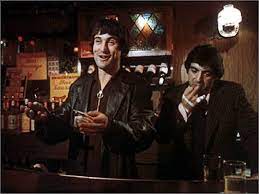
#6 - Mean Streets 

(Martin Scorsese)


There is a certain hard-edged style that has become so indelibly linked to New York filmmaker Martin Scorsese...and despite a couple of admirable efforts prior, Mean Streets is the film that truly established the kind of gritty content we would get from him: a true Scorsese effort.

As one might expect, the film contains staples that would become common themes in Scorsese films: the mob and giving film work to Robert DeNiro.

Much like Toshiro Mifune and Akira Kurosawa, there haven't been many actor/director combos that have been quite as potent and successful as DeNiro/Scorsese...and they click so well together.

And connected to those common themes, you do see a lot of glimmers of future films like GoodFellas or The Departed, but I think where Mean Streets might suffer is that it feels a little more rough around the edges.

I do think in some ways it does work in the film's favor but I think some of the pulsating edges that he would eventually give a movie like GoodFellas or even Taxi Driver just 3 years later show that he was still figuring things out as a filmmaker.

It is still one of my favorite films by him because it does feel like you are witnessing a legend be born but with the promise that the best is coming sooner rather than later.

______________________________

#5 - Don't Look Now

(Nicholas Roeg)


A film like Don't Look Now is a balancing act as it manages to be a psychological thriller in its highest form while also being a very sophisticated horror film.

Considering 1973 was also the year of a certain film about a girl who vomited pea soup and played with a crucifix in a rather bold way, I think Don't Look Now (and also the aforementioned Wicker Man) represents a truly underrated film of the genre as a whole from that year.

Leading the film are Julie Christie and Donald Sutherland giving two of the finest performances of their lengthy careers as Laura and John, a grieving couple who lost their young daughter after she drowned.

While dealing with the grief, they relocate to Venice where they are tasked with helping restore an old church and soon after encounter two sisters. One of them insists that she has psychic abilities and that their young daughter is trying to contact them from the afterlife to warn them of impending danger.
John doesn't believe them until he actually starts experiencing unusual premonitions that might be showing that something tragic may occur. 

Don't Look Now is a film that does suffer at times from being a bit too glacial, but I think that glacial setting helps make the shock of the ending pay off enormously.

It is a film that manages to give great style to a genre that many would soon write off as being only able to make cheap slasher movies a decade later.
________________________________

#4 - Touki Bouki

(Djibril Diop Mambety)


During a decade when "Blaxploitation" films were all over the place, it is a shame that a movie like Touki Bouki is not as known as it should be for being a great representation of Sub-Saharan filmmaking.

If you were to simplify Touki Bouki, it would be a movie about goals and dreams and the quest to achieve them...and that is something we've seen dozens and dozens of times in films.

I think what sets apart the film from others of the genre is how unflinching it is in its approach of showing the true horrors that people would've faced at the time...and it is also manages to take a Truffaut/Demy/Rohmer French New Wave aesthetic and transplanting it into an African world.

Martin Scorsese once dubbed the film as a "cinematic poem" and I actually think that is a very strong and apt description.

In addition to the French New Wave elements, Mambety also gives a dose of neo-realism straight from the Italians and even montages like Soviet filmmakers of that era.

I think this is one film that deserves to be seen and discussed a lot more...and I would like to be a little more vague with going into it in detail. I do want to warn anyone that watches it that there is animal cruelty and it is a bit unsettling to see.

_______________________________

#3 - Amarcord

(Federico Fellini)


After making some truly glorious films throughout the 50s and 60s, I consider Amarcord to be the swan song of Federico Fellini's career.

While his contemporaries like Ingmar Bergman and Akira Kurosawa often tackled darker material, Fellini was a filmmaker who always seemed to go for certain whimsical and fanciful approach...and that isn't to say his films were frivolous; they simply just had more of sumptuous appeal. 

I often talk a lot about films that delve into "memories" or "coming-of-age" tales and I would rank Amarcord as being among the best of that genre, right up there with Yi Yi and Cinema Paradiso.

Much like the film that will end up being my #1 selection on this list, you could say Amarcord is one of those films where there isn't exactly a strong plot.

But I think the world Fellini created is truly an explosion of life at its most colorful and vibrant...and you can tell that Fellini really puts a lot of his own childhood into the film...including his own juvenile sexual deviant ways.

It manages to balance a great line between very elegant but also brash and crude. There is a realism to everything but with a heightened sense that were a witnessing what might be a fever dream of a childhood memory...and very few filmmakers could walk the tightrope of reality and film exuberance quite like Fellini.

Amarcord is essentially a slang term in Italian for "I Remember"...and the film's theme song (which has since been used in pop culture for sentimental montages and the like) is one of my favorite film themes ever. The whole score, by The Godfather's Nino Rita, is one of the best pairings of film and music we will ever get.

__________________________________

#2 - Badlands

(Terrence Malick)


Every now and then, a filmmaker comes along and you know that they just have something special.
It becomes even more exciting when they hit it out of the park on their debut.

Much like Francois Truffaut's The 400 Blows, I think one of the best debuts of any filmmaker has to be Badlands.

I have already discussed Terrence Malick on this series as his 1978 masterpiece Days of Heaven was my choice of the best film of that year (and it also ranked on my top 10 of the decade as well).

Malick is a filmmaker who is something of a mystery. He has a lot of clout and respect and people want to work with him, but he is reclusive and rarely ever gives any kind of interviews. For the longest time, people weren't even sure what he looked like...AND...after he made Days of Heaven, he didn't make another film for 20 years. 

Badlands has a similarity to Days of Heaven in that the story itself is rather conventional and it deals with a couple who are sort of on the run. 

While Days has more of a sweeping epic Harlequin romance angle to it, Badlands seems more in line with being a neo-noir Bonnie & Clyde, as it was loosely based on the real-life murder spree of Charles Starkweather and Caril Ann Fugate in 1958, a couple that murdered 11 people.

Badlands was the first film to truly introduce Sissy Spacek to more of a wider audience and it truly establishes her as a new kind of face and performer for actresses in the 70s.

Martin Sheen was already known for his theatre and television work (and originally was deemed too old by Malick to play this role), but he does very well at capturing a sort of sly and sleazy charmer. There is no denying the chemistry between him and Spacek is palpable.

While the film has received its flowers, I still think it is something of a unsung film at the same time. It deserves a little more attention and praise.

_________________________________

#1 - Day for Night

(Francois Truffaut)


For those who did happen to read my "Best of the 1970s" list, you will recall that Day for Night was my #10 choice. 

You always hear about films that celebrate Hollywood, but there is something about special about a film that simply celebrates film and filmmaking.

When it comes to that type of genre, I would say that Day for Night is among the best ever...and in terms of being a love-letter to film, it is right up there with Cinema Paradiso.

I think what is truly remarkable about Day for Night is that it manages to be such a quietly chaotic and unorganized film but it isn't at its detriment. It truly makes us feel like we are witnessing the true messy nature of a film set where someone might pull focus at a certain moment and another person may do so the next. This could be either the director or an actor or a crew member...because in the end, every film's output would not be possible without the help of everyone on the set. Day for Night puts that mentality all on the screen.

As a filmmaker, Truffaut is someone that I admire greatly in terms of how he approaches films (no matter what Quentin Tarantino has to say about it), but I would say his overall output wasn't as consistently stellar as some of his contemporaries.

I do think Day for Night is one of his true masterpieces...and there is a sense that his career was building to this film (even if I actually still think my favorite film of his was his debut: The 400 Blows). 

The film truly captures the magic of the cinema and how it is made...and I often think back to the line said by Valentina Cortese's character Severine: "What a funny life we lead! We meet, we work together, we love each other, and then, as soon as we grasp something -- it's gone."

It's a potent line.

(And not for nothing, Valentina Cortese losing the Oscar to Ingrid Bergman in Murder on the Orient Express was such a joke that one of the first things Bergman said at the podium was an apology to Cortese. A true class act.)

That line hits so hard...especially when related to any kind of artistic endeavor. The bonds and attachments formed are often strong and emotional...and magical.

Day for Night is basically magic. The end.
______________________________________

FINAL THOUGHTS:


In the last few weeks, I have been admittedly dealing with a lot when it comes to various things. The sad truth is that I would've expected writing down my thoughts on films or TV or theatre would be a great source of releasing some stress...sadly that hasn't been the case.

However, over the last couple of days, I was able to devise this post as I did want to continue my "Anniversary Retrospective" series and also get some new content out there.

I do have some other years lined up that I would like to do still, but this time, 1973 was the one that stood out. There are times where I will draft a list of films and then I will flip flop some of the placements and in some cases, remove a film altogether.

When it came to 1973, I felt pretty solid about the list and just shifted some of the movies around as I began writing about them. 

It is a very good year for film and the amazing thing is that this is basically the appetizer leading into the main course that is 1974 and the dessert that is 1975.

*And I suppose if I keep this series up, I will be discussing 1974 for its 50th Anniversary next year!*

For reference, other years coming up will be:

1968 (55th)

1983 (40th)

1993 (30th)

1998 (25th)

2008 (15th)

Maybe I will do one for 2018, but it still feels too recent. We shall see!


Monday, January 3, 2022

My Review of Mike Mills' C'MON C'MON (Starring Joaquin Phoenix)

It is always something of a miracle when you watch a film that you expected to be good, but it ends up surprising you as being something more.

Mike Mills has always been a truly compassionate filmmaker, but he has managed to give his warmest, sweetest, and best work to date with C'mon C'mon. This may sound a little cheap, but it is the prime example of being a film in which it seems like nothing is happening and everything is happening all at once.

Joaquin Phoenix plays Johnny, a documentarian who is currently working on a film interviewing children from all across the country. While in Detroit, he calls his sister Viv (Gaby Hoffman); they haven't spoken for the past year since their mother's death from dementia. Viv asks Johnny if he can come to Los Angeles and watch her nine-year-old son Jesse (Woody Norman), as she has to travel to Oakland to care for her estranged husband Paul struggling with Bipolar. Johnny agrees, and he and Jesse quickly forge a bond despite Jesse's obnoxious personality and Johnny's unwillingness to talk about his own life.

When it becomes apparent that Viv won't be able to come back when she expected, Johnny asks Jesse if he would like to go back to New York with him. He is excited at the prospect, but Viv is apprehensive at first. 

While in New York, the two start to experience the rougher moments but also still manage to build a relationship they never really had.

I cannot even begin to express how much I loved watching Phoenix and Norman interact. It goes without saying that Joaquin Phoenix is one of the greatest actors working today and here, he gives such a subtle and truly lovely performance. Considering this basically his follow-up to Joker, it just goes to show what range he has. I suppose you could say he is more in the Her territory here in terms of style.

Gaby Hoffman, who recently had a bit of a career resurgence on Transparent after being a child star in the 90s, is also fantastic as Viv. She more than holds her own against Phoenix when they share the screen, and she provides such a tired and harried energy that works perfectly for her character.

Though as much as these two wowed me, I have to commend the young Woody Norman. 

I say this with confidence: Woody Norman gives one of the best performances by a child I have ever seen in a film. He is so real and honest and quirky and funny and sweet and his chemistry with Phoenix is simply impeccable.

On top of this, Phoenix and his team in the film actually do interview real children which also gives us moments in which the film does turn into a quasi-documentary. This additional authenticity only added to my complete joy of watching the film. 

The fact that this film is barely getting any kind of buzz or awards attention is simply a shame...but I do feel like time will be kind to this movie. In my world, I would nominate it across the board.

I honestly don't know if I want to say much else.

I feel like I could go on forever to the point of rambling. The film doesn't deserve a ramble...even if it's message would lead me to believe that is okay to ramble.

It was beautiful.

It was the definition of warmth.

Just watch it.

I hope you agree with me.

RATING: 5/5


Saturday, August 21, 2021

BEST FILMS OF THE DECADE: Vol. 3 - 1950s

Image result for VERTIGO MOVIE

Welcome back to the Best Films of the Decade Series! 

When I created my Letterboxd profile a couple of years ago, I was checking over a lot of my profile stats based on the ratings and reviews I gave to various films. I was a little surprised when I realized my highest rated decade for films was the 1950s. 

There is another decade I always tend to dub as my favorite (which I won't name just yet as we will get to it soon enough) but I then began to look through all of the films I rated so highly in the 1950s. This was when I realized that International Cinema simply EXPLODED in the 1950s and we got to see primo work from some of the finest filmmakers ever to craft a film.

I also think that this was when we truly began to see the divide form even more between the films of Hollywood and the films of other countries. Even if a film came out of Hollywood in the 1950s that I greatly admired or even loved, I tend to find myself more in awe of the films that came out of Europe or Asia.

Due to the wealth of strong films within this decade, and because I feel like a few films would've warranted an honorable mention in my two previous posts, I will be including a list of 10 Honorable Mentions and, more than likely, I will do so for the remaining decades to come.

So let's start with the Honorable Mentions and then delve into the top 10!

10 Honorable Mentions:

All About Eve (1950)

Rashomon (1950)

A Streetcar Named Desire (1951)

Singin' in the Rain (1952)

La Strada (1954)

On The Waterfront (1954)

Diabolique (1955)

Aparajito (1956)

The Bridge on the River Kwai (1957)

The World of Apu (1959)

______________

#10 - 12 Angry Men (1957)

          Directed by Sidney Lumet          

Image result for 12 angry men

As a kid, I can recall episodes of various TV shows tackling the concept of a trial being held and there being one person who seems to think the guilty party is actually innocent. One such episode was of "Hey Arnold!" when Arnold himself acts as the representation of the Juror #8 character as everyone around him seems convinced that the geeky and clumsy Eugene pulled the fire alarm.

It was one of those stories as a kid that just seemed special and intriguing...so it was not a surprise to discover that it was based on a classic film.

12 Angry Men has managed to live on through various modern adaptations, including plays with (rightly so) add women to the proceedings and thus allow the title to be changed to 12 Angry Jurors. The movie manages to take on one essential theme, trap 12 people in a room, and somehow pulls a movie out of it that is far more palpable than probably most of the big Marvel movies that have come out today....and with that comment, I probably just lost some of my readership....haha....

If you are willing to overlook the idea of listening to 12 men, mostly all of them middle aged, battling each other for an hour and a half, I think you'll find that the movie has way more to offer than you might expect.

Aside from being one of the best ensembles of character actors formed for a film, I also appreciate a lot of the development some of these characters get even if it may be rather brief. Also, when it is discovered that Juror #10 is a vile racist who leads a miserable life, the other jurors promptly disregard anything he says feeling he would have nothing meaningful to offer. 

That particular story beat must've sure hit strong in 1957, only two years after the Montgomery Bus Boycott and the real beginnings of the Civil Rights Movement.

Sadly, the film was considered a box office disappointment upon release with many dubbing it a victim to flashier epic films and also the erosion of people staying home to watch TV. However, once the film premiered on TV for the first time, that was when it found its audience and its real acclaim.

_________

#9 - Pather Panchali (1955)

Directed by Satyajit Ray

Pather Panchali (1958) - Turner Classic Movies

In a complete 180 from the glossy sights of an MGM musical, we get the debut feature of Indian filmmaker Satyajit Ray. The fact that Pather Panchali was Ray's first film is something that definitely something to call attention to because it isn't often that a director comes along with such a strong sense of style and connection to their material like he does.

I would even be prepared to hear people make the case that Pather Panchali is the best debut film for any director in history...but for me, the greatest debut by a film director (at least based on my opinion at this moment) is going to be coming up later on this list!

As the first entry of the Apu Trilogy (Aparajito & The World of Apu were both listed as Honorable Mentions), Pather Panchali (roughly translates to "Song of the Little Road") depicts the life of young Apu, his elder sister Durga, and their family as the live in the relative squalor of a poor Indian village.

The film certainly continues on in the tradition of Italian Neorealism and how it unapologetically shows people the lives of those who may very well be far more unfortunate than them. The concept that Ray took has led to many filmmakers borrowing elements of its style in the years to come such as Federico Fellini's Amarcord; Woody Allen's Radio Days; and Edward Yang's Yi Yi. 

The rather simplistic and sometimes meandering tone along with its very straightforward depiction of poverty has led the film has led the film to receive some very high profile detractors.

Famed French New Wave auteur Francois Truffaut, a man I have always found to be fascinating, was once quoted as saying "I don't want to see a movie of peasants eating with their hands".

The New York Times Film Critic of that era, Bosley Crowther, was quoted as saying: "Any picture as loose in structure or as listless in tempo would barely pass a rough cut with the editors in Hollywood".

Well...I think Ray had the last laugh here.

_________

#8 - Early Summer (1951)

Directed by Yosujiro Ozu

Image result for early summer movie

In my essay discussing the Best Films of the 1940s, I mentioned Ozu's 1949 film Late Spring as being one of the finest films of that decade.

Basically, Ozu was on a roll at this point. With Early Summer and then his next film which...spoiler alert...will be coming up later on this list, Ozu gave us some of the best examples of domestic dramas in cinema history.

Early Summer is not often as discussed as some of his other films but I feel this was the best film of 1951, the second best film of Ozu's career, and one of the top 10 best films of the 1950s.

His 1949 film Late Spring discussed a character named Noriko played by actress Setsuko Hara. Noriko's arc forms a film trilogy but it isn't like a trilogy you would expect. The themes are similar and the name is the same, but each film of the trilogy represents a different and distinct Noriko.

What Early Summer shares with Late Spring is that Noriko is a single woman who shares a close relationship with her family who soon faces opposition from older male members of her family to get married. 

The way Ozu is able to make the stories/films feel distinct despite the similarities and also having many of the same actors is quite the remarkable feat but the crazy thing is that Early Summer would be my least favorite of the trilogy. 1949's Late Spring is my second favorite but only by a hair. My favorite is the third outing which will be coming up later on this list.

_________

#7 - The Seventh Seal (1957)

Directed by Ingmar Bergman

Ingmar Bergman's contemplation of plague and death is life-enhancing | The  Economist

When asked who my favorite filmmaker is, I often list a couple of options but for many years, my go-to answer was and could still very well be Ingmar Bergman. 

When it comes to the quality and output ratio of directors, the filmography of Bergman is practically unrivaled. Even some of his weaker films are still quite good and have interesting ideas...and most of those were earlier in his career so you can sort of give him a pass for having a chance to grow. 

I wouldn't say The Seventh Seal is his best film and even if it is on this list, I don't have as strong a passion towards it as I do some of his other offerings, but the main reason it is here is that a lot of the tropes that made for the darkly emotional and unnerving qualities that his work typical feels drenched in are on full display here. It was the film of his that truly felt like, for the first time, would be the go-to example of what a Bergman film is. 

Also, with the way people were raving about The Queen's Gambit, I expected it to be the next best thing about a game of Chess since The Seventh Seal...but no. The fact that I even mentioned that damn overrated miniseries in the same sentence as this dark gem from Bergman should make it feel honored.

__________

#6 - Ikiru (1952)

Directed by Akira Kurosawa

Ikiru movie review & film summary (1952) | Roger Ebert

The 1950s were definitely co-owned by Akira Kurosawa thanks to so many of his classic offerings which are still iconic and strongly felt in the cinematic world today. 

His films always feel so epic, even when they deal with more genteel stories...and there is something so epic about this very quiet story of a Japanese man named Kanji, a bureaucrat who is terminally ill and is trying to find meaning and purpose in his life before he dies. 

A movie like Ikiru feels both inspirational and depressing all at once. Kanji is a man who lives a relatively boring and frustrating existence with a job he doesn't care about, his wife has already passed away, and his son and daughter in law only seem to care about the pension he will receive as that will end up helping them out once he passes away. 

Kanji manages to make his final moments in life about helping others and accepting that the past is in the past and nothing can truly change. One of the last things he attempts to achieve before his stomach cancer takes his life is building a new playground for children in his neighborhood.

Within these last couple of essays, I have made comments about how certain films would be required/essential not just because they are fantastic but because they are relevant in today's society such as The Great Dictator. 

I would definitely put Ikiru on that list.

_________

# 5 -Vertigo (1958)

Directed by Alfred Hitchcock
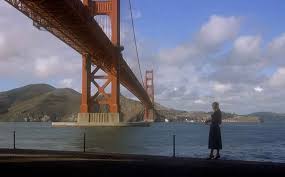
Film Forum · VERTIGO

Alfred Hitchcock was dubbed "The Master of Suspense" and he gave us many iconic, classic films over his 5+ decade run as a filmmaker.

I think Vertigo was his masterpiece.

It was not a horror film and it wasn't even necessarily as suspenseful as many of his films were, but it was him diving into more of a psychological thriller/romance arena.

The folksy Jimmy Stewart plays former San Francisco Scottie Ferguson, who is now working as a Private Detective following an incident in which a fellow officer falls to his death from a rooftop and he was unable to save him. It leads Ferguson to developing a fear of heights and Vertigo.

However, the real drive of the story comes when he encounters an old friend from college named Gavin who asks Scottie to follow his wife Madeleine around as he feels she is mentally unbalanced and also suspects that she is currently possessed by the spirit of her great grandmother Carlotta, who committed suicide years prior when she was cast aside by the man she was sleeping with.

However, as Scottie begins to fall for Madeleine, the story takes an abrupt turn which leaves Scottie all but distraught and catatonic...until a woman by the name of Judy comes into his life and she just so happens to bear a striking resemblance to Madeleine.

Vertigo is the ultimate "reevaluation" movie. At the time of its release, it was seen as a lesser and more melodramatic affair for Hitchcock who was coming off bigger successes like Rear Window and The Man Who Knew Too Much and would follow Vertigo with the highly praised North by Northwest and Psycho. 

It was also one of the 5 films that Hitchcock himself chose to pull from distribution (which that list oddly included Rear Window and The Man Who Knew Too Much so I am not sure what he was thinking). In 1983, Rear Window along with Vertigo got a re-release in theaters and this was when Vertigo's status began to rise. Then in 1996, a full restoration of the film occurred which only further established its legend. 

Now, it is the current reigning champion of the legendary Sight & Sound poll that is held every decade and it did the seemingly insurmountable task of unseating Citizen Kane from the top slot.

__________

#4 - Seven Samurai (1954)

Directed by Akira Kurosawa

Seven samurai | Stephen Jones: a blog

I am not a video gamer by any means but I have been around those who are. Last year, a game called Ghosts of Tsushima for PlayStation was brought to my attention and one thing I took rather interest in was that the game had what was called "Kurosawa mode" in that the action of the game would occur in a grainy black and white rather than vibrant technicolor. 

It made me very happy to see the game acknowledged the history and the importance of Kurosawa's filmmaking, particularly considering it honored his most famous film: Seven Samurai.

Seven Samurai is one of the most influential films ever made and you can see that influence in such film adaptations as The Magnificent Seven. Not long after its release, the French New Wave group of filmmakers often said they preferred the work of Japanese filmmaker Kenji Mizoguchi to Kurosawa as they felt the former told more universal stories that could appeal to a wider audience.

There is no denying that Kurosawa's work has more than held up as universal, and that is also not to knock Mizoguchi as well who was a very strong filmmaker in his own right.

Toshiro Mifune (the Robert DeNiro to Kurosawa's Scorsese) plays a Samurai who falls on hard times and in order to find work, he agrees to help a village protect themselves from bandits who keep stealing their belongings. He gathers six other samurais to help train the villagers, who in turn provide them with food and shelter.

As is to be expected, the bandits do return and thus...CHAOS ENSUES! ;-)

The film clocks in at 3 1/2 hours so yes it is a little long but it is certainly worth the effort.

__________

#3 - Wild Strawberries (1957)

Directed by Ingmar Bergman

Wild Strawberries (1957) - IMDb

While Ingmar Bergman's The Seventh Seal often gets the praise and acclaim (which is certainly deserved as it was on this list), I personally consider my favorite film of his to be Wild Strawberries...though that title is closely battled by two of his other films: stay tuned for the 60s and 70s posts for the answer to that riddle!

Wild Strawberries tells the story of Isak Borg (Victor Sjostrom), a retired professor who is traveling with his pregnant and unhappy daughter-in-law Marianne to attend a ceremony at his Alma Mater in which he will receive an honorary degree.

While traveling, the pair encounter a series of hitchhikers, each of whom will make Isak recall various events from his past ranging from pure delight to miserable failures. 

One of the hitchhikers is Sara, a beautiful young woman who reminds Isak of his first love.

Bergman casting Victor Sjostrom almost feels like a passing of the torch. Sjostrom was a true pioneer in the world of Swedish cinema as both an actor and a director. This would serve as his final performance as he would pass away 3 years after its release.

Wild Strawberries is one of those films that is dripping with melancholy, but manages to also give you a certain sense of warmth at the same time. The warmth aspect isn't always common in Bergman's work which is often why many mock him for being overly droll and too depressing. I think that might be why I love Wild Strawberries because it does give off a certain sense of variety while also still having that trademark Bergman gloominess and throwing in a trippy dream-like atmosphere for good measure.

__________

#2 - The 400 Blows (1959)

Directed by Francois Truffaut

1. The 400 Blows (1959) | Wonders in the Dark

The kinetic energy of what would become to be known as The French New Wave was a style of filmmaking I took to instantly as a young teenager...and you have to love that the final shot of the movie (the screenshot from above) was appropriately parodied on The Simpsons with that show's own lost and troubled Nelson Mandela Muntz.

See below:

Image result for nelson muntz the 400 blows

Francois Truffaut kicked off the New Wave with a vengeance by giving us his semi-autobiographical The 400 Blows, the story of a young teenage boy named Antoine Doinel who is constantly getting into trouble, skipping school, and suffering from an erratic relationship with his mother and stepfather. 

Even with the film's opening credit sequence, we already sense this is a film taking on a new approach on how a movie can be presented. The cinematography is somewhat rough and rocky and it sort of continues on the tradition of Italian Neorealism but the setting and aesthetics seem a little more flashy and cosmopolitan thanks to the Parisian settings. 

Truffaut was, at times, a problematic character but when it comes to filmmakers talking about their work and others, he might be the one I was always drawn to because I usually found myself fascinated by what he had to say and how he would say it. You can tell that he had a strong connection to the character of Antoine since it was based on a lot of his own youthful escapades.

Truffaut would choose to revisit Antoine as he would get older (keeping actor Jean-Pierre Leaud in the role) and thus we got Antoine & Collette, Stolen Kisses, Bed & Board, and Love on the Run. 

While I am not sure those films came close to matching The 400 Blows, I do feel they were all fairly worthy follow-ups...and despite Truffaut's talent, he never quite made a film that would reach the heights of his debut.

He peaked right out of the gate.

________________

#1 - Tokyo Story (1953)

Directed by Yosujiro Ozu

Tokyo Story | BAMPFA

When discussing Early Summer, I said we would return to see Ozu's final installment of the trilogy soon enough...and that installment gets my vote for the best film of the 1950s.

Tokyo Story was Ozu's magnum opus and one of the true peaks of domestic drama in all of cinema. This is a film that is void of any real gimmicks or pretention or any kind of flashy style: it is all heart and emotion.

Instead of primarily focusing on the Noriko character in this selection, he focuses on an elderly couple: Shukishi & Tomi (Chishu Ryu & Chieko Higashiyama) who are making a trip from their small seaside village in northern Japan down to the bustling Tokyo to visit their children. 

Their eldest son Kochi is a doctor and their daughter Shige is a hairdresser: neither they, nor their spouses, seem to have any real time to socialize with them. With the previous two outings, you find empathy with the young Noriko character because she thinks traditions should evolve over time...but with Tokyo Story, you can empathize with two people who simply just want to be with their children but keep getting turned away.

Here is where Ozu's masterstroke comes into play: 

In this universe, Noriko was married to Shukishi and Tomi's middle son who was killed during WWII. Now widowed, the couple visits their daughter in law and it is with her, they find someone who is more than happy to give them all of the time in the world.

However, tragedy strikes not long after the visit which only further shows the divide between the children by blood and the child that is an in-law.

Tokyo Story is just a beautiful movie. You always hear stories about the horrors of dealing with in-laws but here we have someone who isn't even a blood relative providing the love and attention that true family can provide...and it is a daughter-in-law with the parents of her deceased husband.

In the end, your family is who you choose. 

_________

 IN CONCLUSION:

The 1950s were a vibrant decade and a truly landmark time for International Cinema. The conservative ideals of Hollywood at the time were far more detrimental than I think some would like to acknowledge and we did still see some strong efforts. 

I just think American cinema did not truly meet the match of the rest of the world until the 1970s...but we are now coming up on the 1960s which is something of the Moment of Truth. 

Coming up tomorrow (pending any strange delays): The Best of the 1960s!

-

SO...I Am Officially a YouTuber! (AND A POSSIBLE FAREWELL TO THE BLOG)

It has been a long time coming, but I have finally started the YouTube channel I kept wanting to create for the last several years! The chan...