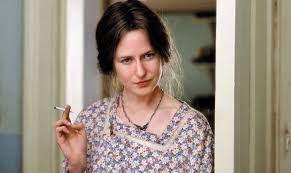
Wednesday, January 4, 2023

My Ranking of the Best Actress Oscar Winners - Vol. 3 (59-40)

I am very behind on this.

I posted the two previous volumes earlier this year (with the most recent being way back in June), and have had trouble finding the drive to pick it back up.

In the past few months, I have sort of been gradually preparing this list and shifted around some of the names but this is where a lot of my problems were coming from.

As fun as making lists are, there just comes a point where it becomes hard to necessarily compare something like performances...especially so many of them are pretty good and on what I would consider to be an equal level.

Also, it becomes a matter of sorting out performances of varying styles whether they be bigger or subtler, from the 30s or from the 2010s.

We are entering a portion of the ranking where I find myself having varying opinions and not necessarily immense passion for the performances as a whole, but they are good performances. Some made for solid Oscar wins, some were what I would consider a slight waste...but on their own, they represent solid or even very good work.

So, maybe this list would look different if I revisited some of these films back to back again...but for now, here come my selections for #59-40.

____________________________________

#59 - Marie Dressler, Min & Bill (1931)

In one of the earliest performances to win an Oscar, you can easily say that Marie Dressler was something of an anomaly.

The ageist attitudes of Hollywood have always been present and the fact that an actress of Dressler's age/stature won this award...and for pretty much a comedy no less...is quite the accomplishment. 

Very few actresses had the kind of command and presence of Dressler...who could make Beatrice Arthur look relatively demure by comparison.

Min & Bill is a very brief film and not overly remarkable, but it would be worth seeing for Dressler. These days, Dressler is better remembered for being a part of the famous Ma & Pa Kettle film series.

_________________________________

#58 - Katharine Hepburn, On Golden Pond (1981)

Going into the Oscars that evening, many pundits felt that Best Actress was between Diane Keaton for Reds and Meryl Streep for The French Lieutenant's Woman. 

Katharine Hepburn's win was considered a major shock. It was also historic as this was her 4th win, something no other performer has duplicated.

There is no denying the memorable nature of her performance or her chemistry with Henry Fonda. Her most famous scene where she refers to Fonda as her "knight in shining armor" is easily the highlight of the film. 

I don't think too much of the film, but Hepburn and Fonda were both lovely and I appreciate that their wins along with Supporting winners Maureen Stapleton and Sir John Gielgud gave us the oldest average age of winners to date. 

Who would I have given it to, though? I actually think Susan Sarandon was truly luminous in Atlantic City and would've loved to see her and Burt Lancaster win for that film. I also would've gladly supported a win for Diane Keaton in Reds.

_________________________________

#57 - Joan Crawford, Mildred Pierce (1945)

Very few performers of any gender are as iconic and infamous as Joan Crawford...which might have a lot to do with her hatred for wire hangers.

Crawford also seems to polarize a lot of people, famous or not, that question if she truly was as psychotic as her adopted daughter Christina claimed.

Beyond that, I am going to refrain from going further into that discussion and instead focus on Crawford as an actress.

Her co-star from Whatever Happened to Baby Jane, Bette Davis, was not a fan of Crawford...and the feeling was mutual, but Davis could also admit the truth.

Davis was once quoted in an interview as saying Crawford was "a consummate professional" in that she was always punctual and knew her lines and was pretty much no-nonsense.

There is no denying Crawford's meticulous nature helped her achieve great success as an actress, but I have also never taken to her much in that arena.

I do think Mildred Pierce was essentially "lightning in a bottle" for Crawford...and this Oscar served not just as deserving acknowledgment for her work in the film, but as a career award as she had yet to receive even a nomination despite a pretty successful 20-year career dating back to silent films.

*Side note: Had supporting categories existed in 1933, I would have to assume she would've been an easy winner as Flaemmchen, the stenographer in Grand Hotel*

I am inclined to say that this win was perfectly acceptable as it seemed very attuned to the exact skills that Crawford was able to excel at.

_________________________________

#56 - Susan Sarandon, Dead Man Walking (1995)

Following 4 nominations, with 3 happening over the span of 4 year, Susan Sarandon won on her 5th nomination for her performance as Sister Helen Prejean in Dead Man Walking, a film based on the true story of a nun who ends up becoming a staunch protester of the death penalty when she encounters an innocent man who is on Death Row.

Directed by her then-partner Tim Robbins, Dead Man Walking is one of those rare examples of a Hollywood film that leans rather heavily into more leftist politics...and it was certainly far better than most of the actual Best Picture nominees that year.

I don't consider this to be Sarandon's best work (I am more of a fan of Atlantic City which I discussed under Hepburn's On Golden Pond win), but it is a very solid win for a performance that could've been a lot worse since it was practically an overdue selection at that point.

Of the nominees, I actually sort of preferred Elisabeth Shue from Leaving Las Vegas but a lot of my favorite performances that year were snubbed.

Nicole Kidman proved she was capable of brilliance in To Die For and should have won her first Oscar here. Another major snub (which was considered a longshot) was Kathy Bates in Delores Claiborne, a performance in a truly underrated film from one of the more underrated titles in the Stephen King canon.

_________________________________

#55 - Jessica Tandy, Driving Miss Daisy (1989)

I was very young when Jessica Tandy passed away in 1994, but she left something of an indelible impression on me as a kid because she is one of the few performers that I can vividly recall being among the first I acknowledged.

This had primarily been due to her performance in Fried Green Tomatoes, which was a big favorite to both my mother and grandmother. I do recall not long after seeing Driving Miss Daisy at my grandmother's house and the honest truth was that I actually liked the film.

It wasn't until I got older that I understood that the film was a rather mawkish and treacly affair about the concept of race...but despite that, Tandy did a nice job. 

She also has wonderful chemistry with Morgan Freeman, who steals the film despite his caricature of an accent.

Tandy was certainly a sentimental favorite going into Oscar night, but she did manage to get the win over her biggest competition: Michelle Pfieffer in The Fabulous Baker Boys, who managed to win several critics wins plus the Drama Globe. 

___________________________________

#54 - Helen Hayes, The Sin of Madelon Claudet (1932)
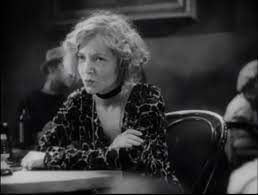
The title of "First Lady of the American Theatre" has been given to a couple of different women, but the first person I ever heard referred to as such was Helen Hayes.

Much like other women who got the title (like Ethel Barrymore), Hayes never strayed far from the stage and only acted in films sporadically. 

While The Sin of Madelon Claudet benefits from being a pre-Code film, it also gets docked for its rather stuffy and offensive treatment of a woman who just made some bad choices in her life. In that regard, you could also see the glimmers of the Hays Code within it.

Hayes does come off as a little theatrical at times, but there is a humanity to her that feels very potent and alive which isn't always apparent in some of these films from the 30s.

Considering a lot of the performances that were getting honored at the time, I think Hayes' stands out as being rather solid.

___________________________________

#53 - Frances McDormand, Nomadland (2020)

I was admittedly a little bummed when McDormand won this Oscar...mainly because I didn't feel like it was a performance that felt undeniable or that warranted a third Academy Award for Lead Actress...something that only Katharine Hepburn has duplicated.

I also felt like Carey Mulligan had more than earned a win and she was truly dynamic in Promising Young Woman. 

I was not as in love with Nomadland as critics were and I did question its take on a company like Amazon, but I do admire the film and what Chloe Zhao achieved with it.

Considering most of the cast were non-actors who actually were living as nomads in real life, there is an authenticity to the film that feels so rich, but it doesn't feel forced. I think what is truly remarkable about an actress like McDormand is that she truly fits into this world. I honestly think no other actress (of her stature or fame) could ever have come close to capturing this kind of performance with these group of people. Having a scene partner like David Strathairn also helped greatly because he, too, blended very well into the environment.

As it stands, I am still not sure she would've made my lineup. 

My personal vote for Best Actress that year was the snubbed Jasna Duricic from Quo Vadis, Aida?, a film about the 1995 Bosnian genocide.

____________________________________

#52 - Olivia de Havilland, To Each His Own (1946)

To Each His Own is not a great film and it tends to sort of fall into some of the more melodramatic tropes of 40s Hollywood cinema...and it also isn't de Havilland's best work by any stretch.

However...this win was a great example of perseverance as de Havilland had fought the studio system over both the true structures of acting contracts and the quality of roles for women.

This didn't adhere to some of the major studio heads, but in her favor, the studio system hierarchy was approaching the last stretch of its heyday.

Olivia de Havilland won two Oscars (her 2nd win will be coming up later on), but I feel like perhaps she should've won her first Oscar for a different film.

In this particular year, I would've voted for Celia Johnson, whose truly delicate performance in Brief Encounter is a prime example of the true power of subtlety.   

___________________________________

#51 - Cher, Moonstruck (1987)

I like Cher very much...and I think her performance here is delightful.

Moonstruck is probably one of my favorite romantic comedies ever made; I also think John Patrick Shanley also helped make it fresh by adding a great subplot for Olympia Dukakis, who played Cher's mother, as she has to navigate the infidelity of her husband and ends up having a quick dinner with a younger man with a seemingly similar roving eye. 

This is an Oscar win I admire greatly on its own merits and I think there is no denying that Cher has natural acting talents...and any training she may have received from Lee Strasberg in the early 80s only solidified that.

I do want to recommend the movie Mask from 1985 (no relation to the Jim Carrey film), as it probably contains Cher's greatest performance, though Moonstruck is a close second.

However, 1987 truly belonged to two women:

Glenn Close, Fatal Attraction

Holly Hunter, Broadcast News

These performances are two polar opposites and while Close's borderlines a very problematic area in how it presents a scorned woman, there is no denying it is an iconic performance and a SUPERB performance.

Hunter's Jane Craig is a marvel, too. She is a strong but also vulnerable and flawed woman...I would go as far to say it may be the greatest character that James L. Brooks ever wrote, and it is easily the best film of his career.

__________________________________

#50 - Claudette Colbert, It Happened One Night (1934)

I think Claudette Colbert truly lucked out in a lot of ways. 

On one hand, it was obvious that the Academy loved her film as it became the first to win the top 5 big Oscars of the evening: Picture, Director, Actor, Actress, and Screenplay.

Colbert was a highlight and gave a truly lovely performance, but this was the infamous year that Bette Davis got snubbed for her rather visceral performance in Of Human Bondage, the film that sort of set up the expectation that this young actress would be a different kind of performer than any of her peers...and one who would not shy away from vile characters.

    I think on her own merits, Colbert is a worthy winner. Perhaps she doesn't match the same level of screwball comedy prowess that her peers of the era cultivated like Irene Dunne, Myrna Loy, Carole Lombard, or Jean Arthur...but she works well with Gable and brings great sophistication and wit to one of the last films to come out before the dreaded Hays Code ruined pretty much everything.

_______________________________________

#49 - Judy Holliday, Born Yesterday (1950)

This is an Oscar win that is often considered one of the most infamous because a major comedic performance managed to best Bette Davis in All About Eve and Gloria Swanson in Sunset Boulevard. 

I can't say for certain what the consensus is, but while I supported the Best Picture win for All About Eve, I do think I would've voted for Swanson.

This isn't to say that Holliday is an undeserving winner. I do think maybe she appears a little green at times onscreen, but considering this role made her a Broadway sensation, she still manages to create a compelling onscreen persona.

I have expressed this before, but it seems like a very frustrating Catch-22 where a lot of people bemoan that not enough comedic performances (or any genre performances for that matter) are rewarded Oscars...and yet, whenever it seems to happen, they are often some of the most hated wins.

I don't even have the same passionate response to Davis and Swanson as other film historians do...but either way, I think Holliday doesn't deserve the intense hate she does often get.

_______________________________________

#48 - Susan Hayward. I Want to Live! (1958)

This is a performance that I actually struggled to rank, because I find myself both marveling at Hayward and cringing at the same time.

Hayward was an actress who loved to...well...emote. 

If I would compare her to any actress that is pretty well known to audiences of today, it would be Jessica Lange.

However, my problem with Hayward is that she often borders a campy melodramatic line that she never truly masters without falling into the pool.

I think I Want to Live! represents her finest performance if only for the fact that she didn't entirely fall into that overbearing melodrama like she did in films like I'll Cry Tomorrow (although that film does play differently when you realize how much it personally related to her) and by the end, she makes some truly subtle choices in moments of silence that show she might've been able to achieve balanced excellence if directors were more willing to reign her in. 

So I am okay with the win, but I wouldn't have been opposed to Rosalind Russell taking it for Auntie Mame or Elizabeth Taylor for Cat on a Hot Tin Roof.

______________________________________

#47 - Janet Gaynor, Sunrise/Seventh Heaven/Street Angel (1928)

So, yes, Janet Gaynor has the distinction of being not just the first Actress to win this award, but also being the only one to win it for multiple films.

In addition to this, Gaynor is the only actress to win this for Silent films. 

I have to admit that I have never seen Street Angel but I have seen Seventh Heaven and Sunrise. I think both of these films are actually quite good, especially Sunrise which I consider one of the best films to come out of the Silent era.

I think Gaynor does her best work in Seventh Heaven but is buoyed up more by the content of Sunrise.

Gaynor would later prove to be an equally strong actress once the talkies came along as she was the original actress to portray the Esther role in the now seemingly ongoing A Star is Born franchise...but she also worked so strongly in Silent films because she had that undeniable quality where she could express so much just with her eyes. 

Not everyone succeeded when talkies came along (coughMaryPickfordcough), but Gaynor did...and she deserves more praise and discussion by today's film historians.

_______________________________________

#46 -Audrey Hepburn, Roman Holiday (1953)

Very few women are as truly iconic as Audrey Hepburn. 

In an era where feminine beauty was epitomized by the likes of Marilyn Monroe and Ava Gardner, Hepburn stood out as a different kind of beauty: svelte and sweet.

Considering Roman Holiday was her first real film role, Hepburn came out of the gate with guns blazing...and with a role that was truly suited to her sweet and genteel charms.

Hepburn would eventually prove herself to be a great dramatic actress in films like A Nun's Story and Wait Until Dark or Two for the Road...but there is no denying the true indelible charm and grace she exudes in this film and how well she works with Gregory Peck, an actor who wasn't always the most consistent scene partner a performer could have back then.

___________________________________

#45 - Ingrid Bergman, Gaslight (1944)

As the first of her 3 Oscar wins, I would say that Gaslight is easily the most deserved of Ingrid Bergman's wins and probably one of the best performances of her entire career. 

Many bemoan the fact that she beat out Barbara Stanwyck's legendary Femme Fatale in Double Indemnity, especially considering Stanwyck never ended up winning a competitive Oscar. I think that Bergman's win is pretty deserving in the grand scheme.

Gaslight may not be quite as strong as Double Indemnity, but it is pretty close. It works very well as a thriller, especially considering that it came out in 1944.

Bergman is so indelibly linked to Casablanca that it may be hard to forget that she had a pretty extensive career otherwise, but I think when looking at a film like Gaslight, you can tell she was able to bring a lot to the table.

____________________________________

#44 - Simone Signoret, Room at the Top (1959)

Often considered a win that is questionable, I think Simone Signoret suffers mostly from the debate over how much one might like the art of subtlety.

Room at the Top is a pretty prototypical 50s melodrama, but Signoret manages to anchor the film down quite beautifully. It is also a performance that I could easily see getting pushed down to Supporting by today's standards since "Supporting" tends to be the place where borderline performances are placed if they feel they may not have as best a shot in lead.

Signoret, the first French actress to win an Oscar, also comes off as quite naturalistic in the film. Despite some of its pulpy nature, it holds up a lot better than most films of its kind from that era and I think her work is a true testament to that.

I do think that if they had honored Audrey Hepburn for A Nun's Story that I would've also gladly accepted that, too.

_________________________________

#43 - Nicole Kidman, The Hours (2002)

I am no devotee to The Hours as a film, but I do acknowledge that the three female leads are simply fantastic. I do have to state that despite the fact that the film is split into 3 parts and the women have mostly equal screentime, I sort of feel like Kidman is the one who should've been in Supporting and not Julianne Moore. 

Although, the only reason that push occurred was because Moore had Far from Heaven that year in which she was the true lead of the film so for the sake of campaigning tactics, she got bumped to Supporting.

Kidman winning the Oscar almost felt like a coronation that Hollywood was dying to perform. Hot off the heels of her infamous divorce from Tom Cruise, sympathies seemed to fall in her favor and then she gave us the one-two punch of Moulin Rouge and The Others shortly thereafter. 

The Hours, in which she also infamously donned a fake nose which seemed to get just as much press as the impending War in Iraq at the time, was the seemingly perfect role to give the new IT girl her due...even though, as I mentioned, she should've won for To Die For 7 years prior.

As for her work as Virginia Woolf, I do have to commend her overall, but the only reason I placed her even this high was for what most film fanatics refer to as "The Train Station Scene", in which she fights with her husband Leonard. I still think one of the more emotionally powerful line deliveries I have heard in a film in the last 25 years was Kidman screaming "I am dying in this town!"

This scene alone is one of the best acted scenes by an actress ever.

Though I still probably would've given Moore the Oscar for Far from Heaven...and since she was technically eligible that year, my favorite performance might've been Isabelle Huppert for The Piano Teacher.

_______________________________

#42 - Julie Christie, Darling (1965)

Julie Christie doesn't get a lot of discussion these days. Even when she came THISCLOSE to winning another Oscar for Away from Her back in 2008, I feel like there wasn't as much passion surrounding her despite her relative legend. 

Many of her contemporaries are highly regarded and beloved by younger generations today like Maggie Smith, Judi Dench, and Helen Mirren...though Christie never seemed to seek that kind of stardom. 

Looking back her earlier films like Billy Budd and Darling, you can see how much she embodied the quirky persona that seemed to be linked with the swinging scene of London in the 60s. 

If you check out the great YouTube channel, BeKindRewind, she talks a lot about this particular race in particular and how Christie represented something of a new movement.

Here's a link to that video and check out the rest of her content...she is FANTASTIC!

I agree with her that Christie's performance in Darling plays more like something you'd see a male actor play in a 1970s film. She is essentially an anti-hero before that became the norm...and even though her character of Diana Scott does seem truly questionable thing, Christie somehow makes her compelling and the furthest thing from "one-note". 

A great example of an anti-hero in film before it took off as a beloved trend.

_______________________________

#41 - Bette Davis, Jezebel (1938)

When looking at the two Best Actress awards that Bette Davis has won, and we already covered her win for Dangerous, it may be a bit shocking to see that neither of her winning performances are that well known compared to her work in All About Eve, Whatever Happened to Baby Jane?, Now Voyager, or The Little Foxes. 

I would say Jezebel does rank as a performance of hers that was on the top tier rather than the lower, but it really does feel like it is a step above being an imitation of Scarlett O'Hara before that iconic film came out a year later.

Much has been said about Bette Davis being passed over for Scarlett O'Hara, even though I still think she was not the right fit for that role. However, Davis does do well here and I think it is a way to toss her an easy win over a relatively meek lineup.

I think I would've been prone to give her an Oscar for Of Human Bondage and Jezebel, but I would strongly consider it for her in 1941 (The Little Foxes), 1942 (Now Voyager), and 1962 (Whatever Happened to Baby Jane?) 

The woman should've had 3 or 4 Oscars on her mantle.

______________________________

#40 - Joanne Woodward, The Three Faces of Eve (1957)
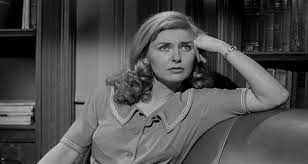
The 1950s for American cinema were pretty pulpy. When we struck gold, we truly struck it but otherwise, a lot of the big films that the Academy honored in that era have not stood the test of time.

I think The Three Faces of Eve is a prime example of a film that is just simply too much of a cheesy and greasy affair, BUT...I do think Joanne Woodward makes the film watchable.

As a woman who suffers from what is now called Dissociative Identity Disorder, Woodward imbues her part with a lot of passion and verve...and it is a shame that everyone around her doesn't seem to want to match that sense of vitality.

She also benefitted greatly from relatively weaker competition that year, too...so this is a case of a rather good performance that looked towards the future in terms of acting styles (i.e. The Actor's Studio/Strasberg) that mostly suffered due to the quality of the film. I think Woodward made for a good choice nevertheless.

_________________________________

FINAL THOUGHTS:

As I mentioned before, this post was a LONG time coming. I found myself struggling with writing out this volume and swapped out multiple performances and moved many of these up and down through the ranking. 

It goes without saying that comparing many different styles of performances and acting methods can be rather difficult because one minute, I might be singing the praises of a beautifully subtle performance and then the next, I might find that another actress did very little with her role.

It can be a fascinating process to see how certain performances work for ourselves and how others perceive them as well.

I think my last two volumes should ignite a little more passion within me as we inch closer to some truly remarkable performances.

I feel confident that the next volume will come a lot sooner than this one did.

CHECK OUT THE OTHER VOLUMES:

94-80

79-60

Upcoming: 39-21

Upcoming: 20-1

Monday, December 26, 2022

"THIS IS OUR LAST DANCE": My Quick Review of Charlotte Wells' AFTERSUN - w/slight spoilers

It has been a while since I have watched a movie that left me feeling uncertain as to how I felt about it once it ended.

I could go on some sort of long preamble about other films I have had a similar experience with, but I don't think that is necessary. I also think that my reaction to Aftersun is a little more unique and complex than calling it an "uncertainty". 

While watching Aftersun, I marveled at the assuredness and style/aesthetic of Scottish writer/director Charlotte Wells. I use the word "marvel" mostly because this is her feature film debut after previously directing three short films following her graduation from Tisch. 

At the same time, I sort of found myself having an issue connecting to the material. It wasn't that I didn't "get" what I was seeing, but I felt like I was somewhat emotionally removed from it.

The film is set in the late 90s and revolves around Sophie (Frankie Caro), an 11-year-old girl who is vacationing at a Turkish resort with her father Calum (Paul Mescal), who is about to turn 31. 

We do learn that Calum and Sophie's mother are amicably separated, and at the fairly young age of 20, perhaps Calum wasn't ready to become a father.

Interspersed within the film are old home videos of the trip that were taken by Calum and the masterstroke here is that we are watching these home videos along with the adult Sophie 20 years after the events of the film.

In some ways, Aftersun reminds me a little of Fun Home in that there is a strangely loving and yet tense relationship between a father and a daughter. While Fun Home does have the LGBTQ+ angle, Aftersun doesn't have that.

Instead, we deal more directly with depression.

Calum makes a comment in the film that he didn't think he'd make it to 30 but he is especially sure he won't make it to 40.

All the while, we watch young Sophie, approaching her teenaged years, showing a lot of maturity and a growing understanding that her father isn't exactly handling things in his life well.

And adult Sophie is going back to watch some of the home videos trying to see if she can piece anything together.

It is clear that Calum loves Sophie, but there is a disconnect there...or a detachment rather. In certain moments, it does feel as though he is building up a wall around her...especially when she shows how astute she is at recognizing that he is feeling sad/angry/upset...even over something like when she loses the expensive goggles he got for her in the sea. He doesn't blow up, but she can sense the stress...especially considering his financial situation.

He can't seem to bear that she can recognize his pain, as if that is somehow a failure on his part.

This is a film that is basically told strictly from the point of view of Sophie. We don't get many moments alone with Calum...and at first, I found that difficult.

As I ruminated on it more, I realized that the film wouldn't even exist if Sophie had that much more to dig into to try to understand her father.

MAJOR SPOILER ALERT:

While not explicitly said, it does seem to imply that Calum did commit suicide not long after Sophie departed on a plane to return to Scotland while he remained behind.

The timeline of this is a little skeptical but we do know that when she waves goodbye from the airport terminal, it is the last time they will see each other.

END OF MAJOR SPOILER

What makes a little unsure of the film is that I wish it focused a little more on the inner mind/thought process/personal demons that adult Sophie may have.

While I came to peace rather quickly with understanding the motives of keeping Calum at bay, I think I might've had a stronger emotional reaction to the film if they let me understand more about what makes Sophie tick and how she is functioning as an adult. I feel like the glimpses we get don't tell as much of a story as I would've liked.

I do want to comment on Paul Mescal and Frankie Caro. 

Mescal has been on the rise lately, having been known mainly for his work in the theatre and his breakthrough role on the miniseries Normal People. 

Here, he does do a lovely job at portraying that mix of love and a sense of detachment that also seems born out of love and fear of hurting Sophie.

I think Frankie Caro is a revelation though. Last year, I praised young Woody Norman for his work in Mike Mills' C'mon C'mon as being truly lived in and realistic child performance.

Caro falls into that group easily. What is even more remarkable about her performance is how she pitches it between the scenes we are watching happen as opposed to the ones that are being filmed.

For the "filmed" scenes, she often puts on a certain energy that is very reminiscent of how a lot of us kids would act whenever a video camera would show up...and I was one of the kids who often made shot videos of my own from exactly that same time period. 

I appreciated their chemistry very much and I think Wells also deserves another round of applause for getting that kind of relationship out of them.

Lastly, I do want to reiterate that I am still ruminating on this film. I feel like every time I start to think about something I love about it, something just pulls me back.

I didn't connect to it as strongly as I had hoped, but I still admired so much about what Wells was attempting to do. 

I am going to be a little more generous due to the combo of the two leads and also the concept itself.

RATING: **** / *****


My Review of Rian Johnson's GLASS ONION: A KNIVES OUT MYSTERY (SPOILERS!)


In 2019, Rian Johnson managed to redeem himself in the eyes of certain film buffs who might have been less than impressed with his work on The Last Jedi...but I didn't really care about that. If anything, as someone who has little to no devotion to the Star Wars franchise, I actually rather enjoyed that film.

But it was Johnson's 2019 outing Knives Out that seemed to garner a lot of attention and acclaim...and rightly so.

Despite maybe not having the most complex or the most shocking of reveals, I found that film to be an absolute joy to sit through and I loved being able to see a juicy murder mystery played out on screen like a modern-day Agatha Christie.

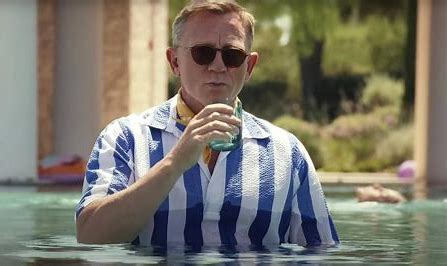
And in the Miss Marple/Hercule Poirot detective counterpart, we get Daniel Craig as Benoit Blanc, a southern gentleman whose accent is so thick that he was ridiculed by Chris Evans' character in that film as being "Foghorn Leghorn".

When it was announced that Johnson had an interest in pursuing further films that would have Blanc solving mysteries, I was very excited to say the least.

The real question is if this new sequel would suffer from a sophomore slump or if maybe Johnson would manage to improve upon his mystery plotting skills.

It's the latter.

Glass Onion is an absolute delight.

If I can nitpick anything about the film, it might be that I simply liked the ensemble more in the previous film but that is an unfair comparison. MAYBE they could've shaved off a little bit in terms of the runtime...but that's it.

I think this film is maybe just a smidge better than its predecessor, and a lot of that goes to the great plotting of Johnson and the duo that forms between Craig's Blanc and the character played by actress/singer Janelle Monae. 

But I will get to those two in a moment when I discuss the plot.

While the original Knives Out takes place in the dead of winter at a mansion on the outskirts of Boston, Glass Onion takes on a sunnier approach that could be compared to Agatha Christie's Evil Under the Sun or the film The Last of Sheila, which happened to be co-written by Anthony Perkins and Stephen Sondheim.

And I want to call out Sondheim because he is in this movie!

Sondheim famously said that after the failure of his 1981 musical Merrily We Roll Along that he considered leaving the theater world to pursue a career as a mystery novelist.

His love of mysteries and puzzles were infectious, and it delighted me to see him featured in Zoom cameo along with another recently deceased legend, Angela Lansbury, whose most famous role was that of TV sleuth Jessica Fletcher on Murder, She Wrote.

We also get zoom cameos of Natasha Lyonne and Kareem Abdul-Jabbar, plus a clever use of Jake Tapper and a hilarious bit with Serena Williams.

Though, perhaps the most interesting cameo in some ways is that of Hugh Grant, who plays the life partner of Benoit Blanc. I hope Johnson may utilize Grant in the third installment because I think his affable energy could fit well into the world and it would be nice to see he and Craig interact more.

Before I discuss the plot in more detail, you have been warned.... SPOILERS GALORE!

I did cheat a little bit here, so the following three paragraphs were crafted together synopses I found online. This is what takes up the first half of the film, but then I will take over discussing the second half.

__________

THE PLOT:

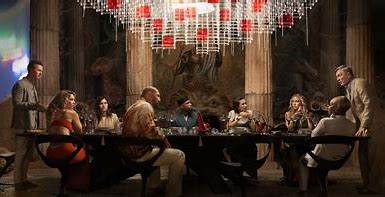
"During the COVID-19 pandemic in May 2020, Miles Bron, the billionaire co-founder of the Manhattan technology company Alpha, decides to host a murder mystery weekend at his mansion, the Glass Onion, on his private island in Greece. He invites five friends: Alpha head scientist Lionel Toussaint, Connecticut governor Claire Debella, fashion designer Birdie Jay, men's rights streamer Duke Cody, and fellow co-founder and ousted Alpha CEO Cassandra "Andi" Brand. Detective Benoit Blanc also has an invitation and joins the group along with Birdie's assistant Peg and Duke's girlfriend Whiskey.

Upon arrival, Miles questions Blanc's presence, but allows him to stay, assuming that another guest invited him as a joke. Blanc overhears Peg confront Miles over a PR statement he wants Birdie to release and sees Duke watch Whiskey flirting with Miles on a bed. Before dinner, Miles shows off the Mona Lisa that he has on loan from the Louvre and reveals that the Glass Onion is powered by "Klear", a hydrogen-based alternative fuel that Alpha will launch in a week despite Lionel and Claire's safety concerns.

Blanc solves the murder mystery immediately and tensions over Andi's presence culminate in her leaving the party. Suddenly, Duke collapses and dies after drinking from Miles's glass; the panicking group suspects Andi. After the group discovers that Duke's pistol is missing, the power goes out, and everyone splits up in a panic. Blanc finds Andi but an unseen assailant shoots her. Blanc gathers the rest of the group and announces that he has solved Andi's murder."

This is when the film suddenly takes a sharp turn...and it is also when you realize how well Johnson structured out this mystery.

When Blanc received his invitation, we don't see who sent it to him. While Blanc is in his tub, his partner, played by Hugh Grant, opens the door to find...Janelle Monae.

So, it's Andi?

No.

In fact, she speaks with a southern accent (Alabama) and introduces herself as Helen, the twin sister of Andi. It turns out that Andi was said to have committed suicide, but Helen knows that it was a murder and that she suspects that someone, whether it be Miles or one of the others (their nickname: "the disruptors" but she likens them to be "shitheads").

Helen discovered the damaged invitation at Andi's home and now with the invitation in hand, Blanc agrees to investigate but with the caveat that Helen joins him so she can pose as Andi.

As it turns out, Helen didn't release a statement that Andi was found dead, so it buys time that she can come help him investigate and bring her killer to justice. I was watching these flashbacks in a mix of glee over the suspenseful plotting, but also sadness in the fact that Helen met a similar fate to Andi.

That is until Johnson's plot structure and clever editing and a great callback involving hot sauce show us otherwise.

The bullet meant to kill Helen was shielded by Andi's notebook. The hot sauce (given to Blanc by Miles earlier in the film) acts as the blood and a way for Blanc to build up tears to sell the drama of the situation.

It is revealed that Miles tried to take claim of the formula that developed Klear, and despite his efforts to silence Andi, she finally found the original cocktail napkin she sketched it on that Miles tried to duplicate on his own.

When Andi sent an email to the group that she found the proof, that set off the chain of events leading to everyone gathered at Miles' commune.

_____________

FURTHER THOUGHTS ON THE FILM ITSELF:


A great suspenseful murder mystery is only as good as its misdirects and its hidden clues. I think the way Johnson set up what we needed to see only to reveal the rest of actions later were done rather well.

Perhaps one of the more interesting choices Johnson made is having a character by the name of Derol living on Miles' commune who is basically a stoner slacker who pops in and it always reminded that he is "not a part of the experience". 

And despite the fact that he keeps popping in and out could imply that he will be involved in some capacity, he never is.

The duo of Craig and Monae is rather compelling too, and while we know they kind of saucy repartee we will get from Craig, it is Monae who comes out of this film as the major highlight in a lot of ways.

She has shown that she can act in other films, but here, I actually wouldn't mind if she got a Supporting Actress nomination. The dual character reveal and the arc of her avenging her sister's death is immensely satisfying. 

And when she finally does destroy the commune...and even the original Mona Lisa painting (complete with Nat King Cole serenading) ...you can't help but feel like you want to burst through the screen and destroy the world with Monae. 

The whole ensemble is very solid as well.


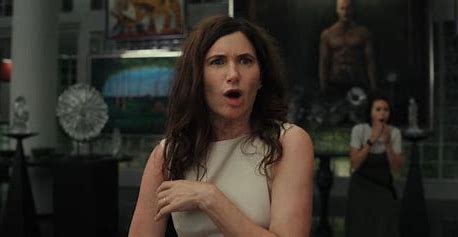
I am, perhaps, one of the biggest fans of Kathryn Hahn out there. Her versatility as an actress is amazing and to see her play this "white woman Governor of Connecticut running for Senate and trying to appear progressive" was perfect casting and plays so well to her strengths. She should just be in everything...I would be okay with that.


Kate Hudson also brings great energy as Birdie Jay, a former fashionista icon who always seems to say the wrong thing and is basically "cancelled"...like...what white woman in her right mind would try to compare herself to Harriet Tubman while on Oprah?

For the record, she meant in spirit...

Edward Norton gets to tackle Miles and I got to say, while it isn't some kind of remarkable performance in the sense of awards, Norton was the perfect choice for a character like this. Everything about his character is built on a lie and all he becomes is this smarmy man-child who oversells his worth for the sake of appearances. 

One of my favorite bits of the film is that every hour, the voice of Joseph Gordon-Leavitt proclaims "Dong!" to announce the time. These were composed by Phillip Glass...or as Miles calls him, "Phil".

Norton has always had a youthfulness about him, and I think that energy as playing a man who is beyond his real means works very well.

On a final note, do you need to have seen Knives Out before watching Glass Onion?

No, not at all.

I do think you should see Knives Out just because it is a lot of fun and very well done...but you could feasibly watch Glass Onion first and not feel lost as the only connection is Benoit Blanc. 

The film retains enough of what made Knives Out so effective and enjoyable while changing up enough of the formula to make it feel even more engaging at times. That isn't even going into the locale change considering we are in the midst of the Mediterranean and not the bleak cold Massachusetts countryside.

I am already looking forward to the third installment and the ensemble that Johnson will be able to assemble.

It would be fun if he could somehow extend these for films even beyond the amount of trilogy because these do seem to be films that many people, including me, seem to really enjoy and didn't know we needed.


RATING: ****1/2 out of *****


Saturday, December 24, 2022

Giving Some Love to UNDERRATED CHRISTMAS SONGS

 Yeah...I love Christmas...

Despite often being somewhat of a cynical and relatively pessimistic human being...or as I like to think of myself, a realist...I do tend to find a lot of joy in the holiday season.

Last year, I made a list of 10 of my favorite Christmas songs.

A link to that can be found below!

My Top 10 Favorite Christmas Songs

However, this year, I decided that I wanted to shine a little bit of starlight onto 10 Christmas songs that don't get the attention they deserve.

I usually start listening to my Holiday Playlists in November because they give me a lot of joy...and each year, I often find myself loving certain songs that never get the kind of airplay and notability that something like...say...a Mariah Carey tune off of her Merry Christmas album might get.

Though, to be fair, that is a pretty tall order to try to meet.

At any rate, I did want to single out 10 Christmas songs that I really love that don't have the iconic stamp of approval on them.

Some of these might still be considered fairly known to some, but I don't see them getting as many covers today. And lastly, these are in no particular order.

THE LIST! 

_______________________

Everyone's a Kid at Christmastime 

By Stevie Wonder

Coming from the Someday at Christmas album, "Everyone's a Kid at Christmastime" is one of two songs from the album (the other is coming up later on) that I have always loved that didn't get as much attention as the title track or "What Christmas Means to Me".

With a nice driving beat and a jubilant soulful tone, I have always preferred this one to "What Christmas Means to Me".

In the end though, it is Stevie Wonder. Everything he does is worth listening to.


_______________

Cold December Night

By Michael Bublé

Michael Bublé's Christmas album is one of the best-selling albums of the 21st century and he does tackle many classic songs on the album

However, one standout is his charming little diddy about finding love during the holidays. 

There is nothing but a warm fuzzy feeling I get when I hear the bells in the intro.

I feel the melody and the arrangement are what truly sell the song. I don't find it to be anything remarkable from a lyrical standpoint...but whatever, it all comes together nicely.


_________________

Caroling, Caroling

By Nat King Cole

As one of the songs featured on my top 10 list year, "Caroling, Caroling" may not be on the same level as the iconic "Christmas Song", but I can't deny that something about hearing that choral intro of "Ding, dong, ding, dong, Christmas bells are ringing!" always pulls me in.

It also doesn't hurt that Nat King Cole is one of my favorite singers of all time.

This is also one of those songs where I feel like no one really covered it and anytime I do hear it get any airplay, it is Cole's version.

I do recall it was sampled on one of Perry Como's Christmas albums but beyond that, it does seem to sort of rest solely within the legendary repertoire of Nat King Cole.

And I think that's okay.

_____________________

Christmas Island

By The Andrews Sisters & Bing Crosby

I remember "Christmas Island" as being one of the songs featured in the legendary Readers' Digest Merry Christmas Songbook...and it did seem to get many covers from artists in the mid-20th century. 

Even recently, Kristin Chenoweth covered it on her pretty solid holiday album.

Having said that, I do find a certain charm to the song and think it taps into that "Christmas in a tropical climate" motif that I am not normally into (and neither is Kevin Mccalister) and yet, I still get drawn to it...similar to "Mele Kalikimaka".

Although, as much as I like that song, I have always considered this one to be my favorite of the "tropical" holiday tunes.


_______________________

Christmas Day

By The Beach Boys

Speaking of tropical climates, The Beach Boys did release a Christmas album of their own but to be honest, I am not much of a fan of it.

The crazy thing about The Beach Boys as a group is that most of their music rested solely on the vocal and musical arrangements (which were mainly connected to Brian Wilson)...and as performers, they certainly lacked the charisma of their contemporaries like The Beatles or The Rolling Stones.

From their Christmas album, the song "Little Saint Nick" seems to have gotten more of the airplay and notoriety, but it is "Christmas Day" that I took to.

There is such a sweet innocence to it, and it is one of my favorite efforts by Wilson.

I also really love She & Him's cover, which made me rediscover the song a few years ago.


__________________

A Warm Little Home on a Hill

 By Stevie Wonder

As I mentioned earlier, we would be returning back to Stevie Wonder's Someday at Christmas album.

Perhaps even less familiar than "Everyone's a Kid at Christmastime", there is something almost transcendent about "A Warm Little Home on a Hill".

Perhaps it is a bit crazy to say, but something about the arrangement and the lyrics and the performance of Wonder just place me right into the cozy little world of the song.

It is a bit sweet and sentimental, but I just think it works really well...and I wish more people would give it credit.


________________________

Must Be Santa

By Mitch Miller

As a song that got a lot of attention when Bob Dylan covered it with a certain peppy glee that seemed a lot unlike him, I discovered "Must Be Santa" as a kid in Elementary School who had to sing it in my music class and then at my 2nd grade Christmas Assembly.

For several years after, I never heard anyone reference the song again until I randomly thought of it and wanted to look up its history.

That was when I discovered the joyous and very cheesy original rendition by Mitch Miller...completely drenched in its 60s choral glory.

Not the most in-depth song on this list, but it will always be a sentimental favorite of mine.

________________________

Jesus, Born on this Day

By Mariah Carey

I am not sure you can call any of the songs on Carey's Merry Christmas album anywhere near the definition of "underrated", but considering the legend that surrounds "All I Want for Christmas is You", I actually find "Jesus, Born on this Day" to have very wistful and beautiful quality that made it stand out to me even as a young kid when my mom would blare the album every Saturday morning during the holidays throughout the 90s.

I did take to "Jesus! Oh What a Wonderful Child!" as a kid because its "take me to church" finale spoke to me as someone who grew up in a fire and brimstone Pentecostal church...but this is one of those songs that when it comes on, I never end up skipping it.

It is also a beautiful vocal performance by Carey who is rather restrained and reserved by her standards.

______________________

The Magic of Christmas Day (God Bless Everyone)

By Celine Dion

Speaking of mother's blaring Christmas albums on Saturday mornings in the 90s, here comes Celine Dion. 

In the holiday season after a year of being prominent for singing a song from this film about young lovers on some ship that sank, Celine Dion released a Christmas album that my mother also adored.

A few of the songs really stood out to me at the time like "Don't Save it All for Christmas Day" and "Another Year Has Gone By" but perhaps the one that really got me was "The Magic of Christmas Day", which built up some of a legend as it was written by Dee Snider (best known as Twisted Sister) for his wife to perform.

Instead, Dion managed to make the song more famous...though it still isn't a song I think many address as being a classic.

__________________________

Underneath the Tree

By Kelly Clarkson

I really debated putting this one here as I feel like it is still so new, and it does get a fair amount of attention.

However, I am putting it here because I think it deserves to have some of the same fanfare that Mariah Carey gets...and, to be completely candid, I love this song more than I do "All I Want for Christmas is You".

I think "Underneath the Tree" manages to really capture the tone and feel of the Phil Spector "Wall of Sound" that you can hear on his legendary "A Christmas Gift for You" album.

Even though the album is (understandably) named after the track Wrapped in Red, I think this song is the easy stand-out...although the song "Winter Dreams" is quite charming, too.

And yes, Kelly Clarkson can sing all day long and I'll never tire of it!

__________________________

AND LASTLY:

For those who made it this far, I will just leave it at this -

I wish you all a very Merry Christmas & Happy Holidays & a Happy New Year!


Monday, December 19, 2022

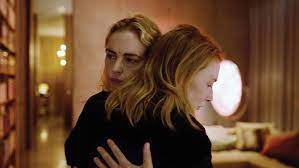
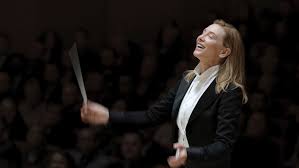
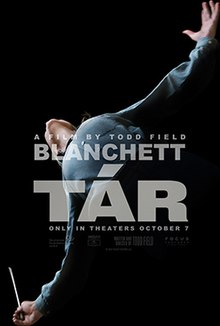
SOMEBODY'S GETTING CANCELLED - My Review of Todd Field's TAR: Starring Cate Blanchett

**I will discuss certain plot points of Tar, but I will make sure to include Spoiler Warnings when the time comes**


Not every filmmaker has a desire to churn out a new film every year...or every other year...or every five years. Terrence Malick had a gap of 20 years between Days of Heaven and The Thin Red Line...and Todd Field came close with his latest effort.

Todd Field's Tar is his first film in 16 years following Little Children...and even that film was his first in five years following In the Bedroom.

In the Bedroom got Best Picture, Screenplay, and acting bids while Little Children managed to get acting and screenplay nominations, so his small track record does show promise.

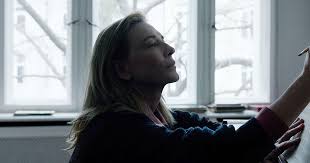
As of this review, Tar is on track to get a Best Picture nomination and its star, Cate Blanchett, is an early frontrunner to win what would be her 3rd Oscar, putting her in prestigious company with the likes of Meryl Streep and Ingrid Bergman.

When looking at a movie like Tar, the trailer left me immensely intrigued.

It showed enough to pull you in based on very stark images and a certain palpable intensity. All of the released plot descriptions talked about how this was a film that would show the downfall of a well-respected and world-renowned composer/conductor...but that was it...not much else was said otherwise.

A fictional character, Lydia Tar (Cate Blanchett) has basically had a staggering career that one could hope to achieve in her field. She is a member of the elite EGOT club, and she conducted with many prominent orchestras within the US such as Cleveland, Philadelphia, Boston, and New York.


She is now the first female conductor of the Berlin Philharmonic.

Using the method of a having her accomplishments listed via an interview intro by Adam Gopnik of The New Yorker, we know right out of the gate that this is a woman who has achieved great success...even if it does come across as a massive avalanche of exposition being thrown at us.

And now, as what she will consider the capstone of her career, she has announced that she will be conducting Mahler's 5th Symphony. 

We also meet two very key women who are a part of Lydia's life:

Her assistant Francesca, played by the lovely Naomie Merlant from Portrait of a Lady on Fire and Sharon (played by German actress Nina Hoss), who is a concertmaster who also just so happens to be Lydia's wife.


So yes, Lydia Tar is a lesbian...or as she calls herself, "a U-Haul Lesbian", which she brings up during a guest lecture at Julliard while she was in town for The New Yorker Festival.

The lecture seems to be going very well, but she seems to take a particular interest in Max, who identifies as "a BIPOC pangender". At first, they seem to have a sort of mutual admiration, but it slowly dissipates when Max has a rather negative opinion on composer Johann Sebastian Bach. While sitting on a piano bench with Lydia, Max's leg bounces up and down as a tic which is noticeable throughout the whole scene. Max's leg bounces as he proclaims he would never want to conduct any music written by white cis men who were said to be purely misogynist, like Bach. Before she says her retort, she 
slams her hand on his leg to get him to stop and proceeds to delicately belittle him. 


Despite Lydia being a member of the LGBTQ+ community...not to mention being a woman in a very prominent role...she doesn't seem to want to play into the idea of identity politics. This leads Max to call her a bitch and he leaves the lecture.

She calmly accosts him on the way out and proclaims: "If you want to dance the mass, you must serve the composer".

And that is a line that echos throughout the film, except Lydia might view it as certain people must serve try to serve the conductor.

Let's get into SPOILER TERRITORY now:

The film's treatment on the ideas of identity politics and cancel culture has made some people angry, with perhaps the most prominent example coming from, ironically enough, The New Yorker.

In his review from the magazine, Richard Brody deemed Tar as a regressive film. 

His main points were:

"It is a regressive film that takes a bitter aim at so-called cancel culture and lampoons so-called identity politics" while going on to accuse the film of "conservative button-pushing" that gives the film a truly dire aesthetic.

Lydia Tar does get "canceled" as it is discovered that she often used her clout to help women in exchange for sexual favors.

Things become truly tense when it is discovered that a young woman named Krista, who was trying so desperately to remain within Lydia's world, commits suicide and pens a damning note that basically incriminates Lydia in her heinous actions. 
 
Lydia asks Francesca to please delete any correspondence to show that Lydia may have had a questionable relationship or even much interaction in general with Krista.

In one scene, Lydia suspects that Francesca didn't do as she asked and ends up sneaking onto her email and finding that she never did.

From here, the movie descends into making sure Lydia Tar will be destroyed...or rather "canceled".

What about the accusations though? How much of this affects the film?

Well, I am going to turn to Richard Brody again for this: 

"The movie scoots rapidly by the accusations that she faces; it blurs the details, eliminates the narratives, merely sketches hearings, leaves crucial events offscreen, and offers a calculated measure of doubt, in order to present her accusers as unhinged and hysterical and the protesters gathered against her as frantic and goofy. Moreover, it depicts her as the victim of another attack, one that is based on blatant falsehoods, but that, in the wake of the other accusations, gains traction in the media."

Here is where I start to waffle on my own opinions...because unlike Brody, I am not necessarily sure that Lydia is presented as a victim. Although, I do agree that the film does sort of breeze by certain developments that I personally feel would've given a stronger structural core. 

Then again, this is also what can be so wonderful about film analysis/criticism. Brody sees the film as one way while I am not entirely sure I agree with all of his sentiments.

Do I think Lydia is portrayed as a victim?

This is where I am inclined to want to watch the movie again and try my best to overthink the opinions of others and take away what I feel the film is giving us.
 
My first inclination is, actually, no. I don't think she is a victim...but if the film makes me have an inkling of sympathy for her, it is simply because Cate Blanchett is just that compelling an actress.

As it stands though, I think some "cancel culture" IS problematic and can be rather conservative in its own subversive way...but despite the limited scope shown of the accusations towards Lydia, we seem to get that she used her clout to target women she wanted to sleep with. That's enough for me to make me view her as someone who has issues and deserves comeuppance.

And she gets that comeuppance.


Her wife Sharon leaves her and she takes their adopted daughter Petra with her. In one scene, we watch Lydia try to intervene to talk to Petra as she leaves school but Sharon rushes in to pull her away. She is cutting Lydia entirely out of their lives and Lydia begs "Please don't do this!"

However, I didn't view the moment as the film sympathizing with her. I think it was a case of me appreciating the layers that Blanchett was able to add to the scene...and if anything, I sort of liked watching this blow up in her face because Sharon was right in her own actions of feeling truly betrayed by Lydia.

Although, one moment of the film, which is presented as uncomfortably funny/awkward, might be my favorite acted moment of Blanchett's career.

Lydia opens the door to find the adult children of her neighbor who passed away...they are looking to sell her apartment. Lydia is still in despair from her life but does show remorse to them at first. They mention the loud music playing, which Lydia assumes they were complimenting, and she proceeds to shut the door. Instead, they stop her and ask if they can try to figure out the time frame of which she'd be playing music because they'd want potential clients to come when she is NOT playing music.

Lydia, with music being her life, is baffled. This is the only thing she has so she almost instantly starts to tear up while also mockingly laughing at the group at what is seemingly their poor taste. She just says "Oh, we wouldn't that!" while shutting the door in their faces. 

We then cut to a quiet shot of her apartment and then she suddenly appears scream singing while playing an accordion "Apartment for sale! Your mother is buried!" among other relatively inappropriate phrases.


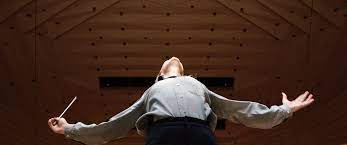
Blanchett is a master. While having a history with music such as playing the piano, she studying to learn how to conduct and the skills to make it convincing. Watching her conduct in this movie has the same sort of intensity similar to that watching Ed Harris paint in Pollock.

Her energy, even when it is at its most subtle, is rather ferocious. We do get those moments where the lion within in her comes out, such as when she attacks her former protégé Eliot (Mark Strong) as he prepares to conduct Mahler's symphony in her stead...or the previously mentioned scream singing of "Apartment for sale!". 


Blanchett manages to make this woman a truly compelling character and while she is someone I am sure I would never want to meet in reality, I was fascinated to watch her onscreen. 

Going back to the film itself...

At the end of the film, we see that Lydia has managed to find a way to maintain working but perhaps not in the most glamorous of locales. She is now conducting the score for a video game in front of an entire auditorium filled with cosplayers. 

People have debated what exactly Todd Field was trying to go for here...especially considering the name of the video game is Monster Hunter.

Some feel that the message is saying that perhaps the idea of "hunting" down and cancelling famous people is just as horrible an act in its own right...as if we are depriving society of a great artist.

Some have viewed it as just an ironic way to show that Lydia has fallen and the heroic act of the people who brought her down puts her right in line with the monster within the game.

I was more inclined to view it with the latter...but then again, I think I want to view the movie a second time.

If I were to watch it again and have a different opinion, I will follow up for sure.

As it stands, my immediate reaction to the film was positive though not as rapturous as some. I do agree with Richard Brody that the film does gloss over details that could've made the "incriminating accusations" portion have more weight...but beyond that, I do get the sense that I need more time to ruminate. I just wanted to get some thoughts out there first.

If anything though, see the film for Blanchett. She is worth the effort!

RATING: ****/*****


SO...I Am Officially a YouTuber! (AND A POSSIBLE FAREWELL TO THE BLOG)

It has been a long time coming, but I have finally started the YouTube channel I kept wanting to create for the last several years! The chan...