Monday, August 7, 2023

"ACTING!" - 20 Amazing Performances from the 1990s

I feel like a lot of my blog is devoted to film as of late...and usually, I will discuss fantastic performances within those films whether I am doing a top 10 list or just a straight up review for a film that has come out.

I decided it might be fun to do something similar with performances.

My plan is to go decade-by-decade and choose 20 performances that I find to be the best (or among the best) of that respective decade.

However, for this journey, I am giving myself some caveats that I will try my best to follow.

Caveat #1 - The lists will not contain any performances that won an Oscar during that decade.

Caveat #2 - I will try to limit the number of performances on the list that got an Oscar nomination.

I decided to start with the 90s first.


While compiling this list, I realized that it actually wasn't that hard to avoid Oscar winning performances. Aside from a small handful, a lot of them were nowhere near worthy enough to make this list...but I did end up slightly breaking another caveat I hoped to have.

My limit that I hoped to not go over in terms of discussing nominated performances was 5, but I ended up acknowledging 7. So, for future posts, I will try to keep that tally between 5-7...or maybe even lower if it comes down to it.

Will I break the rule and actually acknowledge a winning performance down the line?

It is possible. There are some performances where I might just find them too undeniable to ignore, but for this list, I am sticking to my rule...or maybe I will list 5 "Honorable Mentions" that are Oscar-winning performances that I felt truly were worthy of being considered "among the best".

I think I have established my tentative ground rules, so I shall start this list with one of the 7 people that managed to be the bridesmaid of their Oscar category.

I will go ahead and name five Oscar winners from this decade that I loved...but keep in mind, there are still a couple missing from the list that I do love.

FIVE DESERVING OSCAR WINNING PERFORMANCES:

Kathy Bates, MISERY

Jeremy Irons, REVERSAL OF FORTUNE

Jodie Foster, THE SILENCE OF THE LAMBS

Emma Thompson, HOWARDS END

Kevin Spacey, THE USUAL SUSPECTS

=================================

THE LIST:

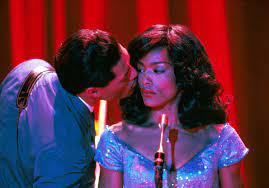
Angela Bassett

WHAT'S LOVE GOT TO DO WITH IT? (1993)


One of the more infamous Oscar losses of the last 40 years, Angela Bassett's performance as Tina Turner in What's Love Got to Do With It? is one of the best.

If we want to talk strictly musical biopics, she may even top that list too. I would put her up there with Sissy Spacek in Coal's Miner Daughter as a great template for a successful musical biopic performance.

The passion, the fire, the intensity...she matches all that Tina Turner gave on the stage, and she also works extremely well with Laurence Fishburne, who gets the daunting task of playing the infamous Ike Turner. 

Angela Bassett managed to get her second Oscar nomination for Black Panther: Wakanda Forever and it seemed early on in awards season that the momentum was moving in such a way that she would perhaps get an Oscar that eluded her 30 years prior.

A lot was said about how the Academy wouldn't want to honor a Marvel Cinematic Universe performance, especially when it didn't get a BP nomination.

BUT - if they were so eager to reward an actress with an Oscar that could also serve as an overdue win, Bassett was a far more palatable choice than Jamie Lee Curtis...and I say that as someone who actually didn't think that little of Curtis. 

Bassett is an actress of such strength and power that whenever I see her, I can't help but be enthralled. She may be getting an Honorary Oscar this year, but it still feels like a cop-out...as sometimes those awards often do. I hope that she will get the chance to win one for real someday. Hell, when they gave Paul Newman an Honorary Oscar, he couldn't accept it because he was on set for The Color of Money...and then he ended up winning for that film the very next year.

Someone should give Bassett a role of Tina Turner caliber again because she deserves to always be "the best".

_____________________________

Juliette Binoche

THREE COLOURS: BLUE (1993)


Juliette Binoche would go on to win an Oscar for her work in The English Patient, which was actually a very strong performance despite my relative disdain for the film. She would get an Oscar nomination four years later in the rather paltry Chocolat, one of the more questionable Best Picture nominees that was clearly a major campaign push by Harvey Weinstein/Miramax. 

Binoche's best work was part of the highly beloved Three Colours trilogy directed by the late Polish filmmaker Krysztof Kieslowski. 

The first of the films was Blue, which tells the story of Julie, a woman who is grieving the loss of her composer husband and young daughter in a tragic car accident...and on top of that, her mother suffers from Alzheimer's and is at a point where she can't even recognize her own daughter.

We've seen many people grieve on film before. In recent years, Toni Collette's volatile grieving of her young daughter in Hereditary was absolutely unsettling; Hidetoshi Nishijima's diving into the world of Chekhov while coping with the sudden death of his wife in Drive My Car felt like a masterclass in how to cope via art.

I also felt like Nishijima's work came very close to matching a similar level with Binoche. 

Binoche is all about boiling restraint. She doesn't want to talk about this grief with anybody; all she wants to do is shut herself off from the world and to live completely in relative silence. She attempts suicide, but can't even swallow the pills; she hits her knuckles against the wall and tastes the blood on her hands...

However, she manages to make a connection with an old friend Oliver (Benoit Regent) who might be able to help get her to move on...and despite being haunted by musical excerpts that were composed by her husband, it is these excerpts that eventually allow her to continue her journey to heal as she and Oliver work together to complete the composition. Although, to add to her anguish, she finds out that her late husband was having an affair with a woman named Sandrine who is pregnant with his child. Julie offers her their family home which she had planned to sell but never got a buyer.

When the film does come to an end, we get to see Binoche's Julie at some semblance of peace; she cries but gives us a glimmer of a smile.

The pain will, undoubtedly, always be there but she has accepted that life should go on for her. 

A truly important masterclass on being able to portray grief in its darkest moments.

____________________________

Vincent Cassel

LA HAINE (1995)


Shot in black & white and feeling very spontaneous and sporadic in its approach, La Haine feels like the 90s continuation for the French New Wave era that was prominent in the late 50s through the early 70s led by the likes of Francois Truffaut, Eric Rohmer, Jacques Demy, and a few others.

And much like the 90s, everything takes a darker edge.

La Haine translates to "hate" or "hatred". 

Set in the Paris suburb of Chanteloup-les-Vignes, La Haine begins with a news montage about a riot that occurred in which an immigrant named Abdel is severely injured by the police and is now in intensive care under police custody.

Abdel's three friends include Vinz (Vincent Cassel), Hubert (an Afro-French boxer), and Said (a North African Muslim). We watch these three interact throughout the day following the riot and how they are coping with their friend facing potential death at the hands of the police.

Cassel as Vinz is a volatile marvel.

Vinz is extremely aggressive and holds absolute hatred for the police. When the original riot escalated following Abdul's grave injury, a policeman's revolver goes missing...and when Vinz discovers it, he intends to use the revolver on a police officer if Abdul dies. 

Vinz seems to want to emulate Travis Bickle in Taxi Driver... even down to mimicking the character's famous "You talkin' to me?" scene in French while staring down into a mirror...except while Travis Bickle never quite got to a volcanic level of intensity, Cassel seems about ready to explode with rage at nearly every moment. 

Cassel works so well with his two co-stars, played by Hubert Kounde and Said Taghmaoui (same as their characters' first names) ...and it is their amazing chemistry and ability to make this friendship seem so natural that is a true testament to their skills and that of writer/director Matthieu Kassovitz.

Cassel has gone on to have a very respectable career, but the aggression and volatility and grit that he displays as Vinz is certainly unmatched. There is an unsettling quality to him, but despite how I might share a certain sentiment that the police are certainly highly problematic, there is still a truth to the line that Hubert speaks to him which a direct reference to the title of the film: "La haine attire la haine" - or "Hatred breeds hatred".

A truly powerful film with a powerful performance by Cassel.

_____________________________

Leslie Cheung

FAREWELL MY CONCUBINE (1993)


I just very recently discussed Leslie Cheung when I featured Farewell My Concubine on my Anniversary Retrospective list for the Best Films of 1993. 

Cheung committed suicide in 2003 and he left behind a truly magnificent body of work...but the weight of that loss makes re-watching this film and performance all the more brutal.

Leslie Cheung plays Dieyi, a man who had been abandoned at a very young age by his prostitute mother with a theatre troupe. With his friend Xiaolou (Zhang Fengyi), they develop an act called "Farewell My Concubine" which is performed in drag...which is particularly fitting for Dieyi as his appearance makes him seem almost androgynous. When Xiaolou ends up marrying a lady named Juxian (Gong Li), it sends Dieyi down a jealous spiral that will end in the breakup over their theatre partnership. 

A review on Letterboxd described Cheung in this film as being a pendulum...which is perhaps one of the more apt comparisons I can think of. At one moment, he is beaming with a smile that can light up the world and the next he is so despondent that you practically sink down to that level with him. 
This is a truly devastating and beautiful performance that anchors a film that is equally as devastating and beautiful.

Very few performances have tread the line of beauty and anguish and volatility quite like this one.

______________________________

Toni Collette

MURIEL'S WEDDING (1994)


I say the phrase all the time: awards don't mean everything. 

And trust me, I fully believe that, even though I often devote posts to the whole shebang that is movie award season.

Nothing proves that saying to be more true than the fact that Toni Collette has only one Oscar nomination to her name. She infamously got snubbed for Hereditary back in 2019 and many attributed that to the horror bias that frequently seems to occur during award. Ironically though, her sole Oscar nomination happened to be for another horror film, The Sixth Sense...and even then, it was sort of a surprise nomination (though richly deserved).

5 years prior to The Sixth Sense, Collette burst onto the scene with her comedic work in Muriel's Wedding, which she did in her native Australia.

While watching Collette act as Muriel, you marvel at how she navigates such a truly bizarre and quirky character...but it is even more apparent how versatile she is as a performer when you take her performance in this and put it next to her work in The Sixth Sense or Hereditary or Knives Out or Little Miss Sunshine.

Or her fantastic work on television projects like The United States of Tara or Unbelievable.

The basic setup of the film is Muriel Heslop is a socially awkward girl who dreams of having a glamorous wedding and being able to leave her backwoods town of Porpoise Spit and move to Sydney.

With a score of ABBA tunes to lead the way, Collette is simply radiant here...and, not surprisingly, many reviews from the time made it a point to state that Collette herself was "svelte" and that she put on 40lbs to play the role.

While this does work for the character, I do think there is far more to this performance than the fact she "trasnformed herself" which is one of those other cliché phrases you hear when people talk about Oscar nominee contenders.

Muriel's Wedding works so well because this was a truly tricky character that only an actress of Collette's level could pull off. There is a reason to many credit her as being key to starting the true surge of Australian talent becoming more prominent on the worldwide entertainment arena. 

________________________________


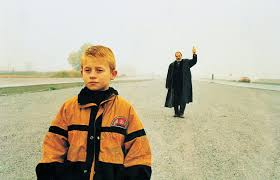
Taste of Cherry is a film by Iranian filmmaker Abbas Kiarostami. He is one of those filmmakers that is often beloved in artsy film circles, but isn't very well known outside of those circles. His passing in 2016 seemed to begin a bit of a resurgence of his work and it was thrilling to see a spike of 4-5 star reviews for many of his films on Letterboxd.
He has directed upwards of 50 films and out of the dozen or so that I have seen, they all range from very good to masterpieces. Taste of Cherry lands closer to "masterpiece" level for me...and aside from the truly compelling and bleak plotting that is so perfectly crated by Kiarostami, the film works very well due to the performance of Homayoun Ershadi.

Ershadi plays Mr. Badii, a man who basically fed up with his life and has decided to end it...but the catch is that he wants someone to be able to bury his body. This sends him on a bit of an odyssey where he meets various people he tries to recruit for the gruesome task, but it is a man by the name of Mr. Bagheri (Abdolrahman Bagheri, in what would be his only credited film appearance) that agrees to take on the job in order to use the money for his sick child.

Although Mr. Bagheri strongly encourages that Mr. Badii not commit suicide and tries to find ways to get him to embrace life again.

Here is the twist: Kiarostami loved casting non-actors in his work, feeling that they could provide a natural take on their emotions without trying to force any kind of blatant emoting. This was Ershadi's first film as he had been working as architect. Kirarostami actually found him while he was sitting in traffic in Tehran. His work in the film would prove to be such a success that he has gone on to act in many films, including The Kite Runner and Zero Dark Thirty.

Ershadi's weariness is palpable...but it makes you wish you could help him find peace. So much of this film is shot with long static scenes that rely strictly on Ershadi to carry them...and the results did polarize some at the time. The film managed to win the prestigious Palme d'Or at the Cannes Film Festival, but also bored some prominent critics to tears...including Roger Ebert, who gave the film 1 star out of four.

It isn't necessarily an easy watch, but it is a very rewarding watch. Kiarostami's instincts were razor sharp and I think the reason that it does work so well is how much the naturalistic tendencies of Ershadi make it so feel alarmingly real.

____________________________

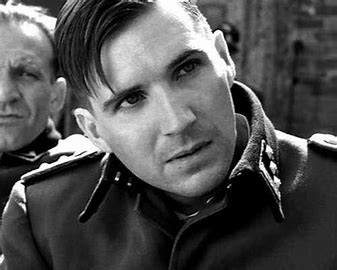
Ralph Fiennes

SCHINDLER'S LIST (1993)


Actors have been known to get typecast after playing villainous roles. Very prime example of this include Anthony Perkins as Norman Bates in Psycho or Louise Fletcher's Nurse Ratched in One Flew Over the Cuckoo's Nest.

In 1993, Ralph Fiennes burst onto the scene as the truly vile Nazi Amon Goeth in Schindler's List and considering he was playing A NAZI, it is remarkable that he was able to overcome playing such a vile human being.

In truth, there is something so appealing about Fiennes as an actor...and there is no denying that his charisma levels are off the charts. You watch this performance and know that you are witnessing a truly stellar actor. You hate him, but you get swept up in the allure of him sort of in the same way Oskar Schindler does.

I think this is probably one of the more "seen" performances on this list, so I will refrain from saying too much but I do want to state this.

Fiennes losing the Oscar for this role was an absolute joke. For reference, he lost to Tommy Lee Jones for The Fugitive which also happened to be another Best Picture nominee that year. Off the top of my head, I think this loss (along with Angela Lansbury's for The Manchurian Candidate) is among the most the worst in Oscar history. Still though, the performance endures despite the lack of an awards win.

______________________________

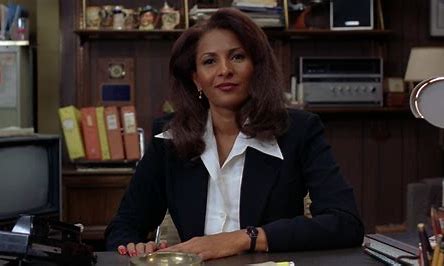
Pam Grier

JACKIE BROWN (1997)


 I have grown to be rather indifferent to sort of frustrated with Quentin Tarantino's work in recent years...but if there is one thing I can commend him on, it his championing of performers who may not quite be in the limelight like they used to be.

In the case of Pam Grier, she was mostly known for her work in the blaxploitation films of the 70s such as Foxy Brown and just a few years prior, she was doing a guest stint on Knots Landing playing a detective opposite Herb Edelman (most known for being Stan on The Golden Girls) and they gave him the bulk of the work in their scenes.

Grier in this film is one of the best comebacks I have ever seen from an actor...and certainly the best in a Tarantino film (because I will never say that Travolta was that amazing in Pulp Fiction).

Grier certainly had an outside shot at an Oscar nod for this performance, but she still missed out...and it is a snub that stings today.

It simply proved that Hollywood was consistently dropping the ball by not hiring actresses like Grier and even after this film, she never quite managed to reach the same kind of roles or acclaim again.

_____________________________

Anthony Hopkins

THE REMAINS OF THE DAY (1993)


When you hear the name "Anthony Hopkins", your mind probably goes straight to Hannibal Lecter. There is no denying that Hopkins' performance as Lecter is iconic, but for my money, his finest performance...at least maybe until 2020's The Father...was as butler James Stevens in the Merchant/Ivory adaptation of Kazuo Ishiguro's novel The Remains of the Day.

With Hopkins' work in this film, it is the perfect time to discuss the art of "subtle acting".

I feel like whenever I visit film message boards, there are often debates year after year over performances that aren't worthy of recognition because the actor did nothing. 

Just this past year, Kerry Condon got a lot of flak for that for her work in The Banshees of Inisherin. Recent winner Regina King was another key example for If Beale Street Could Talk. 

The stereotype of an award-winning performance is usually that of someone transforming into someone they aren't for a biopic or perhaps they just scream/yell/cry a lot and perhaps they throw some plates around.

However, there is a fine line to being able to see the brilliance of a performance where the actor doesn't have to try too hard at all.

The year prior, Hopkins' co-star Emma Thompson swept most of the Best Actress races for her work in Howards End, a performance that was far more subtle than a lot of performances that tend to win acting Oscars. 

I think what Hopkins achieves here is extraordinary. James is a man with repressed emotions and struggling deeply with his affections for Thompson's Miss Kenton. The genius of this performance is that we could just be watching a man showing no emotion at all...or he could be weeping whenever he has a moment to himself. Here, we are watching a man hold everything in and we can clearly see the struggle. It is enough of a success that it may pass off to some of the people around him who aren't as astute on the situation, but we can clearly see the pain and love he feels for her.

I don't want to go for the hyperbolic statement, so I will leave it as this being one of the best examples that you can find on how to navigate a subtle performance.

___________________________

Anjelica Huston

THE GRIFTERS (1990)

When I think about Anjelica Huston, my mind goes straight to Morticia Addams.

I am a semi-elder millennial, so I don't think you can really blame me for having that be my main starting point. The Addams Family was my introduction to Huston and, if I may say so, I think she was truly iconic as Morticia.

What might not be known amongst those from my generation is that Huston was actually such a sought after and highly praised/beloved character actress in the late 80s/90s. After having her official breakout role in Prizzi's Honor, which netted her an Oscar and officially removed her from strictly being known by many as Jack Nicholson's Plus One, Huston had a great streak of work in the 80s from The Dead up to Enemies: A Love Story.

The finest performance of her career is likely to be that of Lilly Dillon in The Grifters.

The role was originally written for and offered to Cher, but due to the film's minimal budget, Cher was too expensive as she had just won the Oscar for Moonstruck.

Huston originally felt the film was too violent despite the fact the story greatly intrigued her. Her character was to have a scene where she is severely beaten with a sack of oranges (which got cut/toned down considerably in the final film) and the process of filming it was so brutal for her, that she ran away from the set after and spent the night throwing up.

Huston gives herself over to this role in a way that is truly unrelenting...and she works extremely well with John Cusack and particularly with Annette Bening, who is so fantastic in the film in her own right that I almost put her on this list.

Huston was actually considered to be the likely frontrunner for the Oscar but lost to Kathy Bates in Misery. Honestly, I would've been happy either way because while Huston was truly powerful as Lily, you can't deny that Bates managed to walk a tightrope with such a manically ridiculous villainous role.

____________________________

Nicole Kidman

TO DIE FOR (1995)
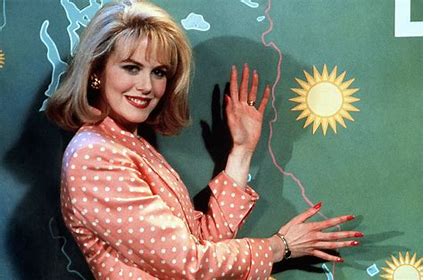

To think that even after this performance, it still took a few years (mainly the divorce from Tom Cruise) for people to truly take notice and appreciate the talent of Nicole Kidman.

Kidman did gain a lot of attention for her work as Suzanne in To Die For, including some critic award wins and even the Comedy/Musical Golden Globe for Best Actress...but in the end, she missed out on an Oscar nomination.

I still might consider To Die For to be Kidman's finest work. It is darkly comedic, chilling, and truly compelling...and it showed that this actress was more than just Tom Cruise's Plus One. 

Kidman plays Suzanne Stone-Maretto, a woman who has always dreamed of being a broadcast journalist along the lines of Barbara Walters or Jane Pauley. 

When she marries Larry Maretto (Matt Dillon), she is eventually coerced by him to give up her dreams and to basically become subservient and help out at his family's restaurant.

As this is happening, Suzanne has gotten involved in her small-town local news station called WWEN as an assistant but plans to work her way up the ranks. One such manner is producing a documentary called "Teens Speak Out" about the problems that teenagers are facing. She manages to recruit Jimmy (Joaquin Phoenix), Russell (Casey Affleck), and Lydia (Allison Folland) ...but when Larry insists that she give up her dream, she seduces Jimmy and promises him a relationship only if he will kill Larry.

This is one of those rare performances where you can't exactly say that there are many, if any, emotional layers to the character. Often times, those can be less compelling to watch.

With Kidman as Suzanne, it is a masterclass. You sort of marvel in watching her find ways to achieve her dreams, but as soon as she starts to delve into the more sinister side, you eagerly wait for her to receive her comeuppance...which she eventually does after Jimmy and Russell's lives are destroyed. 

When you look at the darkly comedic and sinister performances from recently like Rosamund Pike in I Care a Lot or Carey Mulligan in Promising Young Woman (although that was more in a heroic tone), I think they all have elements that can be traced back to Kidman in To Die For.

She is truly wicked and absolutely cold....and yet somehow a delight.

___________________________

Sheryl Lee

TWIN PEAKS: FIRE WALK WITH ME (1992)


An actress who truly deserved a better career, Sheryl Lee managed to strike pay dirt early on when at the age of 22, David Lynch saw her headshot and felt she was the right choice to play a dead girl.

Since the upcoming Twin Peaks television series didn't exactly have a large budget, it seemed logical to just cast a local actress in the Seattle area to play her. Lynch's instincts were correct, because even as a dead girl via flashbacks and photographs, Lee possessed a truly captivating quality.

This quality was so strong that Lynch ended up creating a brunette lookalike character for Sheryl Lee to play on the series...sort of as an homage to Vertigo or even the identical cousin motif of The Patty Duke Show. 

Eventually, Lynch had Lee's new character Maddy be killed off in the scene that would reveal to the audience who the real killer of Laura Palmer was.  

Lee's performance during the murder is chilling and for an episode of television airing in 1990 on ABC of all channels, it still holds up as being pretty intense even today.

Twin Peaks as a series floundered fast, but Lynch wasn't done with it. He wanted to delve more into the final days of Laura Palmer's life because if there is one thing Lynch loves in his work, it is a woman with deep, dark mysteries leading a troubled life.

Twin Peaks: Fire Walk With Me flopped hardcore when it was released in 1992. A lot of this was due to waning public interest of the show and anger on behalf of those from the show who felt the movie was too dark and grim and strayed too much from certain key elements of what was on the actual show.

I will be honest.

When I first saw the film, I didn't like it. Even to this day, I still think the film does ignore key elements that would be very important on the show (such as Laura's relationship with Ben Horne) …but Lynch left hours of film on the cutting room floor. In the end, this was a film about Laura Palmer.

Even beyond that, this is a truly horrific and brutal look at sexual abuse.

*If you haven't seen TWIN PEAKS, I am about to talk about the killer of Laura Palmer so SPOILER WARNING*

Laura Palmer was killed by her father Leland, who also killed her lookalike cousin Maddy...but the twist is that Leland was possessed by a demonic entity known as Bob. This killing was proceeded by a lot of mental, emotional, and physical abuse.

 If we lay the issue bare, Laura Palmer has been getting raped by her father (granted, against his will) since she was 12 years old...and that dark descent leads to us watching her get stabbed to death in a darkened train car in the middle of the Washington wilderness. 

*END OF SPOILERS*

And yet...despite the bleakness...it seems at the end that Laura is finally at peace in The Red Room, with Kyle MacLachlan's Agent Cooper there to comfort her.

Sheryl Lee gives such a tortured and no-holds-barred performance here. She can scream like very few actresses can and her looks of anguish and fear could even be somewhat comparable to those of...dare I say it...Renee Maria Falconetti in The Passion of Joan of Arc. 

Sheryl Lee was robbed of an Oscar nomination and would've been worthy to win here. It is simply a devastating performance...and I also want to give a shout out to Ray Wise, who played her father Leland. He deserved to be in the Supporting Actor race.

_____________________________

Tony Leung Chiu-wai

HAPPY TOGETHER (1997)


Now we get to delve into the world of Wong Kar-wai, a filmmaker whom I adore very much.

While Happy Together isn't what I would consider his best film, it is still quite wonderful and it contains two lovely performances as its centerpiece. One of these is the previously mentioned Leslie Cheung but the other is Tony Leung Chiu-wai.

Leung is part of one of those iconic actor/director duos that have become legendary: Scorsese/DeNiro (or even DiCaprio), Bergman/Ullman, Kurosawa/Mifune.

Wong Kar-wai/Leung might be my favorite pairing of more recent collaborations.

While this may not be my favorite of Wong's works, I do feel like Leung is truly exquisite here...and he is in great hands not just with Wong, but with his co-star Leslie Cheung.

The two play a gay couple, Cheung is Po-Wing and Leung is Yiu-Fai. Their relationship is one that certainly may seem like a negative stereotype within the gay community: tumultous...one filled with many separations and reconciliations.

Keep in mind, this is the 1990s...and this was a film facing censorship throughout parts of Asia due to its depictions of homosexuality.

Cheung had already been there to a degree, but Leung was a star on the rise...and despite being a straight man, he did not give a damn about how others perceived him. He takes on this role with such dignity and grace...and it does help that he gets to play the more sympathetic of the two.

While Cheung's Po-Wing is out philandering and playing the field, Leung's Yiu-Fai is more vulnerable and can't help but find himself eager to seek Po-wing's affections.

We do feel a sense of joy, despite the bitter journey, at the end with Yiu-Fai is finally able to move on. This is a truly beautiful and sensitive performance that is a beacon for LGBTQ cinema. 

____________________________

Susanne Lothar

FUNNY GAMES (1997)


When you hear the title Funny Games, you might suspect that you are in for a comedic film that could range from a family friendly affair or an R-rated Judd Apatow romp.

Once you realize it is written and directed by Austrian filmmaker Michael Haneke, then you may say...what exactly are these games and who are they going to be funny for?

Funny Games is a brilliant but incredibly dark film that understandably has its detractors.

French film director/critic Jacques Rivette said the film was "vile" and "a disgrace"; when it premiered at the 1997 Cannes Film Festival, a third of the audience walked out on the film before its ending.

A film in which an innocent family is pretty much tortured by two young men simply because they find it fun sounds rather heartless and rather disturbing to say the least.

What makes Funny Games work so well is how Haneke uses audience expectation for slasher/horror films to his advantage. He punctuates the tension with fourth-wall camera breaks and at one point, even has one of the young men (Paul) rewind the events of the film so that he and his friend (Peter) can return to gaining the upper hand.

The husband and wife are played by late actors Susanne Lothar and Ulrich Muhe, who fell in love and got married after making the film and sadly died five years apart from each other in 2007 and 2012 respectively.

Both are fantastic here, but is Lothar who really shines as she is truly put through the emotional ringer only for it all to amount to nothing for her.

We have seen many horror performances over the years that manage to succeed on a level that is far better than any esteemed critics might give them credit for, but Lothar is so realistic in her anguish here that I truly felt as uncomfortable as one should while watching a film about such a topic.

Lothar also gets to be our "final girl" of the film...but even then, she is unlike most final girls we get to see. This is someone who is so distraught and devastated and tormented that I very rarely ever feel like I am watching someone actually hit that level of realism in a horror film. 

While this is a film that does flirt with extremely dark comedic elements and format breaks, Lothar manages to come across like we are watching the slow death of someone real right before our eyes.

Truly unsettling.

___________________________

William H. Macy

FARGO (1996)


Very few characters/performances in film history have stirred me up in quite the way that William H. Macy did as Jerry Lundegaard in The Coen Brothers' masterpiece Fargo.

Despite his placement in the Supporting Actor category that year, Macy is clearly the film's lead and truly drives a lot of the plot and sets it into motion...but that is basically irrelevant here. 

Fargo, which was technically a work of fiction despite the film claiming it was based on an actual 1987 crime, tells the story of Jerry, a wimpy car salesman who is employed by his own father-in-law Wade. Looking to pay off debts, he ends up hiring two henchmen who agree to kidnap Jerry's own wife so that her father Wade would pay them a ransom, which would then be split amongst the three men.

From there, the plan gradually unravels and once local sheriff Marge Gunderson (Frances McDormand in her first Oscar winning role) gets on his trail, it is only a matter of time before his plans are foiled. 

Jerry Lundegaard is a despicable character, but also INCREDIBLY pathetic. You almost pity him in how inept he is at basically functioning as an adult...but it is clear why Macy fought so hard to play this role.

This is easily one of the best casting decisions I have ever seen. You often hear the phrase "I can't imagine anyone playing that role" thrown around so often that it has become cheap. In the case of Macy, I think I might go as far to say he was the best, and perhaps, only choice. 

Considering you have qualities like being pathetic, despicable, slimy...it becomes remarkable how Macy truly does make you pity this man. I think a lot of that comes from Macy's own likable quality. It is simply a prime example of a performance that is being staged on a tightrope.

In the end, when he is finally tracked down to a cheap roadside motel completely forgetting that he even checked in under an alias, you feel both gleeful and uncomfortable at watching this man in his boxers getting arrested. He gives off such a pitiful air that even the police quickly put their guns back in their holsters because they know this man isn't a threat. 

When it all comes to a close, Jerry's actions have caused the death of his wife, the death of his father-in-law, two innocent civilians, and also Carl (Steve Buscemi), one of the henchmen he hired who famously gets fed through a woodchipper. 

And left behind is a teenaged son who will have to live with that anguish. It is a truly bleak story and through it all, Macy anchors it with such a slimy chipper energy that is so fascinating. You could argue it is as if Ned Flanders moved to Minnesota, started a new life, and went down a darker path.

____________________________

Fernanda Montenegro

CENTRAL STATION (1998)


If someone was going to win for a role in an Elizabethan-era film, it should've been Cate Blanchett and not Gwyneth Paltrow...but Montenegro bested everyone that year.

The 1999 Academy Awards live on in infamy as the year that Harvey Weinstein basically bought the Best Picture award for Shakespeare in Love and affectively swept up Gwyneth Paltrow along for the ride...not to mention winning Best Actor for Roberto Benigni in Life is Beautiful.

These two wins are so maligned that performers like Ian McKellan and Nick Nolte blatantly talked about how they felt insulted to lose to Benigni while Glenn Close recently said in an interview how it was truly a joke that Montenegro lost to Paltrow (even though she didn't mention either by name).

As a film, I absolutely love Central Station. So much so, that I even selected it as being my #10 film on *Best Films of the 90s* list...but a lot of that is due to Montenegro.

She is known as the "Grande Dame" of the Brazilian stage and screen...sort of like how we revere Meryl Streep here or Isabelle Huppert is revered in France...and while my knowledge of her filmography is not as vast as it should be...quick shout out to her 1981 film They Don't Wear Black Tie...I do feel like this is one of those performances that is strong enough to easily make the case that we are witnessing a true master at work.

Montenegro plays Dora, an embittered retired school teacher who makes a living writing letters for the illiterate at Rio's Central Station. She holds a lot of contempt for her clients to the point where she won't even mail out any of their letters after she completes writing them.

One of her clients is a mother of a 9 year old boy named Josue, and when the mother is killed in an accident right outside of the station, Dora ends up taking in Josue despite her reluctance.

It is a tale as old as time: young child causes cranky old person to gain some empathy.

Writer/director Walter Salles knows what it takes to make this story feel fresh and not overly sentimental...and it takes someone like Montenegro to be able to navigate such a tricky plot. We dislike her when we need to dislike her but her journey is believable. We can watch her open up herself to others, but we can also believe when she knows she isn't good enough or worthy to be around Josue. 

Montenegro, much like Glenn Close said, was also rather upset she lost that night. I don't consider it cocky in the slightest, because Montenegro is the real deal.

___________________________

Julianne Moore

SAFE (1995)


In 1995, Todd Haynes was still very new to the indie cinema scene. He had done 1991's Poison, which was one of the earliest entries in the New Queer Cinema movement along with the infamous Superstar: The Karen Carpenter Story, which tells the late singer's life via Barbie dolls.

Julianne Moore was still not quite a household name. She was an Emmy Award winner for her work on the daytime soap As the World Turns and had supporting roles in movies like The Hand That Rocks the Cradle, Short Cuts, and Vanya on 42nd Street. 

Safe gave Julianne Moore her first leading role and also her partnership with Todd Haynes, which would continue with films like Far from Heaven, Wonderstruck, and May/December (coming out in late 2023).

When I first came across Safe, I amusingly thought the idea of a woman being afflicted by an environmental illness sounded a lot like the 1981 Joel Schumacher film The Incredible Shrinking Woman starring Lily Tomlin which...let me step to that for a second...is a truly bizarre movie and such a unique experience that I don't know how I truly feel about it.

Safe is, without a doubt, a more horrific and bleak take on the matter...not to mention incredibly different...no height shrinking occurring here!

Julianne Moore plays Carol White, a housewife living in suburban Los Angeles. She has her routines: gardening and aerobics in particular but her family life doesn't seem overly thrilling and her friends don't feel overly close.

While her home gets renovated, Carol begins to develop a sensitivity to pretty much everything around her whether it be exhaust fumes from a car, getting a nosebleed while getting her hair done, and passing out when she is near sprayed pesticides at a dry cleaners.

Safe is one of those landmark indie films that managed to get a lot of buzz in those circles at the time, but built up a stronger reputation as the years passed.

Julianne Moore's take on Carol feels like a Jeanne Dielman of the 90s...but placed in almost Contagion like world where she just slowly crumbles to this environmental disease (almost very auto-immune) and no one can help her...or even truly seem to want to help her.

The legend of Julianne Moore truly begins with this performance...one that you watch with horror as she tries to cope with an illness that no understands or wants to acknowledge.

Safe is often compared to the Reagan era and for his administration's lack of care and acknowledgment of the AIDS epidemic...and in light of COVID in recent years, I do feel the film deserves to be seen by more people just in how it deals with the response to an unknown disease.

And through it all is Julianne Moore, wasting away tragically before our eyes.

____________________________

Michel Piccoli

LA BELLE NOISEUSE (1991)


We recently lost Piccoli in 2020 at the age of 94...and while his name may not get mentioned as frequently as other French performers like Jean-Louis Trintignant or Gerard Depardieu, Piccoli deserves to be known as a legend of cinema.

Piccoli had worked with the legendary Jean-Luc Godard but was a frequent performer in the works of Luis Bunuel, particularly one of his more famous works: The Discreet Charm of the Bourgeoise. 

By the time La Belle Noiseuse came acround, Piccoli was already a well-established and beloved actor in France...and he still managed to give us one of his finest performances.

He plays Edouard, a reclusive artist in his 60s who seems to revel in every known trope of the tortured artist known to man...and therefore, he is a terror. Despite his reclusive ways, he still has a younger wife named Liz, played by the late great Jane Birkin, who passed away just a few days before I wrote this. 

Like many artists, he develops an obsession and finds one in the girlfriend of a younger artist he knows. The younger artist is Nicolas (David Bursztein) and his girlfriend is Marianne (Emmanuelle Beart)…and with no shame whatsoever, Nicolas offers up Marianne to be Edouard's model.

There is something truly unsavory and unrepentant about Piccoli as Edouard. 

Watching the tortured artist be an insufferable tortured artist might be...well.. insufferable to witness, but this is a performance that feels truly lived in that I, for the longest time, wasn't able to separate Piccoli from this character. Once I saw him in other films, I truly realized the depth of his talents. 

I must point out that the paintings are not done by Piccoli, but rather artist Bernard Dufour, whose hand we frequently see in closeups as he paints in real-time.

To quote Christian Blauvelt of IndieWire who paraphrased Aristotle, "We realize the act of creation is sometimes greater than the sum of its creator(s)".

_______________

Denzel Washington

MALCOLM X (1992)
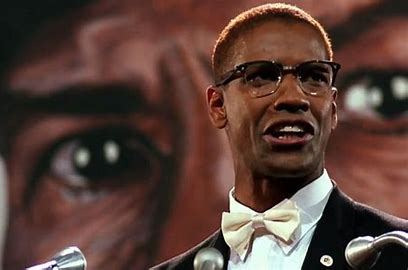
We have another example of a biopic performance...and these days, someone winning for a biopic is often considered the stereotypical choice for Oscar bait. 

However, Denzel Washington infamously lost to Al Pacino, who was on his 8th nomination and had yet to win. The general consensus amongst film historians is that Pacino undoubtedly won mostly for the narrative rather than the film itself...and I would argue that Washington losing here (and also for The Hurricane seven years later) allowed him to gain the upper hand with overtaking Russell Crowe in the Best Actor race during the 2002 ceremony. 

Washington should've won for Malcolm X. 

Much like I said for Angela Bassett, this is easily one of my favorite performances to come from a biopic film. Not only does Washington eerily resemble Malcolm X, but it is simply a performance that just feels so lived in. Washington doesn't even have to try to work hard to impress...he just IS.

Malcolm X was the best film from 1992, in my opinion. I do think Spike Lee does a fantastic job with it even if it does follow a lot of traditional biopic tropes and it has moments of being truly manipulative...something that wasn't as prominent in an original work like Do The Right Thing...but whatever, I can deal with it in this case.

This is a story that needed to be told, especially as many tend to view Malcolm X as the "darker" version of Civil Rights compared to the "saintly" Dr. Martin Luther King Jr.

Both of those men were far more complex than that...not to mention, both men deserve our respect and admiration for what they did achieve.

Spike Lee's passion is undeniable...and that fire is certainly present in Washington. It isn't as bombastic as some of Washington's more hammier portrayals (i.e. his makeup Oscar win for Training Day), but I think this is the finest performance of his career...which is saying a hell of a lot.

____________________________________

Reese Witherspoon

ELECTION (1999)


We live in a world in which Reese Witherspoon is dominating TV by producing content that is providing strong leading roles for women. We also live in a world in which Witherspoon won an Oscar for playing June Carter-Cash in Walk the Line and is perhaps best known for her work as Elle Woods in Legally Blonde.

For me personally, Witherspoon KILLED IT in Election. Her as Tracy Flick remains the role I always associate with her and she continues the tradition of roles on this list that could've been an outright disaster due to the rather bitchy nature of the role. 

She manages to make us care and enjoy watching Tracy despite how we kind of root against and for her in various moments.

Set at a high school in Omaha, the film mostly revolves around a U.S. History teacher named Jim McAllister (Matthew Broderick) who finds himself tired of one of his overachieving students, that being Witherspoon's Tracy, who is about to mount on what is seemingly an unopposed campaign for student body president. 

Tracy is also engaging in an affair with another teacher who happens to be close friends with Jim. While Jim feels his friend deserved comeuppance for his actions, he acts that Tracy got out of it unscathed and seemingly unaffected. This leads Jim to encourage the ditzy but kind-hearted and popular former football star Paul Metzler (Chris Klein) to run against Tracy after he had a debilitating accident that prevents him from playing football.

From there, the film further snowballs until Jim ends up being the one who makes a questionable that leads to him facing the consequences while Tracy, once again, proves to be unscathed.

Witherspoon's mousy but prickly Tracy is a true revelation. We all know those overachievers from high school, but this is a performance that somehow manages to take an over-the-top cartoon version of such a person and somehow make them feel frighteningly real. 

As we watch her set up a cupcake stand early in the morning before anyone else even arrives at the school to promote her campaign, you both admire her and want to roll your eyes at her as well. 

A truly dynamic and bravura performance that still shines as the beacon of Witherspoon's very respectable career.

____________________________

FINAL THOUGHTS:


There was a vibrancy to the 90s that made it feel like sort of a sister decade to the 1970s when it came to the quality and style of the films coming out.

I think the 70s still reigns supreme, but I find myself in awe of the 90s...and I do have to wonder if a lot of it also comes from the nostalgia factor for it being the decade of my childhood. Granted, I didn't see a lot of these films until the 2000s when I had the means to seek them out on cable or at the library/video store.

I do feel like websites or apps like Letterboxd have become a great source for other movie goers to seek out new films they might not have been aware of...and this can even be said for YouTube as well as I am often shocked to see what kinds of films or filmmakers or performances will have videos devoted to them.

I do want to single out some actors who weren't on this list, but that I do greatly admire as being well worth some praise: Annette Bening, Lorraine Bracco, Stockard Channing, Holly Hunter, Irene Jacob, Gong Li, Emily Watson....and those were all women...so yes, power to women!

I do intend to continue this series as I tackle performances from the 70s, 80s, 00s, and 10s...and I may even tackle the 50s and 60s eventually.

And I suppose if there is anything that can come from this, I hope it may encourage some of you to seek out these films/performances if you've never seen them.

In the end, I am always looking to convert someone to the religion of cinema.

Friday, July 28, 2023

LIFE'S A DEATH...I MEAN, DANCE - My Review of Greta Gerwig's BARBIE (with spoilers...)


 Last summer, we were more or less dominated by Tom Cruise feeling the need for speed...and to be completely honest, that was a truly fantastic treat I didn't know I needed.

This summer, Tom Cruise is back and his new Mission Impossible installment has been very well received...and yet...

One week later: BARBENHEIMER enters the cinematic universe.


So much has been said for months about the showdown between Greta Gerwig's Barbie and Christopher Nolan's Oppenheimer...and I have to say, I never really tired of it. 

Between 2020 to now, I feel like we have finally seen a major passionate resurgence of people wanting to go to the theater to see a film...and not just the film fanatics like me, but also your typical average moviegoer. 

Now sure, maybe Oppenheimer is more in line with your average epic awards-bait biopic, but the numbers it has been pulling in have been rather impressive...and I suppose a lot of that is the power of the feud and the power of Christopher Nolan.

But as of this EXACT moment, I haven't seen Oppenheimer (I plan to next weekend).

Having seen Barbie, I knew I wanted to get home and put my thoughts down here. Aside from the Anniversary Retrospectives I have been doing over the last few months, I haven't reviewed a new film since back in late winter/early spring. 

I am approaching 2023 with an open mind when it comes to film as I felt very jaded by the output that 2022 gave us, so does Barbie give me a push towards feeling hopeful?

Yes! ... but ... maybe not enthusiastically so.


Barbie was truly an enjoyable experience and one that managed succeed so strongly in giving us a gloriously ridiculous and yet poignant vision.

Although, I think the film's take on gender politics is...sigh, here we go...problematic at best.

Before I dig into that, let's discuss the plot outline for the film:

SYNOPSIS - 

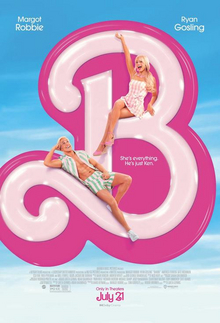
Stereotypical Barbie (Margot Robbie) resides in Barbieland, a matriarchal society where all women are self-confident, self-sufficient, and successful...and yes, they all just so happen to be called Barbie. Unlike the Barbies, the Ken counterparts spend their days engaging in recreational activities at the beach. This leads us to Beach Ken (Ryan Gosling), who is only happy when he is with Barbie and seeks a closer relationship, but Barbie rebuffs him in favor of independence and female friendships.

During a dance party, Barbie is suddenly stricken with worries about mortality. The next day, she finds she can no longer complete her usual routine and discovers her feet have gone flat and she has cellulite. Weird Barbie (Kate McKinnon), a wise but disfigured outcast, tells her that to cure her affliction, she must travel into the real world and find the child playing with her. On her way to the real world, Barbie finds Ken stowed away in her convertible, and reluctantly allows him to join her.

Once they arrive in the LA Metro Area, the two cause multiple antics and are arrested, alarming the Mattel CEO (Will Ferrell), who orders their capture. Barbie tracks down her owner, a pre-teen girl named Sasha (Ariana Greenblatt), who criticizes her for encouraging unrealistic beauty standards. Distraught, Barbie discovers that Gloria (America Ferrera), a Mattel employee and Sasha's mother, is the catalyst of her crisis. Gloria began playing with Sasha's Barbie toys while experiencing her own identity crisis, inadvertently transferring her concerns to Barbie. Gloria and Sasha rescue Barbie from Mattel's CEO and his subordinates, and the three travel together to Barbieland.

Meanwhile, Ken learns about the patriarchal system, and feels respected and accepted for the first time. Returning to Barbieland, he persuades the other Kens to take over, and the Barbies are subjugated into submissive roles, such as maids, housewives, and agreeable girlfriends. Barbie arrives and tries to convince Ken and the Barbies to return to the way things were, only to be rebuffed. She becomes depressed, but Gloria gives her an inspirational speech about what it means to be a woman.


With the encouragement of Sasha, Gloria, Weird Barbie, and Allan (oh yes, I cannot forget Michael Cera as the awkward one man out), the Barbies free themselves from the Kens and manipulate them to fight amongst themselves, allowing the Barbies to regain their positions of power and prevent the Kens from altering the constitution to enshrine male superiority. The Barbies also realize the error of their previous societal system, and decide to make some changes in Barbieland, including better treatment for the Kens and all of the outcast dolls.

________________

This is the third film by Greta Gerwig, which she co-wrote with her partner Noah Baumbach. Her previous two efforts: Ladybird and an adaptation of Little Women were both among my favorite films of their respective years.

Ladybird felt so alive and fresh and contained such an interesting mother/daughter dynamic, while her take on Little Women gave it a lot more agency towards the plight of the March sisters...particularly how she manages to give the spiteful Amy March some meaning behind her rather hateful or opportunistic behavior. Just check out the monologue that Gerwig gave Florence Pugh as Amy to recite where she flat out says that marriage is an economic proposition for women though not for a man.

Still though, the political statement made by Amy (via Gerwig) in that film is not radical by any means. At best, it was radical for 1860s America.

The politics of Barbie are also not radical. If anything, you could say it is very basic corporate feminism...without any real complexity or layers. You could also lay it out as simply as "GIRLS RULE! BOYS DROOL!"


And yes, I get it. I am all for attacking men.

 I am one. I also hate a lot of men.

We are approaching the 2024 Presidential Election where we have Donald Trump rearing his ugly head and Ron DeSantis slithering out and about from his Florida swamp. They suck...and the system sucks! 

It sort of reminds me a line that Sally Field said when she won an Emmy for that now-forgotten show Brothers & Sisters that if mothers ran the world, "there wouldn't be any goddamn war!".

At the time, the network censored the line and it, of course, got a lot of vitriol from the far right once more people heard the full context of what she said. 

The idea of a "matriarchal utopia" was not overly pleasing to the Kens...just like a "patriarchal utopia" was not at all pleasing to the Barbies, but then again, they were stuck in a deep mechanical haze as if they were Stepford Wives during that time.

The way it is presented is in such a black & white manner as if, simply put, women would be the best at running everything. 

But for every Alexandria Ocasio-Cortez, there is a Marjorie Taylor Greene.

For every Angela Merkel, there is a Margaret Thatcher.

I just would've liked to see the political angle be explored in more of a deeper complex manner, because it honestly made it feel just very banal. 


Having said all of that though, I am also not going to let that spoil the party in the same way that Margot Robbie interrupts a dance party to ask if anyone else thinks about their own mortality.

Sure, I might have concerns with how the gender politics/feminism/patriarchy/matriarchy is presented...but it isn't inherently wrong even if it is presented in such a whitewashed way.... although, I do think the unfortunate thing about it is that it gives an easier out for people like Ben Shapiro to attack the film.

And he already has. Relentlessly so.

It is the moments like Robbie's sudden extensional question breaking up the dance party that make the film...and the film sells the comedy very well!

It also manages to sell the moments of warmth too, even if I don't quite see the shift in what makes Sasha suddenly accept her mom and Barbie so quickly...or the schmaltzy nature of the climactic scene.

One key supporting character in the film is the creator of Barbie herself: Ruth Handler, played by Rhea Perlman. Barbie encounters her randomly at the Mattel office earlier in the film sitting in what looks like a kitchen amidst a vast dark room...and while the audience isn't told who she is in the moment aside from being named Ruth, you know full well that she will turn out to be the "mother".

When she shows up in the end to give Barbie the guidance to become a human (how very Pinocchio), it makes for a lovely and sweet moment even if I sort of did find it to slightly drag and to flirt with being a bit too heavy-handed in its schmaltzy tone.


Performance wise, the film delivers. 

Margot Robbie gives the role exactly what it needed while Ryan Gosling more or less understood the assignment. He managed to find a way to make the two-dimensional nature of Ken to be rather compelling when the role honestly could've been an absolute disaster.


And honestly, I think there isn't a bad performance in the film. I am not entirely sure I would be throwing an Oscar nomination at any of them, but they all basically understood the assignment.

The simple truth is that this film is about Barbie and Ken dolls all being alive in their own magical pink and violet land where they party and keep up the same routines day in and day out...and it is ridiculous.

It remains ridiculous when Barbie and Ken go out into the real world; it remains ridiculous when Gloria and Sasha return with Barbie to Barbieland and they have humans interacting with the other dolls.

It is also ridiculous when you have Will Ferrell onscreen because it is Will Ferrell, and he makes everything an absolute delight for the most part.

And in the end, I really liked that ridiculousness. 

I haven't been the happiest person as of late, so spending just under two hours in such a gloriously madcap world was something that was much needed...and the film did manage to succeed greatly on that front.

PLUS - it was cute towards the end of the film when Michael Cera's Allan was facing being an outcast yet again, which led to a young girl a couple of rows behind me to yell out "Justice for Allan!"


I certainly never condone talking in any theater: film or stage...but something about that made me happy. I liked knowing she was that engaged with the film.

This was a film with a very specific vision. I certainly feel the vision faltered on the political front, but Gerwig managed to create such a deliciously fun universe. The sets, the costumes, the tonal shifts...it all clicked rather well. 

A truly delirious and colorful effort by Gerwig...and the pluses do outweigh the minuses, enough so that I feel a little more generous.


RATING: ****/*****

Saturday, June 24, 2023

A 25th Anniversary Retrospective: LOOKING AT THE BEST FILMS OF 1998


*SOME OF THESE SEGMENTS WILL CONTAIN SPOILERS SO YOU HAVE BEEN WARNED*

*ALSO - DO I REALLY NEED A SPOILER WARNING FOR 25-YEAR-OLD FILMS????*

When I look at 1998, I sort of have a very sentimental feeling towards it.

I wouldn't say that the feeling stems entirely from the films I am about to mention (although a couple of them would play a role), but 1998 was the year that the movie lover in me was truly born. 

I was 10 years old and I can distinctly remember watching the 70th Annual Academy Awards, which for reference was the year that Titanic won. During that ceremony, there were a lot of segments devoted to the history of the Oscars and one such montage was a series of clips showcasing the 69 films that had won Best Picture up to that point. 


The link above takes you to the actual clip, complete with the original introduction by Dustin Hoffman. I even commented on the video saying "I've always credited this montage as being a major catalyst to me becoming interested in movie history".

By reading the other comments, I was so happy to see so many other similar variations of that comment and that I wasn't alone in my opinion. The use of the Dragonheart score gives it such an epic feel as well...but it did impress me to watch this list unfold. I bet I rewound that VHS tape dozens of times to the point where I have (and still have) all of the winners memorized. 

And I eventually would watch every single Best Picture winner...something I still have managed to do to this day. I even ranked them!


So going into the 1998/9 Oscar season, it was sort of the first time I observed the process nearly in full...which looking back was rather interesting considering it was such a controversial year with Harvey Weinstein/Miramax pulling off a campaign coup that led to Shakespeare in Love beating Saving Private Ryan.

Even approaching the age of 11, I remember understanding how cheap and questionable of a choice that was on the Academy's part strictly based on the tactics reported in the press...and this isn't even with the immense knowledge we now know about Weinstein's heinous harassment history.

However, that whole story is a tangent that would lead me in an entirely different direction.

At any rate, 1998 was a big year in pushing me towards becoming a young cinephile.

I am going to be doing something slightly different by choosing one film as an honorable mention for this installment as I feel like it does deserve to be mentioned even if I don't perhaps share the same immense admiration for it that others do.

___________________________________

HONORABLE MENTION:

Saving Private Ryan

(Steven Spielberg)


I feel like some people will think I am being crazy for saying this, but I wouldn't say that Saving Private Ryan is necessarily a masterpiece.

As much as I don't want to buy into some of the horrendous campaign tactics that Miramax/Harvey Weinstein pulled during that awards season that I talked about a little already, I do sort of feel that Saving Private Ryan benefits from an insanely strong first act only for it to sort of settle into a "pretty good" category beyond that.

I have never been a "war film" person, but I do acknowledge a great one when I see it...and I do certainly find it impossible to ignore how well made this film is even if it does have that decline in quality after its D-Day scene.

I know that I am not alone in that thought process...in fact, Letterboxd has its fair share of people who even gave the film a negative rating. I would never go that far, but I do think this placement on my list is pretty much solely resting on the tech craftsmanship and how strong that first third of the movie was.

It kind of falls into that schmaltzy Spielberg trap I have discussed multiple times where there is just this sheen over his work that often prevents me from fully sinking into the dramatic material.

Moments in this film do transcend this feeling but not completely; same with something like Schindler's List but I think that film was more of a complete success. 

__________________________________

THE TOP 10:

#10 - Pleasantville

(Gary Ross)


There were two films that came out in 1998 that felt very potent to a lot of my interests at the time and were crucial to setting me on a path to falling in love with films in a serious manner.

One of them is coming up later on this list, but Pleasantville was one of the two.

Before I really got into film and theatre, my early years of childhood were dominated by a love of television. Sure, I watched stuff like Nickelodeon and PBS and The Disney Channel but I also took a fascination in watching old reruns of shows during the iconic evening portion of Nickelodeon called Nick-at-Nite and the eventual spin-off network called TV Land. 

I did relate to Tobey Maguire's character a lot as a younger person who perhaps had an interest in "uncool" older television...and it seemed like a fun idea for two modern day teenagers to be sucked into the life of a cheesy B&W 50s sitcom.

I can remember so impressed with the combination of B&W and color sharing the screen but I was still a tad too young to truly grasp the political statement angle at first.

I do think the idea of people turning into color for embracing more modernized ideals and then being treated with prejudice as "people of color" was a brilliant idea...although the film does lose some of its spark once it descends into its final third.

I do think the movie is stolen by Joan Allen and William H. Macy as the 50s spouses who end up at an impasse when she has a sexual awakening and turns into technicolor. I still think one of the more humorous bits in the film is when Macy is trying to find Allen for dinner, but she is off with Jeff Daniels, and he aimlessly walks around going "Where's my dinner?!".

Maybe it falters at times, but I appreciate a lot of the film more than not.

___________________________________

#9 - American History X

(Tony Kaye)


It has been about 20 years since I have last seen American History X.

I remember very vividly sitting there after watching the film and just feeling a bit shaken by it...and the sad truth is that it feels even more potent today with how the culture has changed over the last decade.

The film has Danny Vinyard (Edward Furlong) trying to emulate the neo-Nazi values of his imprisoned older brother Derek (Edward Norton). On the day that Derek is to be released, Danny is taunting his Jewish teacher by doing a report on Mein Kampf. Derek has been rehabilitated and he is now eager to make sure Danny doesn't go any deeper down the same path as he did.

Derek had been in prison for voluntary manslaughter (and side note: this film introduced me to what a "curb stomp" actually was...) and it originally began when his and Danny's father (a firefighter) had been shot and killed by a black narcotics dealer.

In his vengeful and mourning state, he launches into a vicious racial tirade on live TV which prompts neo-Nazi leader Cameron Alexander (Stacy Keach) to take him under his wing and they form D.O.C. - Disciples of Christ. 

American History X is a film that manages to work based a lot on how powerful the work of Norton and Furlong is, but it does have its flaws.

In fact - one major criticism I have of the film is that we do see Derek's descent into accepting neo-Nazi "values", but we never really see the full journey of how he manages to see the error of his ways. I think a lot of the film's flimsy nature in moments could be tied to the battle over the final cut, which made first-time director Tony Kaye publicly disown the film to the point where he struggled to even have a career following the battle.

Perhaps the film goes heavy handed at times, but it is kind of hard to not go heavy handed when you are dealing with something as vile as Nazis. I feel like the general consensus amongst people is that "Nazi = bad".

The final scene (depicted in the picture above) is a brutal one...and it left me feeling very conflicted at the time I saw it.

I grew up as someone who was very gleeful at the idea of revenge and seeing bad guys get their comeuppance in movies...and I don't think I truly expected to feel so upset by Danny's death. I always felt that bad people deserved bad things...but right in front of me, you had someone like Derek who managed to find it in himself that what he did was wrong.

And that kind of thing happens all the time.

Rehabilitation and care are both keys to helping others learn...and this film was an early example of me discovering how valid and crucial that can be.
_______________________________________

#8 - The Last Days of Disco

(Whit Stillman)


There is something rather fascinating about Whit Stillman as a filmmaker. Since 1990, he has only made 5 feature films and one short film...and he hasn't exactly gotten much mainstream success aside from his 1991 Original Screenplay nomination for his debut film Metropolitan...an award I actually think he should've won.

Also - Stillman is a filmmaker who has a very particular interest: observing the upper classes and how they handle life and interact with one another. While his debut Metropolitan is still my favorite of his works, I would consider The Last Days of Disco to be his next best.

Set in 1980s NYC, the film follows Alice (Chloe Sevigny) and Charlotte (Kate Beckinsale) and their frequent nights out at the club with their group of friends.

Stillman manages to find an interesting balance in making us both hate and care about these people, because in the end, these are essentially "the 1%"...and they are spoiled and selfish and think more highly of themselves than they probably should. Stillman somehow gives them nuance...and his dialogue is sort of comparable to that of Noah Baumbach's work.

Although, if I were to be critical of the film, I would say that perhaps some of the visuals and aesthetics don't fully ring true as being set in early 80s NYC. I understand that I was not alive then, but enough visual aid from over the years should show that perhaps Stillman was only really working with what his budget could afford...and therefore I will let it slide.

Some have accused Stillman of being rather hollow in his material, but I do find that he possesses a rather graceful take on sociological content. 

One of my favorite lines from a 90s film comes from The Last Days of Disco, and it may not seem that amazing on paper but its content and the manner of which the sentence is structured work so wonderfully:

"I consider you a person of integrity - except, you know, in your relations to women". 

I find that this is a film that truly works a lot better than it should. It is almost as if they took elements of Showgirls and Queer as Folk and put them through an artsy indie car wash.... which is not a comparison I expected to use today but whatever, I will go for it.

_____________________________________

#7 - Gods & Monsters 

(Bill Condon)


While it is very traditional and, perhaps, a little more mainstream in its approach, there is still something very bold and refreshing about Gods & Monsters.

This is a film released in 1998 about a gay man who was played by a gay actor and the film was written and directed by a gay filmmaker. 

And not only that, I feel like this is one of the best characterizations of homosexuality on film I have seen...especially in relation to the trauma it may cause the person.

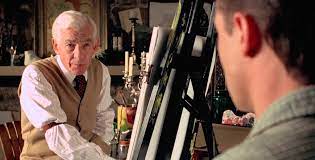
Ian McKellan gives the finest screen performance of his career as famed director James Whale, who is most remembered for directing the 1931 film adaptation of Frankenstein. 

Set in 1957, Whale's German housekeeper Hanna (Lynn Redgrave) hires a handsome young gardener named Clayton (Brendan Fraser) to help tend the property. Hanna is very no-nonsense and also highly disapproves of Whale's homosexuality.

Gods & Monsters manages to wear a few different hats: it's an homage to Old Hollywood, it's a take-down of Old Hollywood, it deals with trauma of war, it deals with trauma of aging, and it deals with the pain of unrequited affection.

It may have been easy to portray Whale as just a sleazy dirty old man who is out for prey, but McKellan (NOT SURPRISINGLY) manages to imbue him with such an inner turmoil that you can't help but feel bad for him even if you know how wrong it is for him to try to pursue Fraser's Clayton in the way that he does.

For what the film manages to pull off, I would say it is a great success for its time in Hollywood filmmaking and also still holds up as an interesting character study for someone who grew up feeling unfulfilled in their sexual life at a time when the majority of the world viewed it as either illegal or an abomination at best.
 ___________________________________________

#6 - The Celebration

(Thomas Vinterberg)


Thomas Vinterberg, along with another Danish filmmaker Lars von Trier, were a very crucial part of the indie filmmaking scene in the 90s.

Their Dogme 95 movement was instrumental in finding ways to make quality films while not focusing too much on the idea of spending a lot on fancy production elements. 

Even though Vinterberg managed to be the one to get a Best Director nod to date, I still think von Trier has made more of a name for himself...but I think Vinterberg deserves a lot of attention and acclaim.

I also think that The Celebration is peak Vinterberg.

There are many films that have tackled family dysfunction, but dear lord, it is hard to imagine many others that tap into comedic elements that are at their darkest.

I have heard some people refer to Wes Anderson's The Royal Tenenbaums as the more abundantly comedic cousin to this film, and I totally see it. They are both structured in similar ways, but The Celebration is certainly far more sinister.

If The Last Days of Disco was a take down on how spoiled rich people may act, The Celebration is a steam roller.

If you think the Roy family on Succession needs to have a group therapy session, the Klingenfelt-Hansen clan might drive a therapist out of their practice never wanting to return.

And lastly, I feel like this is the kind of film Ruben Ostlund wants to make and has never quite achieved it...no matter what his awards success with Triangle of Sadness might prove.

____________________________________

#5 - Eternity & a Day

(Theo Angelopoulos)


When I did my 35th Anniversary Retrospective on 1988, I had included the film Landscape in the Mist on that list with a mention that I am not overly familiar with Greek cinema.

I would shamefully admit that I don't even think I have seen any films from Greece aside from two of Theo Angelopoulos' works: Landscape in the Mist and Eternity and a Day.

I really should check out more of his work and look into other Greek filmmakers as I do think very highly of these two films, and I know that Martin Scorsese has always spoken very highly of Angelopoulos as well.

Eternity and a Day almost gives off a vibe of Kurosawa's Ikiru in that a terminally ill man is trying to do what he can to get his affairs in order and also find a permanent home for his dog before he dies.

The man, named Alexandros (Bruno Ganz), is also trying to help a young Albanian boy, whose name we never learn, who is about to be captured by human traffickers and put into illegal adoption.

Alexandros is able to rescue him and makes it his new mission to get the boy back home. 

Eternity and a Day is a film that I have been thinking a lot about as of late. Part of this is due to how it manages to make you try to find a certain sense of hope for life. As someone who has been feeling very unfulfilled in so many aspects of my life, I do wish I had put more thought and focus into trying to enjoy it.

The only difference now is that I am still fairly young; I do still (hopefully) have a chance to do so.

There is a monumental and poetic beauty to this film, and it feels so delicate and fragile. Life is too short and I think this movie shows you how maybe you need to find ways to liven it up without wallowing in your own despair.

It thrills me that this won the 1998 Palme d'or at the Cannes Film Festival. I wish it had gotten more notice in the US back then, but it does seem to have gained a good following in recent years.


____________________________________

#4 - Rushmore 

(Wes Anderson)


Very few filmmakers have a visual and tonal aesthetic that is as instantly identifiable as Wes Anderson. As much as I often enjoy his work, sometimes I do sort of wish he would try some different techniques. With Rushmore, it was only his second film, but you could tell that he hadn't quite settled into some of his usual tendencies yet...which, in hindsight, works greatly in its favor. 

I adore Rushmore and feel like a lot of people don't talk about it much these days. It even feels like it is often forgotten in the Wes Anderson canon even though I think it is part of his (as of this writing) Holy Trinity of Films which also includes: The Royal Tenenbaums and The Grand Budapest Hotel. 

Plus - this film established Bill Murray as an ever-present fixture of so many Wes Anderson films and also remains one of the worst Oscar snubs for an actor in recent memory.

It also doesn't hurt that Anderson was able to find Jason Schwartzmann for Max Fischer, therefore jumpstarting his career in the process. Schwartzmann gives a performance that feels reminiscent of a young Dustin Hoffman...which isn't surprising since Anderson picked up on that quality when the two first met.

Considering Anderson films would often go on to have more of a whimsy feel to them, there is something a bit more cynical about Rushmore that plays very differently now in hindsight. One review I always loved was Anthony Quinn's in The Independent as he called the film an "adolescent tragicomedy, neurotic romantic triangle".

And that is apt. 

It truly feels very unique compared to many other high school films (sort of like a weird kind of brother film to Heathers but without all the murder staged as suicide), and the weird, warped pairing of Schwartzmann and Murray battling for the affections of Olivia Williams makes for one of the more entertaining and interesting storylines in a Wes Anderson film.

____________________________________

#3 - The Thin Red Line 

(Terrence Malick)


The prodigal son has returned.

20 years after the release of what was his second film (1978's Days of Heaven, my selection for best film of that year), Terrence Malick returned with The Thin Red Line, a WWII film based on a graphic novel by James Jones.

After what I had said about war films when discussing Saving Private Ryan, it may seem surprising that I am already diving back into the genre.

1998 was a strange year when it came to the major awards as it felt like the Best Picture nominees were a lot alike. 

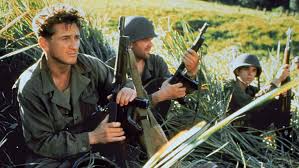
3 of the films related to the era of WWII (The Thin Red Line, Saving Private Ryan, and Life is Beautiful) and the other two were set during the original Elizabethan era (Shakespeare in Love and Elizabeth). 

On nomination morning, The Thin Red Line was seen as a mild surprise for a Best Picture nominee but the truth is that I found it to be the best of the films that made the list.

Not surprisingly, Malick came back after 20 years just as assured as ever and gave us one of the best war movies ever made.

It is a truly brutal film both in terms of its violence and how we witness these characters. There is no sort of glossy sheen over it that I might complain about with Spielberg; this is simply just pure pain and pure hell...and as the saying goes, war is hell.

Not to mention, the film has an exchange that I have always loved...and it sort of ties into that feeling of being alone even if you may be surrounded by hundreds of people around you:

"Do you ever get lonely?"

"Only when I'm around people."

Malick's philosophical nature always manages him to strike gold with even the most simplistic of moments. This one is a true gem.

_______________________________________

#2 - Central Station

(Walter Salles)


At the 1999 Oscars, many film historians and awards prognosticators still bemoan one of the great injustices in Oscar history...and no, it isn't Shakespeare in Love beating Saving Private Ryan.

Although - it does relate to Shakespeare in Love.

Brazilian actress Fernanda Montenegro was the critical favorite for her work in Central Station and to this day, her loss is brought in many forums. Even Glenn Close, despite the fact she didn't remember Montenegro's name, said in an interview how it was truly ridiculous that she didn't win.

And I agree.

Gwyneth Paltrow should not have won. And if it wasn't Montenegro, it should've been Cate Blanchett for Elizabeth. But anyways...

Central Station got overshadowed that year as Life as Beautiful was the foreign film that seemed to drum up the most excitement in Hollywood. Unlike some, I actually do like Life is Beautiful but not enough that I felt it warranted a slot on my top 10. 

Montenegro plays Dora, a middle-aged woman who makes a living by writing letters for illiterate people and mailing them out of Rio de Janeiro's Central Station...however, she is so frustrated and bitter about her life that she often finds little joy in helping others and won't even mail out the letters she writes.

When a young mother who frequently visits her for her services is killed in a bus accident outside of the station, Dora is forced to take care of her 9-year-old son Josue. 

While trying to pawn him off on a couple that have ill intentions, she relents but still struggles at the idea of having to care for him. Dora does decide to travel with Josue in hopes to find other family he can live with and thus sets off a bit of an odyssey of discovery between these two.

Central Station is the kind of film we've seen variations of over time: the surly adult that bonds with a young kid despite how much they want to resist it.

We've seen it tackled in everything from Bicycle Thieves to a freaking children's sitcom like Punky Brewster.

This is a film that manages to find hope without appearing to cloying or sentimental. It is the right mix of that genteel nature with a little touch of grit to go with it...and I think aside from Walter Salles, a lot of that credit has to go to the truly phenomenal work done by Fernanda Montenegro.
______________________________________

#1 - The Truman Show

(Peter Weir)


I have often tried to think about which movies really set me off down the path of actually loving films and wanting to study them and watch as many of them as I could.

I do think The Truman Show is a prime candidate for what might be the major film that started it all...at least in the top 3. 

When I first watched The Truman Show upon its VHS release in 1999, I was already very aware of Jim Carrey and his comedic work. Even from that standpoint, I was impressed going into the film as an 11-year-old seeing Carrey stretch himself as an actor.

I wrote up this film as it was featured on my Best Films of the 1990s list that I devised back in 2021. Below is a big portion of that segment where I go into Carrey as an actor and discuss the film:

"I have heard some people critique Jim Carrey's performance as being directed in the wrong manner; that he was too manic for a role in which he didn't know that he was being watched by millions and millions of people around the world. I can sort of understand what they mean...but I also don't really care because I think it is plausible that someone could be this silly. It also must be said that Carrey is able to find moments of subtlety and he creates a truly wonderful character that was, in many ways, his first foray into a more dramatic role without also sacrificing his comedic talents.

Jim Carrey is a better actor than many give him credit for. His comedic work in a film like Liar Liar is still hilarious but he was also great in this film along with Man on the Moon, Eternal Sunshine of the Spotless Mind, and I Love You Phillip Morris...oh and I have enjoyed his work on the Showtime series Kidding.

Carrey plays the titular Truman Burbank, who is unknowingly the star of a worldwide viewed reality show that was the brainchild of Cristof (Ed Harris). Cristof's goal was to take a child who was abandoned at birth and give them a life inside a huge world he built complete with state of the art technology that simulates day time/night time and even contains a large body of water.

But how do they keep him there?

Well, Cristof devised a plan in which he had Truman's "father" die in a boating accident in order to try to give him a fear of navigating water. Also, when a teacher asks Truman what he wants to do when he grows up, he says he wants to be an explorer in which the teacher says "There's nothing really left to explore!"

This was sort of the big movie debut for Laura Linney, who is fantastic as Truman's "wife" as she too is crumbling the more Truman realizes that he is starting to become more aware of his strange surroundings.

In some ways, this film was ahead of its time but only slightly. Two years after its release, Survivor would premiere and start a true reality series boom...but the amazing thing is that even after 20 years, I think The Truman Show has held up remarkably well in showing how much of an obsession of a reality show concept would be for the world."

I am truly amazed at how well it has held up. For aspects that seemed so insane at the time, the movie came in and sort of predicted the future in a darkly comedic Orwellian way.

The final scene, where Ed Harris' Cristof tries to plead his case to Truman is a beautiful moment and it almost makes you forget the questionable ethics of his plan...and then to top it off with Truman leaving, the show ending, and the movie ending with the audience already thinking about what to watch next because "the fad" is over.

Brilliant ending, brilliant movie.

_____________________________________

FINAL THOUGHTS:
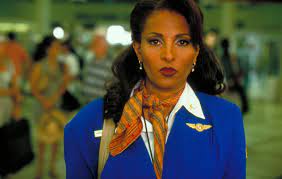

The 1990s truly were a great decade for film...and it is something I didn't truly realize until the last couple of years or so. 

I do think 1998 is a far more deceptive year than meets the eye, because not only were there movies like the ones I mentioned, but you also got great indies that were quite memorable such as High Art, Buffalo 66, or The Opposite of Sex.

You also had solid comedies like There's Something About Mary, Bulworth, and Primary Colors and solid dramas like A Simple Plan, Out of Sight, and Affliction. 

Even the films that might've been second tier were pretty solid in their own right. 

Granted, the year that followed would be one of the greatest years for cinema in history...which I will be diving into once we get to next year!

And that is all I have for now. 1998 really began the journey for me, even if it didn't take off in full force until around 2001. I can't help but feel sentimental about it.


SO...I Am Officially a YouTuber! (AND A POSSIBLE FAREWELL TO THE BLOG)

It has been a long time coming, but I have finally started the YouTube channel I kept wanting to create for the last several years! The chan...