Wednesday, April 23, 2025

A Look Back at 1975 in Film - 50 YEARS LATER (and still fabulous...)


I have said many times on this blog that the 1970s are my choice for the greatest decade of film. However, even the best decades can have their lesser years and vice versa. This isn't a lesser year, but rather a peak during such a monumental decade.

The one-two punch of 1974 and 1975 represents some of the finest output in the cinema world since the artform was evented. I admittedly had planned to write about 1974 last year for its 50th Anniversary but never got around to it. I am sure I will tackle it at some point, but for now I want to tackle 1975 as the breadth of its output is extremely eclectic and there are quite a few hidden gems.

Just to put this into perspective, I strongly considered about 15 films for a shot at a top 10 slot. My original draft of my top 10 is drastically different from the list you are about to read...and because the competition was so fierce, I decided to list 18 films as I didn't want to leave any of these out.

We will just consider this a snapshot of how I feel today.

=====================

#18 - MONTY PYTHON & THE HOLY GRAIL

Directed by Terry Gilliam & Terry Jones

Written by Gilliam, Jones, John Cleese, Graham Chapman, Eric Idle, & Michael Palin

It might come as a surprise to some of you that I actually used to find Holy Grail to be overrated. Even now, I prefer Life of Brian to it.

BUT...no need to be a contrarian when it comes to the world of Monty Python. It is hard to deny that this film is an absolute laugh riot.

I think perhaps why I didn't respond to this film as strongly when I was younger was that I didn't care much for the world of knights, even in a comedic setting. It just felt like a shock to me that I was so cold on it at first because I had already been a rabid fan of Monty Python's Flying Circus and other projects that members from that group had worked on such as John Cleese's A Fish Called Wanda. 

Alas, I was wrong...

I still prefer Life of Brian though, but a lot of that was due to the film tackling the maniacal cult trends within organized religion; a topic that I always love to see dragged through the mud.

________________________________

#17 - THE PASSENGER

Written & Directed by Michelangelo Antonini 

Co-written by Mark Peploe & Peter Wollen


Along with Holy Grail, there will be a few films on this list that fall into a category that I like to call "Movies That Improved Over Time" by my standards.

And yes, The Passenger is another entry on the list.

I don't really talk about Antonini much on this blog, and that is why I love doing posts like these as it gives me a chance to delve into works of very respectable filmmakers who might not churn out the best film of the year but are consistently among the top 10 or 20.

I don't think The Passenger is his best work. His early 60s Holy Trinity of L'Avventura, La Notte, and L'Eclisse along with 1966's Blowup would be swirling around his top 4. I think what negatively effects The Passenger at first glance is that it seems too traditional and conventional by his standards, but this is certainly not the case. 

Some of the sequences in this film, including the 10-minute continuous take at the end of the film and the scene in which Jack Nicholson's character Locke listens to a recorded conversation which then blends into a whole other scene entirely are both exquisitely done. 

Much like many of his contemporaries, Antonini, along with his cinematographer Luciano Tovoli, were always able to paint gorgeous images.

I do feel compelled to revisit this one sometime soon as I admittedly have only seen it once, but I do think about it from time to time and have appreciated hearing reevaluations about it over the years.

_______________________________

#16 - WELFARE 

Directed by Frederick Wiseman 


When it comes to great documentarians, I think that Mount Rushmore of options would easily include that of Frederick Wiseman. 

This guy just won't settle down. He turns 95 this year and in the last decade alone, he has made several documentaries such as 2015's In Jackson Heights, 2018's Monrovia, Indiana, and 2020's City Hall.

A documentary like Welfare, which is often considered his masterwork, is fascinating and tragic all at once. As you might expect, Wiseman is out to examine the American welfare system with a massive magnifying glass. 

It is even more tragic when you see how the people behind the counter don't even consider these people worth their time. Not that this is any kind of surprise, but I shudder to think that this was pre-Ronald Reagan and the "welfare queen" stereotype that would lead to the gutting of the system that still persists.

I saw this film once in a class many years ago, and the gritty and unforgiving nature of it has always stayed with me. It is hard to become anything other than disenchanted with this country when you watch Welfare pan out and quickly realize it has only gotten worse.

_________________________________

#15 - THE PROMISED LAND

Written & Directed by Andrzej Wajda


Another filmmaker I've not talked about on this blog is Andrzej Wajda. To be honest, I haven't seen as many of his films compared to the other major Polish filmmaker, Krzysztof Kieslowski due to accessibility. Suffice it to say, I do think Wajda was a strong filmmaker and this might be my favorite film of his along with Ashes & Diamonds.

The basic premise of The Promised Land could be the start of a cheap joke at first glance: a Polish man, a German man, and a Jewish man build a factory together...trouble is, they are struggling to do so in the midst of late 19th century.

I can always appreciate a film that takes on such a rampant stance against the corrupt world of capitalism. The Promised Land is gloriously progressive in how bluntly presents lack of humanity that happens when one gets too caught up in their greed.

The film's final moments might have the subtlety of a sledgehammer in its conceit, but the sad truth is that it feels like a sick reality and a metaphor all rolled into one.

_____________________

#14 - PRESSURE 

Written & Directed by Horace Ove

Co-written by Samuel Selvon
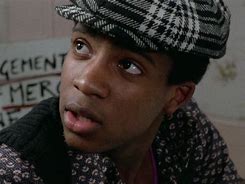
If you go by Letterboxd, this is a 1975 film. If you go by Wikipedia, it is a 1976 film that also mentions it being a 1975 film in its release history. 

I decided for all intents and purposes to deem Pressure a 1975 film. I also just want to call attention to it because it isn't a film I hear talked about much despite the fact it feels very potent in today's world.

Pressure was the first British film to predominantly feature a black cast and it had been originally shelved for 3 years because the film dared to show acts of police brutality.

Pressure has been described by its director Horace Ove as a depiction of "a generation in crisis". I honestly think it is multiple generations in crisis as the whole viewpoint of the elder black immigrants is that they are content with working hard and living under the law of the white people that rule society. This is a contrast to Anthony 'Tony" Waston (Herbert Norville), who is a second-generation British teenager whose parents immigrated from Trinidad and he shares a far less patriotic view of the UK than his parents do.

A film like Pressure felt far ahead of its time, and the sad truth is that considering when it was made, things would likely get worse for families such as these when Thatcher's premiership would begin just a couple of years later.

______________________________________

#13 - FOX AND HIS FRIENDS

Written & Directed by Rainer Werner Fassbinder

Co-written by Christian Hohoff 


I would love it if some conservative wacko tried to Google "Fox and Friends" and somehow gets treated to reading about this film and the brilliant filmmaker that was Rainer Werner Fassbinder.

That is if they don't turn to salt first and bemoan that they are now unclean.

Fassbinder was a groundbreaking filmmaker who was queer himself and insisted on telling stories about the queer world and became a leading voice in the New German Cinema movement that also included Werner Herzog, Wim Wenders, Margarethe von Trotta, and Wolfgang Petersen. 

Karlheinz Bohm plays Franz, a working-class gay man who works at a carnival as the character Fox the Talking Head. He is in a relationship with Klaus, who owns the carnival but gets fired when it is revealed that Klaus was committing tax fraud. 

Down and out, Franz decides to try his luck with a lottery ticket and ends up with 500k marks (roughly $300k). A month passes and we find Franz at a party with his new friend Max, an older antique art dealer. While there, Franz encounters an attractive younger wealthy man named Eugen who is first turned off by Franz's brash and unpolished manners...only to realize that he too has some money to his name. 

Franz falls in love with Eugen, but there is more to Eugen than meets the eye.

As is the case with Fassbinder, he is brutal when it comes to the content of his stories. One could say that perhaps they fall under some kind of LGBT torture porn (another example of this is his 1978 film In a Year of 13 Moons), but I consider his works to be strong character studies that also offer a glimpse into what life was like for the queer community at that time.

I can't say that the film is an easy watch, but it is another strong outing from Fassbinder who bleakly tells us how sometimes love can just be seen simply as a commodity. 

_____________________________________

#12 - COOLEY HIGH

Directed by Michael Schultz

Written by Eric Monte


Considered a major source of inspiration for filmmakers like John Singleton and Spike Lee, Cooley High was a film that was crucial to advancing the concept of "black cinema" being the idea of "blaxploitation" which dominated the 1970s.

Set in 1960s Chicago, we follow the lives of two best friends: Leroy "Preach" (Glynn Turman) and Richard "Cochise" (Lawrence Hilton-Jacobs) who are high school seniors. Preach is more sensitive and has a desire to be a writer while Cochise is on track to have a career in basketball. 

A lot of the film was shot around the infamous Cabrini-Green Housing Projects in North Chicago that would also serve as a backdrop in the 1992 movie Candyman. Like other films on this list, including some I haven't discussed yet, I think one thing that is very effective about Cooley High is the world building. 

We find ourselves charmed by these characters and their lives and how they make do with what they have, only for the light-hearted nature to turn to tragedy by the end. 

I actually came across this film as a fan of SNL. I had watched an interview and read a couple of books in which Garrett Morris spoke of how Lorne Michaels saw his performance in this film, and it led him to add Morris to the cast rather than only being a writer.

Say what you will about SNL, but as someone who followed that show's history, it can serve as a very solid steppingstone to finding out about other artistic properties.

_________________________________

#11 - LOVE & DEATH

Written & Directed by Woody Allen

I have said it multiple times on this blog, but I am of the firm belief that Woody Allen hasn't made a truly great film since 1989's Crimes & Misdemeanors. Basically, a good swath of his filmography prior to that film contains several first-rate efforts between 1973-1989.

Among those is Love & Death, which doesn't get as much attention, but it represents his last truly farcical film of sorts before he began his more mature slant with the film that followed it: Annie Hall.

Set during the Napoleonic Era, Allen stars with his muse Diane Keaton as Boris and Sonja. A lot of the film is set up around mock-serious philosophical debates which is more or less the bread & butter of what often makes up a typical Woody Allen film.

However, Allen manages to walk a fine line between taking on the darker philosophical sides with pure lunacy...particularly when dealing with the "death" aspect. I also can't help but love when he does an homage to Swedish director Ingmar Bergman's blocking composition such as the moment with Diane Keaton and Jessica Harper when they talk about being surrounded by wheat.

"Did you say...wheat?"

"Wheeeeeat."

I know Woody Allen is a pariah these days, but when the man was at his peak, he was immensely enjoyable. It is just a shame that he couldn't seem to sustain that quality which also coincided with his downfall beginning with the Mia Farrow breakup and marriage to Soon-Yi Previn.

_______________________________

#10 - ONE FLEW OVER THE CUCKOO'S NEST

Directed by Milos Forman

Written by Laurence Hauben & Bo Goldman


The fact that I have One Flew Over the Cuckoo's Nest at #10 is likely going to be considered too low for some, but I have never responded to the film as rhapsodically as most film fanatics do. 

So much has been said or written about this film that I personally don't think I have much to offer in the discourse, but I will say this:

In terms of villains, Louise Fletcher's Nurse Ratched is rightly up there in the pantheon of truly compelling screen villains. Her vacant stare which can also turn into an evil, angry glare is one for the books...and Jack Nicholson as McMurphy gives one of the finest performances of his career surrounded by an amazing ensemble of actors like Brad Dourif, Christopher Lloyd, and Danny DeVito.

It isn't that I have anything bad to say about the film itself. I just never found the first half of the film to truly draw me in like many other films that year for me. What does make the film excel beyond the acting is that it has one of the greatest final acts of any film I can think of.

Everything in the film from Brad Dourif's Billy getting essentially blackmailed by Ratched up until the final moments where Will Sampson as "Chief" Bromden is able to fulfill on his goals with McMurphy, even if it isn't quite as any of us expected, makes for some of the finest cinema I have seen.

__________________________________

#9 - GREY GARDENS 

Directed by David & Albert Maysles, Ellen Hovde, Muffie Meyer


Arguably one of the most beloved and discussed documentaries ever made, I can't help but be enamored by Grey Gardens and the life that the mother/daughter duo of Big Edie and Little Edie Bouvier Beale, who were the aunt and cousin of former First Lady Jacqueline Bouvier Kennedy Onassis. 

Living a life of seclusion in a decaying mansion in the Georgica Pond hamlet of East Hampton, this mother/daughter duo is as eccentric as the come. Some have questioned that the Maysles Brothers, Hovde, and Meyer exploited two people who were in desperate need of help. I still think it isn't untrue to consider that some exploitation was involved, but the film also holds a great amount of empathy for these two women. 

These were two strong assertive women in control who had zero fucks to give about what others thought of them, and I am definitely grateful we got to have a glimpse of it.

I honestly don't have much to add about this one. It simply shows you the kind of glorious gems you can find when diving into the world of documentaries. 

____________________________________

#8 - PICNIC AT HANGING ROCK

Directed by Peter Weir

Written by Cliff Green


We start to see a real emergence in Australian cinema once we reach the 70s that would grow more as we entered the 80s and 90s. Among that group, we see Peter Weir take off as he would go on to direct such beloved films as Witness, Dead Poets Society, and The Truman Show. 

His third film was Picnic at Hanging Rock, a very chilling mystery that falls into a similar gothic/folk horror aesthetic that was recently ignited by Robin Hardy's The Wicker Man a couple years prior.

The setting is in Victoria on Valentine's Day 1900. A group of girls from a private school called Appleyard College are having a picnic at Hanging Rock (hence the title...haha) with two of their teachers.

When a couple of the girls climb the rock, they start to feel under the influence of something supernatural and fall asleep. Upon awakening, the girls walk into a hidden crevice seemingly in a trance. 

The film's darker approach to the mystery along with refusing to cater to audiences about perceived expectations led it to be poorly received once it was screened in the US. Weir once stated in an interview that when the film was screened for an American distributor, he threw his cup of coffee and proclaimed that he wasted two hours of life because nothing felt resolved. 

I suppose even in a decade like the 1970s, we still had a lot of growing to do in Hollywood at accepting fare that wasn't completely accessible to the masses. 

______________________________

#7 - NASHVILLE

Directed by Robert Altman

Written by Joan Tewkesbury

Considering I watched a number of films at an age where I was likely too young to appreciate them, it does surprise me when I would respond to some of those kinds of films and not others.

I have already talked about Apocalypse Now in my 1979 post and how war films weren't really my cup of tea at the time, but an even more baffling example of this was Nashville, a film I remember watching on a blazing hot summer afternoon when I was around 13–14-year-old and I was just a bit like...eh?

Altman has never been one of my more passionate go-to filmmakers despite having admiration for a few of his films, but I never felt too deeply connected to them.

Nashville feels so unique in a lot of ways, but it feels like a world in which we don't see portrayed often in cinema...and growing up, I can't deny that I was around a lot of country music. In fact, to be completely candid, there are multiple home movies out there of me singing country songs and watching CMT from my toddler years until I was around 4-5 years old. 

Altman and his frequent collaborator Joan Tewkesbury immerse us in the world of 1975 Nashville and the lives of various people in and around the country music industry...or in the case of Lily Tomlin, the most out of place southern gospel singer you can possibly imagine, but maybe THAT is the point when it is clear that the all black choir behind far exceeds her abilities. 

The film features a main cast of roughly two dozen performers, tons of original music with some being written and performed by the actual actors in the film, and a buildup to a gala for a politician named Hal Philip Walker, a populist running for President on the Replacement Party ticket. 

I have only seen Nashville twice. The second time was during my film rewatch blitz that occurred during the 2020 quarantine and while my opinion of it was still fairly muted after finishing it, I kept finding myself thinking about it more and more. 

Watching a lot of these Altman ensemble films today, some might notice that the tradition has been carried on by such filmmakers as Wes Anderson and especially Paul Thomas Anderson who really tapped it with films like Boogie Nights and Magnolia. I still think Nashville stands out from the group because of its unique setting and how lived in the results are. It's an interesting slice of Americana that truly sneaks up on me whenever I begin to doubt its appeal.

______________________________

#6 - BARRY LYNDON 

Written & Directed by Stanley Kubrick


I am sort of fascinated by the journey that Barry Lyndon has taken over the last 20 years or so. To put it into perspective, I was peak film bro during my teen years. During that time, one of my biggest obsessions was the work of Stanley Kubrick. Even to this day, I consider him my choice for the greatest English-language filmmaker. 

It has almost become the cool thing in recent years to consider Barry Lyndon to be Kubrick's best film. When I first saw the film as a young teenager, I found it to be very stuffy and a little dull but incredible to look at. When I revisited the film back during the quarantine days of 2020 (just like Nashville), I found myself enjoying the first half a little more than I remembered but it was the second half that grabbed a hold of me and wouldn't let go. 

And, not to mention, it is in contention of being the most beautifully photographed and designed film ever made.

I am about to be a little bitch, but it is kind of remarkable that this film is as successful as it is considering it is being headlined by the absolutely "mid" actor that is Ryan O'Neal. I think the fact that he is someone who tends to provide moments of solid acting amidst average banality, his energy was what was needed for the role of Barry since with that average banality came an ego larger than that of Europe. This is a man who is weaseling his way up the social ladder by marrying a rich widow...a classic tale of class that one might expect to occur in such a time period of the 1700s.

I think what really ended up standing out to me with the second half is when Barry's stepson, Lord Bullingdon, challenges him on his actions as he sees right through Barry's deception. As is expected, Barry responds to this with both physical and emotional abuse. We may tolerate Barry in the first half, but by the second half, I was fully ready to watch his downfall at the hands of his stepson. 

Before I move on, I have to bring up the technical aspects of the film yet again because DEAR LORD. Kubrick may be a crazy exacting genius, but what he was able to accomplish in so many of his films was nothing short of extraordinary. The sets, the costumes, the natural lighting with candles for certain scenes, and how the cinematography was achieved using special 50mm lenses that had been used by NASA for the Apollo moon landings...it is all simply spectacular. 

I still don't think I would call the film Kubrick's best as a whole, but I would call it his most remarkable technical achievement after 2001: A Space Odyssey.

_________________________

#5 - MANILA IN THE CLAWS OF LIGHT

Directed by Lino Brocka

Written by Edgardo Reyes & Clodualdo del Mundo Jr.

There are people who watch films looking for escapism, and then there are those of us who might be accused of being a bit stuck up in what we try to seek out when we watch films.

I am not saying I am constantly to watch darker content at the expense of something more lighthearted, but I do truly appreciate when a film doesn't shy away from telling a brutal story.

Manila in the Claws of Light was one of those films I stumbled across by happenstance when 20 years ago, for its 30th anniversary, I watched an airing of it on cable without much knowledge of it. 

The film tells the story of Julio (Rafael Roco Jr.), a 21-year-old fisherman who comes to Manila as his girlfriend Ligaya (Hilda Koronel) is now living there. While the attention was for her to be getting an education, Julio discovers she was brought there to be put into a sex trafficking ring.

I always love when a film pulls you into its world with unrelenting force, and here, we see 1970s Manila during the heights of the Marcos regime. Director Lino Brocka, who also happened to be gay, was a dynamo in that he didn't give a fuck about Marcos. He takes on class struggle, prostitution, and the exploitation of the lower class and women without breaking a sweat.

This was, as Martin Scorsese, a film made for the people by someone was so eager to give marginalized people their voice. While the results may not necessarily what we would hope for, it does leave you with a lot to think about. 

This is one of those gritty underrated gems I wish more people knew about.

_______________________________________

#4 - JEANNE DIELMAN, 23 QUAI DE COMMERCE, 1080 BRUXELLES

Written & Directed by Chantal Akerman


Here we are. I am ranking "The Greatest Film of All Time" as dictated by the BFI's Sight & Sound list as my #4 for 1975. Honestly, this isn't a slam towards the film by any means. I don't think I could go as far as calling it the best film ever made, but I do stand by the opinion that this film is one of the most fascinating and well-structured/directed/acted films I have ever seen.

I have seen a few memes going around in various film circles like FilmTwitter, some tongue in cheek and some flat out mocking the film talking about how we spend so much time watching Delphine Seyrig as the titular character doing chores, such as peeling potatoes. One could say that this borders on pretentiousness and that we are responding to it because we are told it is brilliant. 

I am not saying this is a film I want to sit down and watch repeatedly. In fact, I have only seen it 3 times in the last 20 years or so, including yet another 2020 rewatch. I just think how Akerman and Seyrig are able to achieve this woman's subtle breakdown in which can delicately see her facade breaking is an astounding achievement. 

Most of the film, as is usually the case with Akerman's work, is done with long continuous takes from a distance which can the experience slightly unsettling because it truly feels like we are being a voyeur in a way that isn't always the case when watching a film. Her belief on this was to give her character space for her to breathe...and while this is a choice that could further alienate some, I do think it is effective.

Needless to say, this won't be a film for everyone, but I do greatly admire Akerman as an artist and what she was able to achieve for women filmmakers.

________________________________

#3 - JAWS 

Directed by Steven Spielberg

Written by Peter Benchley & Carl Gottlieb


Out of all the films on this list, Jaws is by far the one I have seen the most. I wouldn't be shocked if that was the same for many of you reading this aside from maybe Monty Python...or perhaps you might have a rabid obsession with Fox & His Friends.

Jaws is credited as being the first true summer blockbuster film as it was the first to gross over $100 million at the box office and even remained in the top 20 highest grossing list until as recently as the early 2000s. 

It is crazy to think that there was a time when Best Picture nominees were consistently among the highest grossing films of the year. Instances like 2023 where we got Barbie and eventual winner Oppenheimer are exceedingly rare these days, but back in 1975, Jaws may have won 3 Tech Oscars, but it only got one additional nomination that it lost: Best Picture.

Some assumed that this was a bias against the film's tremendous success and that it was nothing more than a popcorn flick that some might consider on par with a Marvel movie today.

If that is what someone thinks about Jaws, I don't know if I could seriously value their opinion.

Yes, this is a movie about a man-eating shark. However, this is also a film with incredibly rich characters with a world that is totally lived in.

Considering the absolute nightmare of a shoot this was for relative newcomer Steven Spielberg, who was only 27 at the time if you want to feel like you haven't accomplished anything, it is remarkable how well this film turned out. 

It also further improves upon the source material. While the script is co-credited to the novelist Peter Benchley, most of the script was a hodgepodge of material from various writers like Harold Sackler and Carl Gottlieb, who eventually got the shared screen credit. 

It is the film's humor that helps make it so surprisingly effective, along with Spielberg's wise choice to use local residents and amateur actors to play the extras, particularly Lee Fierro who played Mrs. Kitner, the mom of young Alex who was one of the shark's earliest victims. Who can forget the scene in which she slaps Roy Scheider's Chief Brody in the face?

Even the background extras steal the show. I still can't help but think of the lady yelling "24 hours is like 3 weeks!!!!" when they are told the beaches will only be closed for 24 hours. 

I haven't even talked about most of the acting yet!

Scheider as Brody is iconic. He was always an underrated actor; check out All That Jazz if you haven't seen it for his best work. Richard Dreyfuss' Matt Hooper seems to be perfect meeting between role and actor with the dry, snarky wit. Then you have Robert Shaw as fisherman Quint, a remarkable performance from a British character actor who had been known for playing more refined characters in period pieces like A Man for All Seasons and The Sting. His monologue about the USS Indianopolis is so exquisitely delivered that even 8-year-old me when I first watched the film knew I was witnessing something special.

The first true summer blockbuster was also a masterpiece that extended beyond the term "popcorn flick".

_________________________________

#2 - MIRROR

Written & Directed by Andrei Tarkovsky

Co-written by Aleksandr Misharin


Are you ready for a little bit of a mindfuck?

I am not going to sit here and tell you that I have Mirror all figured out as I don't think a lot of people could truly make that claim. What I do know though is that I might consider this to be the magnum opus of Andrei Tarkovsky's career, the abstract/surreal filmmaker who came to prominence during the peak of Soviet Russia from the 1960s to his death in 1986.

Writer Natasha Synessios once compared the film's structure to that of a musical piece rather than a narrative piece, saying that Tarkovsky "always maintained that he used the laws of music as the film's organizational principle...emphasis placed not on the logic, but the form, of the flow of events".

What truly sells Mirror is that a lot of his been more directly drawn from Tarkovsky's own life, from his childhood up to his first divorce. The throughline of the film, if you can call it that, is about an unnamed poet that we only hear via narration and just so happens to be voiced by Tarkovsky's father Arseny. He is ruminating over his life which, on paper, sounds like a concept we've seen countless times, but it all comes down to the execution. 

You can count on Tarkovsky to take the execution to a whole other dreamlike level. He even said after making the film that the results were cathartic for him. In his own book Sculpting in Time, he was very candid about his take on Mirror:  "The hero of Mirror was a weak, selfish man incapable of loving even those dearest to him for their sake alone, looking for nothing in return—he is only justified by the torment of soul which assails him towards the end of his days as he realizes that he has no means of repaying the debt he owes to life."

I feel like I am shortchanging the film in discussing it, but it is truly hard to put into words the kind of moods and aesthetics Tarkovsky can achieve. He is truly unmatched when it comes to what he can accomplish and he did it time and time again. He only made 7 feature films in his career which also included: Ivan's Childhood, Andrei Rublev, Solaris, Stalker, Nostalghia, and The Sacrifice which was released the same year as his passing at the young age of 54.

Admittedly, I have not seen The Sacrifice and I need to change that...but the small output he provided us was mighty and unique unto himself.

________________________________

#1 - DOG DAY AFTERNOON

Directed by Sidney Lumet

Written by Frank Pierson w/Leslie Waller, P.F. Kluge, and Thomas Moore

There are certain films where I can vividly remember when I watched them for the first time. I had rented Dog Day Afternoon from my local library during the summer of 2002. I was almost 14 years old. 

On a day of scorching heat that felt just as overbearing as the one in the film, I found myself completely enthralled by what I was watching. By that age, I was already in love with the gritty NYC aesthetic of the 70s and there is an abundance of that in this film.

The film was based on a Life Magazine article called "The Boys in the Bank" that had been written by P.F. Kluge & Thomas Moore, which was based around the real life 1972 bank robbery/hostage situation led by John Wojtowicz and Sal Naturile at a Chase Manhattan Bank located in Gravesend, Brooklyn. 

Wojtowicz is changed to Sonny Wortzik in the film and is played by peak-form Al Pacino while Sal is played by the late great John Cazale, the uniquely versatile character actor who had one of the briefest but strongest streaks in films before his untimely death in 1978.

I think the one key plot point that might ruffle some feathers in today's world is the reason in which Sonny and Sal are doing the robbery: to fund the sex reassignment surgery on his partner Leon (who in real life would go by Elizabeth Eden post-surgery). 

I was not aware of this twist when I first watched the film, and I remember finding it to be an immensely compelling development that was unexpected. Granted, it was a true story, but I suppose you can chalk this up to a case of reality being more fascinating than fiction. 

Writing about Dog Day Afternoon doesn't necessarily feel as deep or as profound as it would be writing about the works of Tarkovsky or Fassbinder, but there is a reason why I selected it as my #1 choice: it is simply the best film that blends every aspect perfectly from an artistic and entertainment value. It also doesn't hurt that Al Pacino was absolutely phenomenal as Sonny to the point where I would even consider this to be his finest performance. Although one couldn't help but battle that out with Serpico or The Godfather Part II. 

The direction is tightly paced and has one of the most affecting atmospheres I have ever seen in a film, which I brought up earlier with the scorching summer heat blazing down on the concrete jungle of 1970s Brooklyn. The feels draining and exhausting and you feel the intensity in nearly every frame. Even in Pacino's quieter moments, you just watch him running a mile a minute. 

Words cannot begin to express what a masterclass this film is in pretty much every respect.

___________________________

FINAL THOUGHTS:

I have been thinking about and structuring this post for a while now, even before I intended it to be a 50th Anniversary post. I do hope to tackle more posts like these in the coming months as I always consider it a joy to talk about a lot of these hidden gems and some that maybe aren't so hidden but deserve the praise anyway.

I do have some years of cinema in mind that I want to try to tackle next. I have been thinking about 1960 for the past year or so as I also consider it another prime example of a stellar year for (mostly international) films that doesn't get a lot of discussion. I also want to revisit 2020's output as well because we got a lot of great indie cinema that year in the spotlight considering everything shutdown due to COVID.

Be on the lookout for my updated Best Picture ranking as I hope to have those lists up soon as well!

Thanks for reading!

Monday, April 21, 2025

NATHAN TAKES A CRASH COURSE: Thoughts on Season 2 of THE REHEARSAL - Ep. 1


 I am a member of the Church of Nathan Fielder.

I cannot help but be truly enamored with his dry sense of humor that is the epitome of cringe. I still revisit his Comedy Central series Nathan for You, which I wrote about here. I also found myself baffled and intrigued by his Showtime series The Curse that he co-ran with Benny Safdie and starred opposite Emma Stone. I admittedly did not write about that one because, frankly, I am not even sure I know where to begin. My head was in the clouds just as much as Fielder's was...some of you may get that reference...

When The Rehearsal first premiered on HBO back in 2022, I was positively thrilled as I wanted to see what Fielder could do on the grand scale that HBO could provide. All of you have to do is see how much they have unleashed John Oliver to do whatever the hell he wants over the last decade to know that the kind of content Fielder could provide had the potential to blossom to insane proportions.

The Rehearsal taps into a very basic idea that also was the core theme of Nathan for You: helping others.

However, Nathan for You was a satirical take on the kind of reality shows that help struggling businesses by offering comical solutions/scenarios to generate interest.


The Rehearsal began as a concept to help people who are struggling with a goal and Fielder giving them an intricate and detailed outlet to rehearse through their fears. Much like many of his schemes on Nathan for You, a lot of Fielder's goals start fairly small and then snowball out of control.

For my thoughts on the first season, please check out the link here.

The remarkable thing about Nathan Fielder is that he has a general area that he loves to roam when it comes to conceptual comedy, but he always finds ways to make it not only seem fresh but truly unexpected.

The first season mostly revolved around a serialized and chaotic rehearsal involving a woman looking to raise an adopted child, but by the end, Fielder questioned if his tactics were harmful as one of the young boys playing who would eventually become his "son" (it's a long story) took strongly to Fielder as he didn't have a father in real life.

The final result is that Fielder felt like season 1 of The Rehearsal was truly its own rehearsal.

Season 2 of The Rehearsal may have just aired its first episode as I write this, but it is evident right out of the gate that Fielder has done it again. What he is doing can be traced back to theories made by French philosopher Jean Baudrillard on hyperreality and simulacrum...which to put that into layman's terms: representations become more real than actual reality. Fielder isn't necessarily trying to mimic reality, but he is trying to mimic it in order to actually change reality.

The concept of the show is still there, but now is he is walking a very specific tightrope between trying to help figure out solutions for a serious issue while having the stigma of needing The Rehearsal to be a comedy show. 

Considering the show filmed during 2024, prior to all of the aviation chaos that occurred pre-Trump's 2nd term, it is eerily prescient what the serious issue is that Fielder wants to tackle: aviation crashes. 

The first moments we see are of the captain and a co-pilot in the cockpit of a plane. The tension amongst them and the lack of real communication leads to a crash...but after the crash, we see Fielder ominously (and hilariously) standing outside of the window observing the moment. It turns out what we were watching was occurring inside a flight simulator.


Fielder's focus is on that of plane crashes caused by communication failures and captains who were, for lack of a better word, too smug to take the guidance of their first officers. He manages to score an interview with John Goglia, a former National Transportation Safety Board member who nearly 20 years ago actually proposed the concept of "roleplay simulation" to help pilot communication but got rejected.

Fielder expresses he knows a thing or two about simulations and with that, you can't help but feel intrigued by where he will go next.

Perhaps a true testament to how Fielder can take the slightest idea and have it snowball, he gets connected with a real-life airline first officer named Moody who would be willing to try out these simulations...but Fielder becomes very fascinated with the distance that these pilots maintain from each other outside of the cockpit.

Once he gets to know Moody more, he learns that he has something of a long-distance girlfriend named Cindy, who is a barista at Starbucks. Moody is a bit concerned that she is being hit on by customers while he is away flying planes and yet doesn't feel comfortable asking her about it. 

Fielder gets Cindy to come to the simulation and has her dress up as the pilot, leading to a strange blending of the task at hand. Namely: improving communication between copilots while also tackling the kind of weird relationship dynamics he really delved into during season 1 and even during certain segments of Nathan for You.

Cindy's attitude is...at least to me...rather oblivious that the men who hit on her and bring her gifts are willing to except that she has a boyfriend...and it leaves both her and Moody feeling awkward once the simulation is complete. 

Meanwhile, Fielder is there responding with equal awkward fervor but seemingly believing that he may have had a spark of success. By the end of the simulation, Moody and Cindy are not smiling; they force civility for the camera with the most lukewarm hug you can imagine.

While The Rehearsal has never had the cringe factor of Nathan for You, this final scene taps into the cringe in a way that I think felt right at home for the world of Nathan Fielder. 


While not as LOL-funny as some of his other content, I do think The Rehearsal is still on track to be his finest work. It is very rare to find a writer/content creator who makes me truly wonder what makes them tick. 

With all of this in mind, I am going to be sitting down each week to write a small review for each of the remaining episodes: 5 more total. I hope to be able to delve more deep into the episodes as we go along and I have a sense for where exactly he is heading. 

Judging by the end of this episode, there may be quite a bit of turbulence ahead...but the kind that'll make intriguing television.

Saturday, April 19, 2025

A Look Back at 2000: A Deceptively Strong Year For Film


I know that I talk about the award season process quite a bit on this blog, and while that is not the intention of this post, I am going to begin with discussing what exactly happened during the season that rewarded the films and performances of 2000 as it will lead to the whole reason I want to discuss the year 2000's cinematic achievements.

While there were some expected victories such as Julia Roberts winning Best Actress for Erin Brockovich or perhaps Benicio del Toro winning Supporting Actor for Traffic, I think the other two acting categories were largely up in the air.

On top of that, there was a crazy back-and-forth with Best Picture as well that year where by the time the envelope was being opened, you could've made a case for not just the eventual winner Gladiator but also Traffic which took Best Director for Steven Soderbergh in an upset over expected winner Ang Lee for Crouching Tiger, Hidden Dragon, another film that had a strong shot at taking the top prize.

For most of the aughts, I always looked at 2000 as something of a weak year and it seemed as though a lot of people on various film forums agreed with me back then. However, looking back at that decade, there are other years I would consider to be less remarkable by comparison. It doesn't help that it had to follow the 90s, a decade that felt like a resurgence of various 70's cinema ideals.

I think the real problem with 2000 stems from the award system process. This was a year in which many of the biggest Oscar contenders ended up flopping when they were released at the end of the year such as All The Pretty Horses, Pay it Forward, and The Legend of Bagger Vance which led to other films that were released earlier in the year to come back into the fray and take charge such as eventual winner and Box Office hit Gladiator and the aforementioned Erin Brockovich which had been done by indie darling Soderbergh but became an empowering true story vehicle that gave America's Sweetheart a chance to do a true dramatic role.

The fifth nominee for Best Picture that year feels like a joke.

This was at a time when Miramax, under the leadership of disgraced sex offender Harvey Weinstein, was coming off a peak of continued awards success with getting nominations for smaller independent and/or international films in Best Picture like The Crying Game, The Piano, Il Postino, and wins for The English Patient and Shakespeare in Love plus getting a last-minute surge of nominations for The Cider House Rules the year before which even had some pundits wondering if Weinstein would pull off the upset again over American Beauty.

The big Miramax awards push for 2000 was Chocolat, a film that offered beautiful shots of delectable chocolate as perhaps its only truly desirable quality. 

Well okay...that might be a bit harsh considering it is a film that stars Juliette Binoche and Dame Judi Dench, but this was something that just felt too twee and mawkish. The nomination of this film, likely due to Weinstein's vile campaigning tactics, cost quite a few films of a slot on the short list of 5.

As it stands, not all of the Best Picture nominees would make my top 5. To be completely candid, none of them would make my top 10. 

2000 looks like a weak year if you only look at the awards lineup (very similar to 2018, the year of Green Book, Bohemian Rhapsody, Vice, etc...), but there were quite a few gems that came out that year...which is now a quarter of a century behind us as I write this.

With that in mind, I am going to talk about 15 films that came out in 2000 that I have a strong opinion of, and if you haven't seen any of them, I hope to encourage you to check them out.

I do want to shout out Crouching Tiger, Hidden Dragon and Traffic as the two strongest Best Picture nominees that year, but I am going to refrain from discussing them at length here to shine a light on films I think deserve more attention instead.

====================

#15 - Before Night Falls

Written & Directed by Julian Schabel

Co-written by Lazaro Gomez Carriles & Cunningham O'Keefe


On a very basic level, we can thank Before Night Falls for introducing many of us to the brilliance that is Javier Bardem. I would say the film is good for what it is, but a lot of what makes it click is the truly passionate performance by Bardem as Reinaldo Arenas, a homosexual Cuban poet who had been a vocal critic of the infamous dictator Fidel Castro. His time being a political prisoner served as the basis for his memoir, which was written following his escape to the US during the 1980 Mariel boatlift. 

Elements of the film have not aged well at all, such as Johnny Depp playing a transvestite named Bon Bon or Sean Penn's one scene as Cuco Sanchez...but this is a film that does have a strong director at the helm which Schnabel, who would go on to make the truly underrated 2007 gem The Diving Bell & The Butterfly and an actor like Bardem who is able to bring Arenas to life and make us care even if the film might feel rather erratic at times. 

___________________________

#14 - Code Unknown

Written & Directed by Michael Haneke


Juliette Binoche may have gotten her 2nd Oscar nomination that year for the treacly Chocolat, but it was her work in Michael Haneke's Code Unknown that felt more in line with the high-quality work she typically provides.

Haneke is a filmmaker who is known for being rather dark and depressing in the subject matter ranging from a family being mentally and physically tortured to death with the occasional wink to the audience (Funny Games), an elderly husband struggling to care for his Alzheimer's-stricken wife (Amour), or a troubled teenager obsessed with violence who wants to make his own disturbing film (Benny's Video)...among other delights.

Code Unknown doesn't get as much talk as his some of his other works and while I wouldn't rank it among the best of the best, I do think it has more of a cryptic and chillier feel. What is perhaps even more crazy is that for as blunt as this film can be, it is a lot lighter than most of his offerings. 

This is a true ensemble film as we weave through the lives of several characters living in Paris and various racial and cultural clashes that they face. In a lot of ways, it feels like a bolder take on this kind of social strife than what Paul Haggis would laughably bring us with Crash a few years later.

I think what makes the film work for some of us as opposed to others is that it can often feel like a documentary in how its shot/presented...and it feels very true to life in that it is one of those films where nothing and everything happens at the same time. 

While perhaps being nearly as cryptic as the film itself, I do feel like if you were to dare try to enter the mind of Haneke, this would be a solid place to start before delving into his darker efforts.

_____________________________

#13 - You Can Count on Me

Written & Directed by Kenneth Lonergan 


Films about the dynamics between siblings can be a fascinating starting point. This is the kind of content that is deeply within the realm of what one would expect from Kenneth Lonergan, who made his feature directorial debut with this film following success as a playwright. 

While I was familiar with Laura Linney prior to seeing this film thanks to her gem of a supporting role in The Truman Show as Meryl/Hannah, the "wife" of Jim Carrey's Truman, this was where I think many of us who hadn't seen her onstage in NY realized she was someone to watch. Not long after seeing this film, I did see her as Elizabeth Proctor opposite Liam Neeson in The Crucible and needless to say, she is an actress who command even doing so little.

This WAS the film that introduced me to Mark Ruffalo, however.

Both he and Linney have talked about how they both seem so far removed from being believable as siblings, but their chemistry and connection is so strong that it throws any desire to question that out the window.

While I would argue that You Can Count on Me is a lot more successful as a film compared to something like Before Night Falls, I still think a major driving force of seeing this is witnessing these early works of Linney and Ruffalo. She did manage to get a well deserved Best Actress nomination but it is a shame Ruffalo missed out on a Supporting nom. 

___________________________________

#12 - Pollock

Directed by Ed Harris

Written by Barbara Turner & Susan Emshwiller


Having Pollock on this list may be a selection that will raise a few eyebrows, but while I may not necessarily have as rapturous an opinion on the film as a whole, a lot of why it is here is due to Ed Harris and Marcia Gay Harden.

Harris stars in and directs this film, and it is clear that this is a project that he has immense passion for. Combine that passion with the performance of Marcia Gay Harden and it makes for one of the most underrated cinematic pairings of 21st Century cinema. 

I sort of think of Pollock in the same vein as I would La Vie en Rose in that the film itself might have some issues with the scripting, editing, directing but that it becomes required viewing due to the performances onscreen.

Sure, the film may deal with something we've seen many times: the tortured, troubled artist and the person/people who put up with it because they are enamored with them. 

It's a trope, to be sure...but when done well enough or when you have performances like that of Harris and Harden to back it up, it is hard to ignore the fine work in front of you.

________________________________________

#11 - Requiem for a Dream

Directed and Co-written by Darren Aronofsky

Written by Hubert Selby Jr.


There are certain films I think about as being classic examples of "film bro" chic. What I mean by that is that during my early days of being a "film bro", I feel like I would notice a certain passion being given to a group of films to the point where small sanctions of discourse would form leading people to say "Hey, maybe this film might be a bit overpraised."

I would consider Requiem for a Dream to be part of this group, but with me ranking it here, I do fall on the positive side of the discourse. That isn't to say I have had my moments of wondering how much I actually did love it. Truthfully, it is one of those films that isn't easy to love due to how bleak it is, but I will say that it does stick with you and despite the good performances all around, such as Jennifer Connelly who was MUCH better here than in her Supporting Actress win a year later for A Beautiful Mind, the one major aspect of this film that stands out is the career best work of Ellen Burstyn. This is sure saying a hell of a lot considering the kind of work that Burstyn has graced us with, but she is simply sensational and heartbreaking in this role. 

Requiem for a Dream revolves around 4 people suffering from various forms of addiction. Sara Goldfarb (Burstyn) is a widow living alone in her Brighton Beach apartment. Her son Harry (Jared Leto back before he became insufferable) is a heroin addict along with friend Tyrone (Marlon Wayans). They both deal heroin as a means to help Harry's girlfriend Marion (Jennifer Connelly) open a clothing store which will also showcase her own designs.

However, Burstyn's addiction comes from the form of amphetamines at the recommendation of her friend Rae as she has the chance to appear on her favorite TV game show. 

The spiral that Burstyn takes in particular is nothing short of a brutal thing to witness, and it is an absolute shame that she lost the Oscar for this performance. 

I have only seen this film twice, and I am not sure when I would revisit it again. This was my introduction to Darren Aronofsky, and it was quite the blunt one to say the least. 

________________________________________

#10 - Eureka 

Written & Directed by Shinji Aoyama 


I would consider Eureka to be one of the more truly demanding films on this list in terms of what it provides to its viewers and what it asks in return.

At nearly 4 hours long, Eureka is a Japanese film about 3 survivors of a mass shooting that occurred on a public bus and how they cope with their PTSD and also survivor's guilt. To add to their tension, more murders keep occurring them which keeps them trapped in their grief.

I do think the film does suffer from its length a bit. When I talked about how The Brutalist suffered from trying to cram too much in its final 1.5 hours, I actually think this is a case where Shinji Aoyama could've benefitted to trim the film down by even just a half hour or 45 minutes. 

Beyond that, the film is honestly remarkable. The film being shot in a sepia tone that feels unlike any sepia tone I've really seen in a film ends up being highly affective, especially once the film reaches its climax. 

In today's world, Eureka sadly feels even more prescient than it did when I first saw it in 2002. I actually haven't revisited the film in about 15 years and I do wonder if I should try doing so again. 

It may not be a film I can necessarily revisit often, but I cannot deny there is something beautiful and heartbreaking and somehow hopeful about how connections can form between the people you least expect. 
_______________________________________

#9 - As I Was Moving Ahead, Occasionally I Saw Brief Glimpses of Beauty

Written & Directed by Jonas Mekas


One thing about these kinds of lists is that I often leave off films that are classified as some variation of a documentary. I don't necessarily mean to do this intentionally, but I think the real reason for this is that I consider documentaries to be in a class by themselves. 

In the case of As I Was Moving Ahead, it is highly experimental documentary in which Lithuanian American filmmaker Jonas Mekas takes hours of personal home movie footage to tell a story of his family's history ranging from birthday parties to family picnics and even the first step of his children. 

The final result clocks in at just shy of 4.5 hours and I have read countless reviews over the years that stated that this film offers nothing of value. One could argue that watching someone's home movies, even that of "The Godfather of American Avant-Garde cinema", could lack a certain connection as we don't know the people. It could be seen as the equivalent of that trope where you would get trapped looking at a slide show of a family friend's vacation as they pose awkwardly next to the Grand Canyon.

Mekas was a master and an often forgotten about and unsung hero from 20th century film. Beyond just his works as a filmmaker, he was the very first film critic for The Village Voice and mentored who would go on to become one of the most preeminent film critics in history in his stead: Andrew Sarris.

I firmly feel that he achieved something outstanding here. It is messy and raw but also one of the most genuine pieces of work I have seen and the mastery of it all is due to how is able to edit it all together to make it effective.

It is a case where some may say "nothing happens" while others say "everything happens". Simply put, it just feels like a slice of life.

When Mekas died at his Brooklyn home at the age of 96 in 2019, I do recall being pleased when certain publications like The Guardian picked up the story and gave him the fanfare he deserved.

__________________________

#8 - Amores Perros

Directed by Alejandro G. Inarritu 

Written by Guillermo Arriaga


Just like with Kenneth Lonergan and You Can Count on Me, we now get the debut of eventual multi-Oscar winning filmmaker Alejandro G. Inarritu and his first installment of what would become known as "The Trilogy of Death": Amores Perros...which would be followed by 21 Grams (which I do remember liking) and Babel (which I very much did not like). 

Amores Perros was far and away the best of the three and still remains his best work, even over the film that netted him multiple Oscars: Birdman. 

The film tells three separate stories that are linked together by a car accident:

Octavio (Gael Garcia Bernal) as a poor teenager who gets swept up in the world of dogfighting.

Valeria (Goya Toledo), a supermodel whose leg is severely in the car accident that was caused by Octavio.

El Chivo (Emilio Echevarria), a hitman who is trying to get in touch with his daughter who believes him to be dead.

The dog element also links up to each of the stories in various ways, but I think the hyperlink structure here is extremely successful and it prevents the film from feeling too much like an anthology which is something that Babel suffered greatly from.

The film takes on domestic violence, gun violence, animal cruelty, and class structures within capitalism without breaking a sweat. With this film, Inarritu came out swinging and it would be great to see him truly reach the heights he showed here. 

__________________________________

#7 - Best in Show

Written & Directed by Christopher Guest

Co-written by Eugene Levy


After talking about incredibly dark films like Eureka and Requiem for a Dream, it is time to spruce it up with this irreverent little gem from the minds of Christopher Guest, Eugene Levy, and their merry little troupe.

While I do hold a certain fondness for Waiting for Guffman as it so closely ties into the world of theatre, I actually think Best in Show might be my favorite film from this group...and it is certainly a bit of an outlier on this list which does tend to veer more towards the dark and depressing. 

Told in that mockumentary style that has since become a norm in the world of comedic storytelling concepts, Best in Show takes a hard-hitting look at the world of dog shows as we follow the lives of 5 entrants in the proceedings.

You can always count on an absolutely stellar ensemble of actors in these films ranging from Eugene Levy, Catherine O'Hara, Parker Posey, Jane Lynch, Jennifer Coolidge, Michael McKean, Fred Willard, and Christopher Guest himself. 

I sort of wish that this group would get together every couple of years and make a new movie or even a TV show/Limited Series. We did get a small dose of it when Levy and O'Hara were paired up on Schitt's Creek, but I cannot begin to tell you the absolute joy I felt watching the string of films they all made in the 90s/00s. 

If you haven't seen any of the Christopher Guest films, go check out Best in Show and Waiting for Guffman. If you really love them, then check out A Mighty Wind and For Your Consideration.

Also - while not directed by Guest, you should definitely check out Rob Reiner's 1984 gem This is Spinal Tap, which features Guest and McKean along with Harry Shearer as the titular (fictional) heavy metal group.

_____________________________

#6 - Werckmeister Harmonies

Written & Directed by Bela Tarr

Co-written by Laszlo Krasznahorkai 


I have been writing my blog, in various forms, for the last 7 years and I don't think I've been in a position where I've been able to talk about Bela Tarr as a filmmaker. 

While not as heavily prolific as some, Tarr is a Hungarian filmmaker who is usually known for taking a more cynical approach to film and always had an interest in focusing on "social cinema" and dealing with humanist stories.

He hasn't had as frequent an output and it doesn't help that I have only seen 4 of his films, with two of them being among the best of their respective years: 1994's Satantango and the film that you are currently reading about now, Werckmeister Harmonies.

I would even go as far to say that this might be one of the more inaccessible films on this list in terms of how it would appeal to a general audience. Set amidst communist-era Hungary, the film revolves around Janos (Lars Rudolph), a newspaper boy who has a close relationship with his uncle Gyorgy (Peter Fitz), who is a composer and musicologist who has strong opinions about harmonic principles...which is where the title stems from as it goes into the work of musical theorist Andreas Werckmeister.

Although the film's brilliance is how it tries to blend realism with more fantastical elements as the film's major storyline involves a sinister circus coming to town.

I will leave it at that. It is worth experiencing with not much knowledge beyond what I have told you.

____________________________

#5 - Almost Famous

Written & Directed by Cameron Crowe


I hold a certain sense of a nostalgia for Almost Famous in a way that I don't exactly do for the other films on this list. There was a time when I called this my favorite film of 2000, but while it doesn't have that title anymore, it most definitely holds a special place in my heart. 

As someone who is clearly a bit of a geek when it comes to film, I identified with the character of William, a teenager who didn't exactly fit in but had a strong passion for music and wanted to write about it.

Also - Patrick Fugit as William was one of the first parasocial crushes I can distinctly remember having as a young teenager and that certainly helped the film on a superficial level.

In my intro, I stated that Chocolat getting nominated for Best Picture that year was a joke and that I would be naming several films I clearly would've preferred. I am bringing this up now because I am fully convinced Almost Famous was next in line for that final slot. Not only did the film get two Supporting Actress nominations that night but Cameron Crowe WON Best Original Screenplay over WGA winner You Can Count on Me, Erin Brockovich, and the eventual Best Picture winner Gladiator. 

While technically a box office flop, Almost Famous was one of the biggest hits in terms of critics and did have a strong devout following of supporters at that time. In truth, more people talk about and think back more fondly on Almost Famous than a lot of the big awards contenders that year and for good reason. Perhaps it could be a bit predictable at times, but it is a film with such an infectious spirit and captures the 70s world of music so indelibly.

___________________________________

#4 - Dancer in the Dark

Written & Directed by Lars von Trier


When you hear that there is a film that was made by Danish filmmaker Lars von Trier, you pretty much can expect that you are in for a brutal ride if you choose to watch it. I actually think Dancer in the Dark is my favorite of his works, but even calling this film such a positive term chills me to the bone a little bit. It also doesn't help that von Trier has since had his own "#metoo" attacks...including one from this film's star: the iconic Icelandic singer Bjork.

To give you some context, the film did manage to get a Best Song nomination for "I've Seen it All" which was co-written and performed by Bjork at the ceremony, which is where we got treated to the legendary Swan dress that was the talk of the town. 

For reference:


Making Dancer in the Dark was not an easy experience for Bjork, but the performance proved that had she wanted to sustain a film career, she most definitely could've done so. She managed to win Best Actress at Cannes, and while that unfortunately didn't lead to recognition from American voting bodies, I think her performance is far better than most of the contenders that got into any category that year, female or male.

Bjork plays Selma, a Czech immigrant who moved to the States in 1964 with her 12 year old son Gene and takes a job at a local factory while living a life of poverty. Selma is suffering from a degenerative eye disease and because she fears Gene will suffer the same fate, she is desperately trying to save money that'll help prevent such a thing.

This is a film that, as to be expected from von Trier, will not shy away from making you uncomfortable. It is grimy and dirty and messy and with it being shot on a handheld camera continuing the Dogme 95 movement he founded with fellow Dane master Thomas Vinterberg, it feels frighteningly real. 

The soon to be 13 year old boy who sat down to watch this film after knowing it as the one starring "The Swan Dress Lady" only to be dealt this absolutely tragic storyline was a jarring experience and one that I simply just wasn't expecting.

My mother often allowed me to watch films that I was probably too young for which I have talked about here. I think in this case, this was a film that I probably should've waited to see in hindsight but it also told me early on that darker stories have a place in film. Films can entertain but they can also take you an emotional journey that can enthrall or appall you.

Enthrall and appall this one did.

_______________________________

#3 - Memento

Written & Directed by Christopher Nolan


 I debated whether or not to put Memento on this list, but I am someone who tends to be stickler for when films make an official premiere. While it was released in US Cinemas in March 2001, Memento had its world premiere at the Venice Film Festival in 2000; in addition to that, the film is listed as being a 2000 film all over the place so I am sticking with that opinion.

What can I truly say about Memento?

Well for starters, I used to call it Christopher Nolan's best film and I would actually still be willing to consider that argument. I never really responded to deeply to his work in the way that most film fanatics have done over the years...although I did love Oppenheimer. 

Nolan would go on to warp minds with films like Inception or Tenet, but I cannot begin to tell you how invigorating it was to watch Memento as a 13-year-old. I am not saying I understood everything that was happening, but this was a film that just truly felt alive. 

It is told in a non-linear narrative with two timelines being told in reverse order before they both collide in the end. Our main protagonist is Leonard (Guy Pearce), a man who suffers from anterograde amnesia and uses an elaborate series of photos, notes, and even tattoos to aid his quest to find the person who murdered his wife.

I will never claim that Nolan is consistent in finding the emotional strength in his work, but the intensity of his work in Memento has never truly been captured since.

___________________________

#2 - Yi Yi 

Written & Directed by Edward Yang


It makes me sad to talk about Yi Yi as only 7 years after its release, we lost the master behind it: Edward Yang, who had suffered from colon cancer for several years before it took his life just shy of his 60th birthday.

Yang's approach to film was rather fascinating to me because his works were often made with distance and even often invoking a sense of isolation. 

So many of his shots are done with very long takes, rarely with closeups, and often showing cityscapes and empty rooms all while acting as something of an outsider looking in from a distance. And yet...that distance never seems to make you feel disconnected from what you are watching.

Yang was also a filmmaker who felt incredibly passionate about social issues and also how greed impacted middle class life in Taiwan and how business could negatively affect true art. In that regard, Yang's works aren't as widely seen and can be very difficult to find as they weren't heavily distributed even within Taiwan. To this day, I have only about 5 of the 8 films but Yi Yi was his last film before the cancer truly took hold. 

Is Yi Yi his best film? I actually think I prefer his 1991 effort A Brighter Summer Day a tad more as a film and what it achieved. Although, that film is nearly 4 hours long while Yi Yi clocks in at just under 3 hours, which isn't to imply that I am against films being rather long. I do admit that Yi Yi is an easier watch just based on its subject matter and that does make it more prone for a rewatch. 

The film chronicles the life of an engineer known as NJ (Wu Nien-jen) and the three generations of his middle class family that live in Taipei. With the weaving of multiple storylines amongst the families, you could see this as an ensemble piece done by the likes of Mike Leigh or even Noah Baumbach...but there is something so striking about how Yang handles the material and how he presents it. 

It is almost poetic in its simplicity and a quietly emotional in ways you aren't expecting it to be until the journey is over. I wish we could've had more time with Edward Yang.

___________________________

#1 - In the Mood for Love

Written & Directed by Wong Kar-wai


For any film lover reading this, odds are that you are considering this to be an anticlimactic choice...but there is a reason this film is worshipped as much as it is.

In 2022, the prestigious Sight & Sound Poll put out by the BFI selected In the Mood for Love as the 5th Best Film of All Time. It was only one of two films to come out in the 21st century (along with Mulholland Drive) to make the top 10.

Why exactly has this film endured so well to that point it is now considered one of the finest films ever made in the past couple of decades?

In my opinion, this is a prime example of how telling a story that may seem too simple on paper can blossom with the right mix of direction, performance, the setting, and the acting. 

Set in 1962 Hong Kong, we come across Chow Mo-wan (Tony Leung) and Su Li-zhen (Maggie Cheung) who both live in the same apartment complex with their spouses. While more reserved as people, they soon take a notice in each other which ends up becoming more of an issue when both of them realize their spouses are having an affair. 

The question is: do they want to follow suit?

 I once made the comment that romantic films are often looked down upon, but they can sometimes be the most compelling and emotional works when done with great care. I think the remarkable thing about In the Mood for Love is how concise it is. For a list that contains films that are well over 2 hours or even 3 hours long, this is a film that clocks in just shy of 100 minutes in length. 

The film does move at a pace that could be comparable to that of a Merchant/Ivory piece, but there is something so beautiful and honest about what is being portrayed here. This was the film that solidified my belief that Wong Kar-wai is one of my all time favorite filmmakers after a string of a truly strong films from the 90s like Days of Being Wild, Chungking Express, and Happy Together.

Our two leads, Leung & Cheung, are both nothing short of exquisite. I once posted something on Twitter a while ago that referred to them as the most stunning couple onscreen, and I do stand by that statement. The chemistry between the two of them is so beautiful and it does have an undercurrent of steam without being exploitative or aggressive. It also helps that the darkly rich sets and lighting and their period costumes add to the allure. 

When I first watched In the Mood for Love over 20 years ago, I recognized it as a very good film and then...it just sat there building esteem in my mind over the passing decades. For such a quiet film in its approach, it is somehow as rapturous and glorious for me as some kind of big MGM Technicolor Spectacular of the 1940s but under an indie lens.

I am not going to make the claim that In the Mood for Love is a film that will appeal to everyone, however if you do have an interest in exploring international cinema and like romantic films with a dramatic style, this would be a great place to start. 

As alluring and bittersweet a film as I can remember, and a true masterwork from Wong Kar-wai.

__________________________________________

FINAL THOUGHTS:


In 2024, a lot of film people I follow on the internet were talking a lot about how epic of a year 1999 was for film. I bring this up primarily because I have to say that the quality of 1999's output is widely regarded as among the finest in cinema history.

And yet...

I never wrote about it.

 I actually still have a draft of a post that goes into my top favorite films of 1999 and I couldn't get myself to finish it. Something about it just felt expected and not overly fresh.

I found myself feeling very excited to talk more about 2000 because it did always have a stigma, even from myself, as a being a very weak year following the heights reached in 1999.

I am not about to claim that 2000 is better than 1999, but I will say that 2000 is a bit of an underrated gem if you look beyond what the mainstream industry pushed for major consumption and awards consideration. 

This trend doesn't continue though. In fact, 2001 is a year that offered a couple of strong and provocative outings such Mulholland Drive and The Royal Tenenbaums but not many films ignited a lot of passion within me. 

That is actually fairly true for a quite a few years in the 2000s, which is a shame considering how strong the 90s were for cinema. 

I do want to try to talk more about the years of cinema that I consider to be hidden gems, and considering we are 25 years removed from 2000 plus it being one of the earliest years of my filmgoing obsession, it seemed like the perfect place to start.

SO...I Am Officially a YouTuber! (AND A POSSIBLE FAREWELL TO THE BLOG)

It has been a long time coming, but I have finally started the YouTube channel I kept wanting to create for the last several years! The chan...