Thursday, May 8, 2025

A Look Back at 1995 in Film - 30 YEARS LATER


As of late, I feel like I tend to get a lot of traction and interest for my Year's Best Retrospective posts. I am singling out 1995 as it turns 30 this year, but I am not about to make the claim that this is a hidden gem of a year.

The 15 films I am about to discuss are all very good to great films, although my top 3 would be the only films that warrant a 5-star rating for me. The rest would get 4.5/5 but that is certainly nothing to scoff at. I think 1995 is another prime example of a year where The Oscars and the rest of the award season were not the best barometer of in showing the best of the year.

For example, spoiler alert, Braveheart won Best Picture that year, but it will be nowhere close to making it onto this list. To give you a tease, only one Best Picture nominee from that year made this list...and it was not the one I would've expected. 1995 was a pretty strong year when it comes to indie and we will be seeing quite a few of those on this list as well. 

It is still pretty crazy that 1995 is now 30 years ago. While I proceed to lift my jaw from off the floor at the fact, let's dive into the list.

====================

#15 - WELCOME TO THE DOLLHOUSE

Written & Directed by Todd Solondz


While technically not released to the general public until May of 1996, Welcome to the Dollhouse first premiered at the 1995 Toronto International Film Festival so, for all intents and purposes, I am going to shout it out here. 

The film revolves around an awkward and unpopular 12-year-old named Dawn Wiener (Heather Matarazzo) who lives in a small suburban New Jersey town with her dysfunctional family. 

Todd Solondz has such a distinctly subversive satirical style that is dripping with dry, dark humor and that is fully on display here.

Coming-of-age films can be insufferable to sit through, but they can also be surprisingly engrossing when done well. I think when they do something invigorating with the tone, they can become something more than just an awkward but endearing story. 

I always think back to my time in middle school as the worst time of my life, and it is always films like this that can truly capture that vibe of how kids can be very cruel...and not to mention, very stupid.

________________________________

#14 - KIDS

Directed by Larry Clark

Written by Harmony Korine


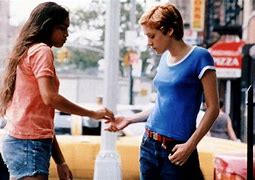
Perhaps one of the more volatile films on this list both in terms of content and the critical response, Kids is an aggressive look at the lives of pre-teens and teenagers roaming the streets of New York.

They are sexually active, including the nearly 18-year-old Telly (Leo Fitzpatrick) sleeping with a 12-year-old girl and taking her virginity. In fact, Telly only wants to have sex with virgins. They also shoplift alcohol and consume other narcotic substances regularly. 

We eventually meet Jennie (the exceptional Chloe Sevigny in her film debut), who tests positive for HIV, but she tells the nurse that she only had sex with one person: Telly. She then tries to get ahold of him knowing he will likely keep spreading it to other young girls. 

Director Larry Clark wanted to have Kids be seen as "the Great American Teenage Movie" as if it could be comparable to that of a "Great American Novel". I will say that Kids is brutal in the best ways, and it does seemingly capture a New York that hasn't quite been messed with by the Rudy Guiliani administration who had just become NYC Mayor while the film was being shot.

Two of the film's biggest defenders at the time of its release were Roger Ebert and Janet Maslin. The former acknowledged that this was a film that needed to be discussed and that while the film has a message, it is also fully aware that "safe sex is not going to civilize these kids". Nothing is going to be THAT simple. The latter felt that the film was difficult to sit through for the right reasons and that it should be seen "as a wakeup call to the modern world".

I actually haven't watched Kids since high school. I do have to wonder how it would be if I went back to revisit it.

______________________________________

#13 - LOVE LETTER

Written & Directed by Shunji Iwai


I don't even remember for certain what led me to watching Love Letter. It wasn't like I heard of the director or any of the performers, but admittedly, there was a time in my life where I did take more chances on watching films in a way that I don't really do today. Normally I will dig around and find recommendations rather than basing it just off the description I may come across...which back then would've likely been via the TV Guide Channel or a literal TV Guide.

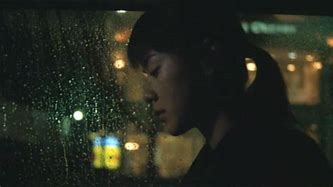
A young woman named Hiroko (Miho Nakayama) loses her fiance Itsuki in a mountain climbing accident. Two years after the accident, a memorial service is held; she looks through his high school yearbook and finds an address under his name. As a form of catharsis, Hiroko decides to write a letter to Itsuki and sends it to the address only to get a response back from a WOMAN named Itsuko. From that point on, the film alternates between Hiroko and the female Itsuki as they become pen pals. 

However, we do learn that the female and male Itsuki both knew each other, which makes Hiroko suspect that maybe the reason he fell in love with her is due to the resemblance she shares with the female Itsuki. I should also point out that the female Itsuki is played by the same actress to really drive that point home.

Love Letter is a film that somehow manages to straddle a line between being bittersweet but also feels deeply beautiful. Dealing with the grief of memories is something that is very universal no matter the language, but admittedly, I always love when this comes up as a subject in Japanese cinema. 

Even recently with Ryusuke Hamaguchi's Drive My Car, I found that to be another great example of how people handle grief and those around them with grief...whereas that film also had grief being expressed through art, Love Letter is through the connection of a lost love and how a random stranger can give you some kind of catharsis. 

____________________________________

#12 - THE USUAL SUSPECTS

Directed by Bryan Singer

Written by Christopher McQuarrie 


Good lord, I always forget that this film was directed by Bryan Singer...moving past that awkward tidbit of info...

The Usual Suspects is part of a group of films that has maintained a sense of "legend" due to its ending, sort of like The Sixth Sense or Fight Club would achieve 4 years later. However, as amazing as the ending is, I do think the film has more to offer than that.

Having said that, I do find it interesting that this is one film over time that I have grown to admire less. There was a time where I likely would've ranked this film not only in my top 3 but as high as my #1 slot. Even when I first drafted this list, I had it at #4. After I started to write about it and other films, I found myself thinking more positively about the rest of the list and kept shifting The Usual Suspects down.

What really brings this film up to a higher level, aside from the script's progression to the end, is that of Kevin Spacey's performance as Verbal Kint. Say what you will about Kevin Spacey, but the man can act. I adore this performance, and he is simply so captivating acting opposite Chazz Palminteri. 

I used to try to defend this film A LOT more, but I do think it doesn't fully age as well as a final product. However, if you go in pretty blind, you will likely appreciate it quite a bit. At the very least, you can admire the plotting and that iconic Oscar winning Spacey performance. 

_____________________________________

#11 - PARTY GIRL

Written & Directed by Daisy von Scherler Mayer

Co-written by Harry Birckmayer


Thanks to her scene-stealing work on Season 3 of The White Lotus as the well-to-do North Carolinian Victoria Ratliff, Parker Posey has had a bit of a career resurgence at the time of me writing this post. As a kid, I took to her instantly in the Christopher Guest movies, namely Waiting for Guffman and Best in Show.

However, Parker Posey had a whole other moniker entirely in the 90s: Queen of the Indies. 

Bouncing around working with filmmakers like Richard Linklater and Noah Baumbach in their earliest films, Posey established herself as an effervescent and eccentric character actress who could pretty much do anything you asked of her. 

This vibe truly began with Party Girl, in which Michael Musto of Vanity Fair dubbed her "the new Queen of the Art House" and was a highly assured feature-film directorial debut for Daisy von Scherler Mayer, who had mostly been known for her contemporary stage interpretations of Shakespeare staples like The Tempest and Two Gentlemen of Verona.

Posey plays Mary, a young woman who spends her life flitting from party to party until one night, she is arrested at an underground rave. Once she has her godmother Judy pay her bail, she seeks to repay her but reluctantly agrees to do so by becoming a clerk at the New York Public Library where Judy happens to work. 

This is a very solid film that is elevated by the presence of Parker Posey. For a film that cost only $150,000 and was shot over 19 days, the final result is a little underrated gem from 90s cinema...and in terms of its footnote in history, it just so happens to be the first film to have a premiere on the internet which had only been available widespread for roughly 2 years at that point.

__________________________________

#10 - BABE

Written & Directed by Chris Noonan

Co-written by George Miller 


Yes, you are reading this correctly. Babe is an absolute delight. 

What is even more hilarious is that as kid, I wasn't a big fan of the film. In fact, when I heard that it got nominated for Best Picture, I was floored!

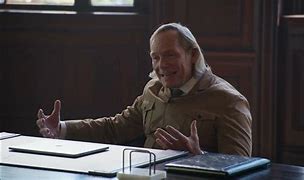
However, I cannot deny that this film is so sweet and charming and that the scenes between James Cromwell and Babe the Pig are enchanting. That final moment (seen in the picture) when Babe looks up at Cromwell's Farmer Hoggett and he says the immortal "That'll do, pig. That'll do"...it almost makes me misty even thinking about it now.

When it comes to family-oriented films, Babe was a clear example of one that was made with total class and a sense of detail. It wears its heart and soul on its collar, and it does thrill me that a film like this was able to be embraced by the film community as a strong artistic achievement. I can even recall at the time that the film led to a surge in vegetarianism, with James Cromwell leading that charge. 

As for its sequel, Babe: Pig in the City, a film that Gene Siskel dubbed the Best Film of 1998, I remember THAT one flooring me in other ways...but that is a story for another day. George Miller took the reigns which wasn't shocking considering how much he and Noonan feuded during the making of the first one. I just think its crazy that George Miller, the same man behind the Mad Max films, also help bring children's fare like Babe and Happy Feet to the screen.

_______________________________________

 #9 - SE7EN 

Directed by David Fincher

Written by Andrew Kevin Walker


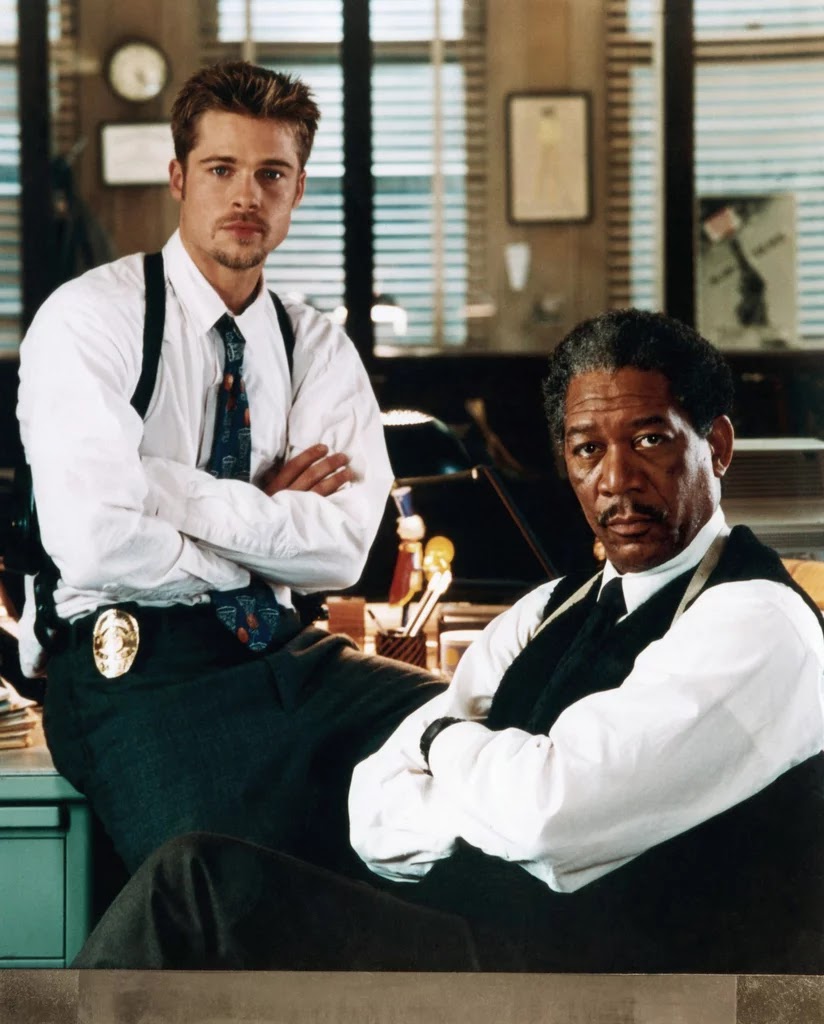
After having a highly successful career directing music videos, including the iconic "Vogue" and "Express Yourself" videos for Madonna, David Fincher was given the opportunity to direct the third installment of Alien. Needless to say, that did not go well. A lot of that film's faults, however, can't fully be attributed to Fincher as it is clear he does have some interesting visual ideas.

His sophomore outing, Se7en, is truly his coming out party and where you can see the true promise of his technical mastery. 

I am not exactly a passionate fan of Fincher's work like I am some of his contemporaries, but it is hard to deny that man is a master at crafting tension and can pace scenes down to a tee. Even a film like Zodiac, which I actually think is superior to Se7en, is nearly 3 hours long but he keeps that film moving in such a way that I marvel at it every time I see it. 

Se7en is a film that I did like upon first viewing, but it resonated over time. So much about the film's aesthetic is so gritty and grime, but it comes off as vibrant and thrillingly alive. At that point in time, I am not sure many people were going to claim that Brad Pitt was some kind of remarkable actor, but he is buoyed up working next to a master like Morgan Freeman. 

The idea of a serial killer utilizing the Seven Deadly Sins feels like one of those plots that could border on gimmicky and melodramatic, but nothing about Se7en suggests this. 

But I gotta say...that scene where Kevin Spacey gives Brad Pitt some head...if you know, you know...

_________________________________

#8 - FALLEN ANGELS

Written & Directed by Wong Kar-wai


Ah yes, my main man Wong!

I have waxed rhapsodic about Hong Kong filmmaker Wong Kar-wai quite a bit on this blog, particularly his magnum opus, In The Mood for Love from 2000. I have also talked a little bit some of his other films such as Happy Together from 1997, but this is the first time I will be discussing Fallen Angels, his neo-noir genre bending crime film.

The film circles around two intertwining stories: Wong Chi-ming (Leon Lai), a hitman who is looking to leave his life behind and the relationship he has with a prostitute named Hui-ling (Karen Mok) and his "partner" (Michelle Reis) who is in love with him. The second story looks at a mute ex-convict named Chi-mo (Takeshi Kaneshiro) who is on the run from the police and an unstable woman named Charlie (Charlie Young) who seems to be living a life of constant despair. 

I do think the film has developed a strong cult following over the years, but I will say it is clearly on the lesser end of Wong's filmography. Saying that, however, is not as harsh as it may seem considering how strong most of his works actually are. Upon its release, some critics bemoaned that the film was "style over substance" to the point where Roger Ebert said the film was so niche that it would only be liked by a small subset of film people whom you might see "in a Japanese anime section of a video store."

I do think this sells the film a bit short, but it does come across like an MTV of the 90s permeating into a crime film. I just think for what it is, it worked for me. It may not be as deep or profound as his other works, but it is very sleek and vibrant, nonetheless.

_________________________________________

#7 - MABOROSI

Directed by Hirokazu Kore-ada

Written by Yoshihisa Ogita 

Original Story by Teru Miyamoto


It makes me very happy that I now get to discuss the great Japanese filmmaker Hirokazu Kore-ada, who is still churning out fantastic work after having won the Palme d'Or in 2018 for Shoplifters and his wonderful 2023 coming-of-age psychological drama Monster. His directorial debut, and one of his 5 best films, was Maborosi which in Japanese means "Phantasmic Light". 

The film opens with a young couple named Yumiko and Ikuo (Makikio Esumi & Tadanobu Asano), who recently welcomed a new baby. One day while going for a walk near train tracks, Ikuo is struck and killed by an oncoming train. While sort of left ambiguous, we are left to believe that he intended to do this on purpose. After a few years pass, Yumiko agrees to an arranged marriage with another widower named Tamio (Takashi Naito) and how they manage to find a common ground in their grief.

I have talked a lot about the late great Japanese filmmaker Yosujiro Ozu on this blog, the man who was behind Tokyo Story, Late Autumn, Early Summer, among others...and I have always felt that Kore-ada was something of a modern-day./ example of Ozu.

This film, in particular, really taps into the Ozu aesthetic with its genteel mood surrounding a topic of a woman dealing with expectations of marriage and what love/relationships look like for others...and how willing we are to let the opinions of society shape that. 

While not as complex as some of his future films, Maborosi is deeply effective and represents a truly wonderful and assured director who would go on to become one of the greatest of our time.

___________________________________________

#6 - LA CEREMONIE

Written & Directed by Claude Chabrol

Co-written by Caroline Eliacheff


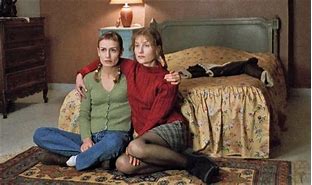
When you think of great female duos in film, you could begin with Susan Sarandon and Geena Davis in Thelma & Louise or go for full on comedic camp with Mira Sorvino and Lisa Kudrow in Romy & Michelle's High School Reunion. There are many great female duos beyond what I just mentioned but one that I wish got more attention is that of Isabelle Huppert and Sandrine Bonnaire in La Ceremonie. 

Surprisingly, I don't think I have really talked much (if at all) about Isabelle Huppert on this blog and that floors me as I consider her to be one of the finest acting talents to ever exist. She is simply sublime. I did bring up Sandrine Bonnaire when I discussed her performance in Agnes Varda's Vagabond, and she is also quite the luminous performer. 

I had first seen La Ceremonie back when I was in high school and really enjoyed it, but it wasn't until I revisited the film during my oft-mentioned Quarantine Rewatches of 2020 that I realized how much I actually loved what Chabrol achieved here. The reason I ended up revisiting it was due to Bong Joon-ho, who mentioned La Ceremonie as a major source of inspiration for Parasite. 

In the film, Bonnaire plays Sophie, a young woman who is hired as the maid for the rich Lelievere family who live in an isolated Brittany mansion. We learn as the film progresses that Sophie is illiterate and has had a history of violence in that she may have not only set fire to her father's house but intended to kill him.

Her energy is exacerbated when she meets Jeanne (Huppert), who is woman mired in jealous and aggressive tendencies and expects the worst from everyone. She also has a violent record as she was charged with the murder of her 4-year-old daughter but was acquitted of the crime.

The two of them soon find ways to slink deeper into the lives of the Lelievre family, but things take a turn when Sophie tries to blackmail Melinda Lelievre (Jacqueline Bisset) after she discovers that she is illiterate. 

A film like La Ceremonie flirts with being pulpy, but Chabrol, a director who was part of the illustrious French New Wave, elevates this to neo-noir art. It also doesn't hurt that you have actresses the caliber of Huppert and Bonnaire leading the charge as both of them are simply compelling beyond belief. 

_________________________________

#5 - TO DIE FOR

Directed by Gus Van Sant

Written by Buck Henry

When I first saw To Die For, it was right in the middle of the Nicole Kidman explosion that occurred right after her divorce from Tom Cruise. With her work in films like Moulin Rouge, The Others, and The Hours, she became the talk of the town and ended up winning the Oscar for the latter.

However, all I kept hearing online from other film fanatics was that her best work was still in To Die For and that she was on the brink of an Oscar nomination after winning the Comedy Globe and the Critics' Choice Award. 

I still feel to this day that To Die For may remain Nicole Kidman's best work and that is certainly a strong claim to make considering she has done consistently solid work over the years while also making bold & artistic choices.

I also might love To Die For as a film more than most. I tend to be drawn to stories where people are trying so desperately to achieve a life they want, and that is something I definitely related to when I first saw the film. Even now, feeling very unfulfilled with my job, I can relate to it wholeheartedly. 

To Die For straddles a line of wish fulfillment and psychosis as we see Nicole Kidman's Suzanne Stone-Maretto (or as she prefers "Suzanne Stone...that's my PROFESSIONAL name") trying eagerly to make her way up the television ladder to become a beloved newscaster a la Barbara Walters or Connie Chung. 

With a persistence that borders on obsessive, Suzanne is able to obtain a job as an assistant for her tiny local TV affiliate in the fictional Little Hope, New Hampshire. She eventually turns this into doing the nightly news weather forecasts. With her ounce of a profile, she pushes to get a documentary series made called "Teens Speak Out" and tries to recruit local high schoolers for the program which among this group includes Joaquin Phoenix, Casey Affleck, and Alison Folland. However, Suzanne STILL doesn't feel enough fulfillment from her life, even after she has a whirlwind marriage/romance with a local business owner named Larry (Matt Dillon). 

Her documentary series ends up becoming a whole other plot entirely. 

To Die For is dark satire at its sadistic best. The sardonic script by Buck Henry contains some of his best work and under the hand of Gus Van Sant, we get to see Nicole Kidman truly soar in this role where we both enthrall in her rise and rejoice at her downfall.

_____________________________

#4 - SAFE

Written & Directed by Todd Haynes


Safe is one of those films that I always had respect for, but for whatever reason, I would often forget about the film whenever the topic of 1995 in cinema would come up. This isn't the first time I have discussed the film on my blog as I did discuss Julianne Moore's performance back in my Best Performance of the 90s post from a couple of years ago. 

As it stands now, Safe has stood the test of time for me. The more I think about it, the more I admire it.

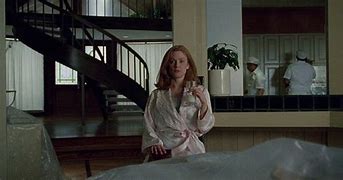
Safe involves Julianne Moore as Carol White, a suburban housewife living outside of LA with her husband Greg and stepson Rory. Her life seems to be all surface level, not a lot of excitement and even her friendships come with a bit of distance.

After her home undergoes a renovation, Carol's health begins to respond rather intensely to various outside sources whether it be having uncontrollable coughing fits after being around car exhaust, suffering a panic attack for the first time, and having a nosebleed while getting a perm. 

Writer/director Todd Haynes wanted to tackle a film about the concept of "environmental diseases" and how a housewife might opt for a new age method to try to cure herself, which had been all the rage in his social circles from various gay men who tried that method after having been diagnosed with AIDS. 

The final result is simply a truly devastating experience, and it is no wonder that Haynes and Moore would go on to be a fantastic "auteur/muse" pairing for decades to come. In fact, this film truly showed the world what Moore was capable of as up to that point, she was mainly known for her role on the CBS Daytime Soap As the World Turns and supporting roles in films like The Hand That Rocks the Cradle, Short Cuts, and Vanya on 42nd Street.

To this day, this ranks among her absolute best work. I would also say the same in terms of Haynes' filmography as well. It acts as a harsh critique not just towards the medical industrial complex but also that of the Louise Hay-esque self-help ideologies...and the final moments with Moore staring at her gaunt expression in the mirror telling her that she loves herself is nothing less than unsettling.

_________________________________________

#3 - TOY STORY

Co-written & Directed by John Lasseter 

Also written by Joss Whedon, Andrew Stanton, Joel Cohen, & Alec Sokolow

Story by Lasseter, Stanton, Pete Docter, & Joel Ranft


When Toy Story was released in theatres back in October 1995, I was 7 years old; CLEARLY right within the prime target audience.

Watching the film at that time, the graphics were clearly something to marvel at and I greatly enjoyed it. For whatever reason though, I wouldn't say I was passionate about it. Not sure why that was exactly, but it took me growing up to truly find my adoration for this film series. It was my rapturous response to seeing Toy Story 3 in theatres that really led me on that journey.

When I look at Toy Story now, there is one major aspect to it that stands out more than anything: the script. 

In fact, Toy Story was the first animated film to receive a Screenplay nomination, although it did happen to lose to The Usual Suspects. I am not looking to pit either film against each other, but strictly judging Toy Story's script, it walks that fine line between being fully appropriate for young kids while providing enough of a salty edge for the parents who sit through it with them. 

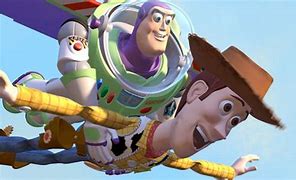
The dialogue within the script is so memorable. I am not even talking about "To infinity and beyond" but who can forget Buzz Lightyear's "You are a sad, strange little man" or Woody incredulously exclaiming "That's not flying, that's...falling with style!"

And a lot of that great dialogue is brought to life by Tom Hanks, who was fresh off of back-to-back Oscar wins, and Tim Allen, who was at the height of his star power as the lead of the highly successful sitcom Home Improvement. The whole ensemble, ranging from Don Rickles to Estelle Harris to Wallace Shawn to Annie Potts to John Ratzenberger to Jim Varney has got to be one of the best voice casts for any animated film I can think of. 

It is also impressive how a lot of the imagery in the film still holds up 30 years later, but to me, it still always comes back to that script. Considering how the film was breaking new ground as the first full-length computer animated film, they could've coasted by on that fact and avoided devoting a lot of time to the story. Thankfully, that wasn't the case.

These films have always been made with stellar stories and concepts behind them, particularly the 3rd one. I do think perhaps they should've ended it with the 3rd one, but the 4th entry was very solid and well written in its own right. 

I do have to wonder what we will get with the 5th entry, though.

______________________________

#2 - BEFORE SUNRISE

Written & Directed by Richard Linklater

Co-written by Kim Krizan


After showing off a certain flair for eccentric misfits in films like Slacker and Dazed & Confused, Richard Linklater appeared in 1995 with the ultimate meet-cute film and thus began one of my favorite film trilogies of all time.

Before Sunrise begins on June 16, 1994. An American named Jesse (Ethan Hawke) is boarding a train in Budapest after traveling around Europe. On the train, he meets Celine (Julie Delpy), a French student who is returning to Paris after visiting her grandmother. The two strike up a conversation over the books they are reading and have instant chemistry. 

Jesse is on a bit of a time crunch though as he has a flight out of Vienna the very next day, but the two decide to spend the rest of the day together before going their separate ways. 

I can't even begin to tell you how truly enchanting of an experience I consider this film to be. Hawke and Delpy are absolutely radiant together and you completely buy into the idea that these two people could connect so instantly. 

Everything about the film is so fleeting and may be seen by some as a kind of fantasy, but everything about the film seems believable and grounded. I often think a lot about the ending, which might seem to be a bit bizarre in today's social media-drenched culture, but it also feels very poignant at the same time. 

As I mentioned before, this is the first film in a trilogy that would be followed by 2004's Before Sunset, which is where Jesse and Celine cross paths in Paris, and 2013's Before Midnight, in which the duo are now married with kids but face some personal turmoil. 

As a film trilogy, each film offers something so rich and alive and human. I don't think it is any of their intentions, but if there was ever a film series I would be curious to see continue beyond a 3rd installment, it is this one.

_____________________________

#1 - LA HAINE

Written & Directed by Mathieu Kassovitz


This is not the first mention of La Haine on this blog. I had included the film on my Best Film of the 90s list way back when and I also singled out Vincent Cassel on during my old "Acting!" series where I tackled my favorite performances of the 90s. 

Set in a poor immigrant-heavy suburb in Paris, La Haine is about three young friends: one Jewish, one Black, and one Muslim and follows them over the course of one day and one night.

Much like Do the Right Thing, I would say La Haine is a film that took on a deeper and darker new light for me over the past few years. The first time I saw it was when I was in high school back in 2005 when I began to dig deeper into French cinema. My immediate response to it then was extremely positive but the more I think about it, the more I admire it as I've gotten older.

The film begins with a riot and a man named Abdel getting killed while in police custody, which is loosely based on Zairean and Makome Bowole, who died in police custody in the early 90s.

Vinz (Vincent Cassel) is the most aggressive of the group and seeks to avenge Abdel's death. He openly despises police officers and even acts out Taxi Driver fantasies in his head of murdering them. 

Hubert (Hubert Kounde) is a boxer who is actually trying to seek to find a better life and would rather not provoke the police, even though his boxing gym got destroyed during the riots. 

Said (Said Taghmaoui) is the calm mediator of the group who has to tend to the consistently bickering Vinz and Hubert.

As I mentioned above, I saw La Haine as a teenager but even at that time, I picked up on the vibe that the film felt like a continuation of the French New Wave but under a more modern lens. While those films from the 60s had a certain gloss about them (and I don't mean that negatively), I loved how Kassovitz made a film that borrowed from ideas of the Wave along with Italian Neo-realism and placed it in a setting that is so unrelented and modern and still very timely, as hard as that is to say.

I would actually consider this film to be recommended viewing, and I wish it could be shown to teenagers. The subtitle aspect of it would likely turn off many, but as a film, I think it should be able to grab one's attention rather easily.

____________________________________

FINAL THOUGHTS:


Considering this is smack dab in the middle of the 90s, I do feel like 1995 is a good representation for the kind of cinematic content we got throughout that decade. I still maintain that it wasn't the greatest year for cinema of that decade, but I do think we get some great variety in terms of whimsical efforts (Babe) to the volatile societal attacks (La Haine, Kids). 

I do love that the 90s brought back a strong indie scene which felt more prominent in the 70s but dipped throughout the 80s. 

I don't have much else to add here, but I do hope to do more posts like these in the coming months. Not sure what year I will want to tackle next, but the possibilities are almost endless. It is my blog after all. ;-)


Wednesday, May 7, 2025

EVANESCENCE ON THE HUDSON: Thoughts on S2/E3 of THE REHEARSAL


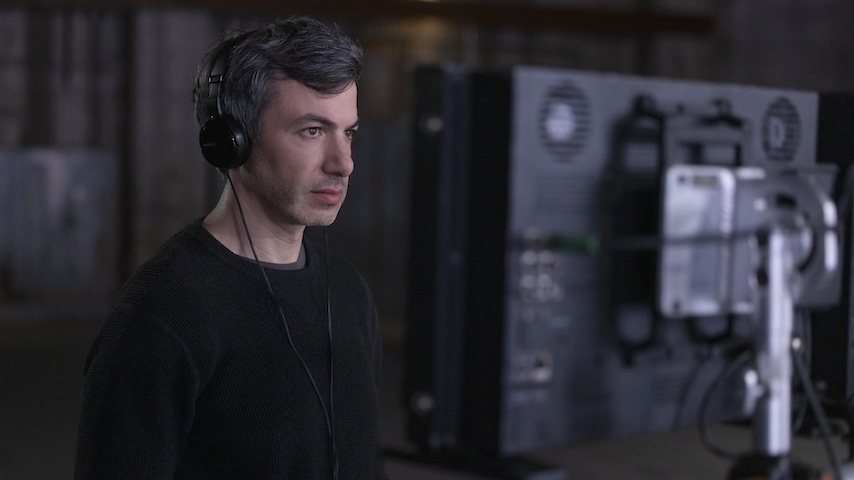
 If someone said that we would get to see Nathan Fielder dressed as an infant Sully Sullenberger getting breastfed from a massive puppet mother, I would say "oh yeah, that tracks". What a joy to live in a time when a man of such complete and utter lunacy is putting out such absurd content on television.

It is time to discuss Season 2/Episode 3 of The Rehearsal, entitled "Pilot's Code".

When the episode begins, we don't even delve into the theme of pilots and flights right away. Instead, we meet a couple named Bogdan and Monique. When their dog Achilles passed away, they chose to get him cloned on multiple occasions (must be nice to be able to have that kind of expendable income...) but found that the results were lackluster as the clones don't share the same personality at all. 

Enter Nathan Fielder!

Fielder re-creates the house layout that Bogdan and Monique had when they lived in San Jose back in 2011...and even though they live outside of LA now, it doesn't matter. Fielder has tanks full of air transported down from San Jose to blow onto the dog to try to create a similar environment. Honestly, it was THIS bit early on that had me sold. The idea of pumping air from San Jose out on a dog in LA to try to get it to take on the personality of the OG version of Achilles is one of the most Nathan Fielder-based ideas that I can't help but just fall in love with the surreal genius of this man all over again. 

As is his won't, Fielder finds a way to tie this back to his theme of airline pilots and what conditions them to act the way that they do. He becomes drawn to perhaps the most famous pilot of them all: Chesley "Sully" Sullenberger, the man behind the iconic crash landing known as the "Miracle on the Hudson" here in New York. 


Using his autobiography as a guide, Fielder wants to act out various key moments from Sully's life which does include acting as Sully in his infancy/toddler years on a set that could be on the verge of Honey, I Shrunk the Kids complete with a mom played by a massive puppet and a father who walks on stilts. He even acts out a bit from Sully's life where he took a girl up in a plane and how he referred to it as a "sensual experience". In order to truly experience this, Fielder can't feel aroused with the actress playing the girl, so he has her and the crew all leave the simulation room so he can watch porn to achieve the level of horniness he deems appropriate. 

The little details when it comes to the sexual humor makes me think back to Nathan for You, particularly the episode in which he has a robot claw arm programmed to pull down his pants at the expense of exposing himself to young children (you had to be there...). He is willing to put himself in ridiculous and embarrassing situations all for the sake of comedy, and while that is a point I have made before, I am still impressed by it time and time again. 


The culmination of the episode delves into how Fielder notices certain words like "cope" or "deal" within Sully's autobiography and how he tends to avoid discussing his emotions too deeply, if at all. One method he brings up to try to work through these repressed emotions is listening to music on his iPod. Sully had said he had a particular fondness for Evanescence, who are most known for the song "Bring Me to Life". 

While going through the simulation of the Miracle on the Hudson landing, Fielder noticed there was a 23-second gap on the recording where Sully remains silent while the control tower tries to communicate with him. He makes the connection that the chorus to "Bring Me to Life" is exactly 23 seconds long and imagines that Sully listened to this to build him up in the moment before tackling a landing that could've gone horrendously. 


If you read my first two-episode reviews (Episode 1 and Episode 2), you will know that my response to this season begin with a mix of bemused optimism and uncertainty. I had faith in Nathan Fielder that he would be able to stick the landing...which is the easiest pun I can possibly imagine but I am not here to try to win brownie points for witticisms...and sure, maybe I won't like the direction the next 3 episodes will take.

Somehow, I doubt that. Maybe it'll not end up being the success that the first season was for me, or maybe it will blow me away. All I know is that THIS was the episode that I needed to truly embrace the concept at hand. 

Nathan Fielder essentially created a mini-Sully biopic that had more life and creativity in it than the 2016 Clint Eastwood film starring Tom Hanks. This seemed so apparent that even Vulture's review called it out, and the final result is one of my favorite episodes of TV that Fielder has produced. 

Everything about "Pilot's Code" is a microcosm of what makes Nathan Fielder one of the greatest minds in the entertainment world. It is smart, it is subversive, it is surreal and somehow turns out to be incredibly earnest in its thinking even with it coming across as positively bonkers. He poses theories and analysis on the behaviors of others and in the lunacy of it all, he makes it feel believable at the same time.

Truly quite the accomplishment. 


Wednesday, April 30, 2025

JUST A LITTLE TOUCH OF STAR QUALITY: Thoughts on S2/E2 of THE REHEARSAL


What makes a star?

Nathan Fielder's dour and awkward demeanor does not place him in the annals of what one could traditionally call "charismatic", but that is honestly what makes him a true star in my eyes. 

Fielder has been essentially playing a version of himself; sort of like Larry David did on Curb Your Enthusiasm or Woody Allen in several of his own films. He captures the vibe of lacking any kind of social grace or decorum, and yet he has so much confidence in reality that he is willing to make himself look like an idiot or a wimp so frequently. 

His persona becomes a key part of Season 2, Episode 2 of The Rehearsal, which is entitled "Star Potential". 

Before I go any further, this is the second of what will be a series of posts devoted to each episode of The Rehearsal's 2nd season. I will likely not go too in depth when it comes to discussing the previous episodes so it will help to have seen the episodes beforehand. If you have not read my post devoted to episode one, you can do that here.


As is his won't, Nathan Fielder tries to look towards his past endeavors as a means to shine a light on his current projects. Considering he is trying to work out a way to create a rehearsal program between airplane captains and co-pilots and how they communicate, he talks about his first professional gig in the business: a junior producer on Canadian Idol. He talks about how he would be tasked to watch people's auditions and would determine if they have "star potential" to be on TV. While the goal was to find legit talent, it is hard to ignore that a lot of comically bad singers would be let through on shows like these. 

In order to gauge the confidence of the pilots, he has them act as "producers" of a new singing reality competition program called "Wings of Voice" which gives them a chance to deliver potentially sad news to a contestant in a way that hopefully wouldn't be condescending or vindictive. Fielder leaves a ballot box outside of the audition room and asks the auditionees to rank the judges on a scale of 1-10.

One of the pilot judges, Mara'D, has the highest average score of roughly 9 out of 10 while most of the other judges' scores average around 7. When Fielder takes a crack at it, he only manages a 2 and a 4 despite trying to emulate Mara'D. 

It is always a bit of a snowball with Fielder as one of thing leads him to re-evaluate his own life, which includes Paramount+ removing the "Summit Ice" episode of Nathan for You which had been considered an episode that was making light of the Holocaust and therefore had some calling it out for antisemitism. This only intensified following the development of the Gaza attacks. Fielder goes as far to create the Germany Paramount offices in the way he feels it probably looks, complete with guards and studio heads dressed like they were a part of the Nazi Party.


By the episode's end, Fielder is feeling a bit dejected and misunderstood. He can't seem to find the right energy and confidence to defend himself and to get others to see that he is a genuine human being despite his timid demeanor. He watches one more audition of a 15-year-old singing and playing her own guitar. It is clear she could have potential, but she needs more training and confidence. He does his best to explain to her that he has faith that she will succeed in life because she is actually TRYING to fulfill her dreams while others don't put up the fight. 


It is clear that she is sad, but she seems to take his advice in stride. Once she gives him her rating and leaves, Fielder checks the paper and sees that the score is a 6...still his best score but not up to par of any other pilot's average. However, turn that frown upside down as they say, since it flips it over to resemble a 9. It may have been another fabricated instance, but for a moment, he achieved his goals.

This episode has me mostly on the positive side, but I am not sure if I feel as strong for it as I did the premiere...and certainly not anything from season 1. I am not necessarily saying that I am disappointed with this season, but rather that I do feel perhaps a slight bit of trepidation as to where he may go with this. 

I just read a review by The AV Club that postured if The Rehearsal is actually "narcissism with a budget". They weren't attacking Fielder per se, but they did acknowledge that no matter the cause, it always comes back to how Nathan Fielder examines his own life.

I don't really see it that way. I do agree that is what is happening on a surface level, but I wouldn't make the claim that Fielder is a narcissist. It is just the same as someone like Larry David; it's HIM but it is a heightened fictionalized version of himself on Curb Your Enthusiasm. 

I do have faith in him, and I am very excited to see the season through. I just find myself unsure of how to respond to this concept. It is very intriguing, but somehow, the hook for it hasn't grabbed me like it did for the first season. I could see a world where once this season ends, the final results could bolster it up and then the whole season will age remarkably well. 

This isn't to say I am unhappy with the season so far, it is just a little bit of an adjustment. 

I will be back next week to discuss the third episode which is entitled "Pilot's Code". I hope that we get a bit of a boost with that one.


Saturday, April 26, 2025

A Look Back at 1960 in Film: A Year of International Dominance


Now it is time to dive back into the beginning of a truly fascinating decade when it comes to nearly every aspect of society/culture: the 1960s.

From what I can tell, I don't often hear 1960 brought up as being a great year for cinema...but I think the reason for that is that a lot of the films I find amazing from that year did not come out of Hollywood or even out of England. 

This was one of those years, which was actually more frequent than not during the period post-WWII up through the mid-60s, that international cinema reigned supreme. 

How much of a reign are we talking for 1960 specifically?

Well, here's a spoiler: only two English-language films are going to be featured on this list of 15...but they are two truly remarkable films.

This isn't to say that all of the output from Hollywood/England was bad. There were some sterling efforts like Peeping Tom, Village of the Damned, and Elmer Gantry just off the top of my head, but I don't necessarily view those as being first rate masterpieces.

This is one of those years that is truly an embarrassment of riches as we get so many wonderful entries from the likes of The French New Wave up through the genteel domestic dramas of South Korea and Japan. 

Perhaps the international angle will make this list seem more pretentious, but there are quite a few films on this list that are considered to be quite indelible to cinema lovers.

There are some films I did consider putting on this list but chose to leave off. Those include the three I mentioned above along with Italian Neorealist legend Vittorio De Sica's Two Women, which contains a true tour-de-force from the luminous Sophia Loren; Shoot the Piano Player, the sophomore outing of French New Wave legend Francois Truffaut; Henri-Georges Clouzot's La Verite, a truly gripping French courtroom drama regarding a woman accused of murder; or even Stanley Kubrick's Spartacus.

This is a bloodbath of a list, so much so that looking at the outline below me, I can't believe that I have some of these films ranked below the top 10. THAT is how highly I think of these films.

====================

THE BEST OF 1960:

#15 - ZAZIE DANS LE METRO

Written & Directed by Louis Malle

Co-written by Jean-Paul Rappeneau


My first entry on this list is something of a last-minute addition. There was a period of my life (teenager) where I watched so many films that many of them don't necessarily stick with me over the years.

That isn't to say that this particular film was forgotten, but it was certainly a pleasant surprise when I happened to come across the title and was like "Oh of course!"

Strangely, Louis Malle is one of those filmmakers I don't often discuss as much or bring up when talking about great cinema, and yet, he has a truly wonderful catalog of work.

In the 80s, he has three films that are truly great: Atlantic City, My Dinner with Andre, and Au Revoir les Enfants...and while those may arguably be his most well-known efforts, he has so many wonderful films from earlier in his career that deserve some attention.

The source material, a novel written by Raymond Queneau, was considered to be "unadaptable", and a lot of that was due to the rather surreal and abstract way of storytelling. 

You could even argue that the results of the film onscreen are an explosion of chaos and vibrancy that might even lack a little bit of soul at times...but there is such a sense of abandon with this film coming from a place of pure joy.

The film's titular protagonist Zazie, played by Catherine Demongeot, made such an indelible impression in this role...but after only making two more films, she chose to abandon an acting career and became a teacher.

Although years later, legendary author Vladimir Nabokov admitted in the press that he would've loved for Demongeot to play the iconic/infamous titular role of Lolita. One has to wonder what might've been if that had occurred.

_____________________________

#14 - NEVER TAKE SWEETS FROM A STRANGER

Directed by Cyril Frankel

Written by John Hunter


I debated even putting this film on my list, because I am not sure I can say I love it. I do respect this film for how it managed to tackle the concepts of pedophilia/child abuse and attacking the rich who can often use their clout to get away with anything. 

Made my British filmmaker Cyril Frankel, the film revolves around a British family (Peter, Sally, and their 9 year old daughter Jean) move to a small Canadian town as he will become a local school principal.

Jean meets a local girl named Lucille and they go for a walk in the woods. When she returns home, she appears to be very bothered about something and reveals that she and Lucille were asked to dance naked for an older man in exchange for candy.

It is revealed that the older man is Clarence Olderberry Sr, who just so happens to be the richest man in town and holds a lot of respect within the community. 

Topics surrounding child abuse/pedophilia are not new to artistic endeavors, but it is approached here with such uncompromising force by Frankel. A lot of these vile human beings...and I don't have to name them here as you already know...use their celebrity and wealth to shield truly immoral acts. Never Take Sweets from a Stranger doesn't shy away from that concept. Maybe it is a bit rough around the edges, but I do admire how it simply lays this horrendous issue out for what it is.

______________________________

#13 - BREATHLESS 

Written & Directed by Jean-Luc Godard

Story by Francois Truffaut


Not to date this post right off the bat, but we will see a boost to this film's profile in 2025 as Richard Linklater's new film Nouvelle Vague (which refers to what we call The French New Wave) will go into the story of the making of Breathless.

To be honest, I don't know much about the making of Breathless, at least not to my knowledge unless it somehow slipped my mind. All I know is that it was a very crucial film, along with Truffaut's The 400 Blows and Alain Resnais' Hiroshima Mon Amour, for starting off The French New Wave. 

I do admire Breathless very much and think it has a lot of style, but I am not sure I love it as much as I do the other two films I mentioned (both of which came out in 1959). I also think Godard becomes a far more fascinating filmmaker as the 60s progress and especially once we reach the 70s.

I do love the frenetic nature of it, and it does feel very relaxed in tone even with the jump cuts and youthful vibrancy. It is highly competent film debut, even if it wasn't quite the punch to the gut that The 400 Blows was the year prior for Truffaut. 

_____________________________________

#12 - THE APPROACH OF AUTUMN

Directed by Mikio Naruse

Written by Ryozo Kasahara


This marks the first of four Japanese films I will be talking about on this list. I have always felt drawn rather strongly to Japanese films, and honestly a lot of films from Asian filmmakers in general. 

While a Japanese filmmaker like Akira Kurosawa was known for tackling bigger epic concepts from time to time, a lot of his contemporaries were drawn to smaller domestic stories that were brimming with a lot of humanity and pathos. 

Mikio Naruse doesn't get as much discussion as some of his contemporaries, but he was a wonderful filmmaker who felt comparable to that of Yosujiro Ozu (who we will be hearing from soon).

While works by Naruse (and Ozu for that matter) often tackled societal norms and family dynamics, what makes The Approach of Autumn feel a little more unique is that our main focus is on a young boy named Hideo (Kenzaburō Ōsawa) and his life after his father dies and his aloof mother has him stay with his uncle's family in Osaka.

The scrappy quality of the film suits it rather well, and I find the dynamics of the between and his friend Junko are very charming. I always admire how these films can find beauty in the tiniest of moments, even when dealing with truly tragic subject matter...like a neglectful mother.

_____________________________________

#11 - MACARIO

Written & Directed by Roberto Gavaldon

Co-written by Emilio Carballido


Macario is an icon of Mexican cinema and actually became the first Mexican film to receive an Oscar nod for Best Foreign Language Film; an award it would lose to a film that will (spoiler alert) also be on this list.

The film revolves around the titular Macario, a poor peasant who is eager to find a meal to eat on what is The Day of the Dead. When his wife is able to prepare a meal for him, he is greeted by three visitors: the Devil, God, and Death. All of them want to share the meal that he has been so desperately craving.

There are elements to the film that may make you think of Bergman's The Seventh Seal or even Dickens' A Christmas Carol. It doesn't exactly reinvent the wheel in any way, but there is something truly spellbinding about how it is presented.

All that this man wants to eat a turkey dinner, and in the end, his dream is only partially fulfilled.

The message is blunt, but also simple and timely: the poor will sadly always suffer when they often only ask for so little in return.

_________________________________

#10 - THE NAKED ISLAND

Written & Directed by Kaneto Shindo


We enter the top 10 and we are starting off with a bit of a doozy.

The Naked Island is a film with that is mostly void of dialogue. It feels a lot like it could've been a silent film made over 30 year prior. We meet a poor family living on a rural island located close to Hiroshima. They are the only residents on this tiny island and their means of survival is farming and fishing We watch them do their daily chores and we watch the children play together. 

When they get a chance to take a ferry to Onomichi, they get to experience new things such as eating in a modern restaurant, riding a trolley, and seeing the still fairly new invention that is known as a television.

The spark of joy is short-lived, however. The Naked Island may act as something of a visual cinematic poem, but it also deals with such a truly tragic circumstance and how some people don't have the luxury or means to take the time to grieve.

It might not sound up your alley, but it is a truly fascinating and alluring experience, even if it does pack a punch in the end.
_________________________________

#9 - ROCCO & HIS BROTHERS

Written & Directed by Luchino Visconti 

Co-written by Suso Cecchi D'Amico, Pasquale Festa Campanile, Massimo Franciosa, & Enrico Medioli


Visconti is one of those directors I always knew about but somehow never saw a lot of his filmography. However, when thinking about a film like Rocco and His Brothers, it is kind of hard to not be compelled to go check out more of his work. 

His 1963 film, The Leopard, was yet another key example of an international filmmaker wiping the floor with Hollywood and to be honest, 1963 has got to be one of the weakest years for cinema...particularly from a Hollywood standpoint. But I digress...

While his other films I have seen take on a more opulent style, Rocco & His Brothers is more in line with the Italian neo-realist style of filmmaking that we could see in the works of Roberto Rossellini (Rome: Open City, Stromboli) or Vittorio De Sica (Bicycle Thieves).  

When the patriarch of a family passes away, Rocco (Alain Delon), his widowed mother Rosaria (Katina Paxinou), and three younger brothers Simone, Ciro, and Luca have no means to survive on their own so the migrate from Southern Italy to Northern Italy where they have family living in Milan.

While this film could be seen as "the city corrupts the country boys", an angle I wouldn't approve considering I am someone who fled a more rural life for a city life and became significantly happier, I think the film is more fascinating in how it is a character study for observing the personality differences between these brothers.

Rocco is supposed to be the saint of sorts, but it is also to his detriment. Simone is the volatile one and it is Rocco's need to try to keep protecting him that makes you wish he'd grow more of a spine.

And yes, clearly Woody Allen was inspired by this title when he went on to write Hannah & Her Sisters, which I have to admit is one of his best films.

________________________

#8 - LE TROU

Written & Directed by Jacques Becker

Co-written by Jose Giovanni & Jean Aurel


I have never really been one for prison based films. I am not even that big of a fan of The Shawshank Redemption if I am being completely honest.

Did I just lose some of you?

Well, for those of you that stayed...

Le Trou is yet another prime example of how French cinema from the mid-20th century was firing on all cylinders as we managed to get the greatest jail-break film ever made. Yes, even over The Great Escape.

Five inmates have gathered to plan their escape from prison. Of the five, we only know in one instance of why they are in prison: Gaspard for attempted murder. We actually don't know a lot about the characters, so for all we know, we could be watching men who went around raping and killing young children. 

OR - what if they are wrongly imprisoned?

We don't know. This is where the success of the film is kind of shocking, because we don't know much about any of them and yet they all feel so vivid and real as human beings. Once they begin their escape, you find yourself debating if we should be rooting for their escape or if we want them to get caught. 

Great tension and a great enhancement of the claustrophobic setting that truly comes across onscreen.

_____________________________________

#7 - L'AVVENTURA

Written & Directed by Michelangelo Antonini

Co-written by Elio Bartolini & Tonio Guerra 


This is one of those films that has tons of high praise heaped upon it, but it also has quite a few detractors who consider it to be dull and pretentious.

A lot of that stems from the fact that Antonini wanted to tell a story that was heavily focused on the visuals and the mood and allowing everything to breathe. Whenever I hear that kind of comment, I can't help but get a bit anxious at first. I keep thinking about how Martin Scorsese talked about letting Killers of the Flower Moon breathe and I ended up finding that film to be incredibly slow to the point where I was already checking the time two hours in.

L'Avventura is a film that does require a lot of patience. It may move slowly and leave you eager for a jolt in the quiet narrative, but I clearly fall in the camp of people who were utterly entranced by this film.

The core catalyst of L'Avventura begins with Anna (Lea Massari), who goes missing while on a boating trip in the Mediterranean with her lover Sandro (Gabriel Ferzetti) and best friend Claudia (Monica Vitti). While on the search, Sandro and Claudia begin to realize that perhaps the two of them might be falling in love. 

Vitti, in particular, is absolutely stunning in this and gives a truly complex and soulful performance as Claudia. It is a shame that we couldn't have seen her get an Oscar nomination for it. Watching her and Ferzetti navigate the complexities of their emotions over someone who may be gone from their lives while finding possible joy in their own is an entrancing experience. Although, as I type it out, I can't help but cheekily think about the relationship of Donna and James on Twin Peaks following the murder of Laura Palmer.

So yes, the themes are similar but those two were certainly no Monica Vitti and Gabriel Ferzetti.

___________________________________

#6 - LATE AUTUMN

Written & Directed by Yosujiro Ozu

Co-written by Kogo Noda


I guess Autumn was a popular theme in Japanese cinema...

It is time for me to jump for joy as I now get the chance to discuss one of the greatest gems of a filmmaker: Yasujiro Ozu.

Perhaps most known for his 1953 opus Tokyo Story, Ozu films might be seen as cheap and lifeless at first glance. That kind of thought couldn't be further from the truth.

Ozu's focus was on societal expectations often surrounding the world of domestic life, particularly how women would often be stifled with the expectation of getting married and the conflicts that arise between older and younger generations.

I also can't help but cheekily comment on how even his titles are simplistic in their approach, often invoking times of day (Good Morning or An Autumn Afternoon) or specifically seasons themselves which include not just Late Autumn but there is an Early Autumn and Late Spring as well. 

Late Autumn still continues in his usual themes, but here, a widow (Ozu's muze Setsuko Hara) and her daughter (Yoko Tsukasa) are both facing pressure from men who were close with their husband/father to get married. 

Truly infuriating patriarchal subject matter, and yet somehow, Ozu always handles these topics with such grace and simplicity that you are also somehow comforted while watching it. Ozu seemed to be one of the greatest filmmakers of that era how seemed eager to give focus to female characters and knew that there was more underneath the surface than them just being domesticated figures. 

I will always be a passionate champion of Ozu, even if some may bemoan all of his static shots and people talking directly to the camera. 

___________________________________

#5 - THE VIRGIN SPRING

Directed by Ingmar Bergman

Written by Ulla Issakson


When it comes to lists like these, there is usually one thing you can count on: if Ingmar Bergman made a film that year, it will be featured.

The Virgin Spring may not be among his absolute best work, but that is what was so stunning about Bergman in that a lot of his output was so strong that the fact that The Virgin Spring might only barely crack the top 10 of his filmography is quite the impressive feat. 

In terms of the plot, it is about as dark as one might expect from Bergman: a father is grappling with how to handle the rape and murder of his young daughter. In fact, Bergman's main inspiration for the film was Akira Kurosawa's 1950 epic Rashomon. Being rather modest, Bergman referred to his film as a "wretched imitation"...which is certainly not the case.

Bergman was always fascinated with ideas of morality and religion. The Virgin Spring is no different, and even taps into themes surrounding paganism and Norse mythology. Here, we see a man of strong faith descend into the deepest pits of hell as he seeks revenge. The late great Max von Sydow is beyond powerful in this role, and he was splendid at tackling characters such as these.

The Virgin Spring may have taken inspiration from Rashomon but it also would eventually inspire Wes Craven to make his breakout 1972 film The Last House on the Left, which while on the level of those other two films, was a very effective and gritty offering to the horror genre.

_________________________________

#4 - LA DOLCE VITA

Written & Directed by Federico Fellini

Co-written by Ennio Flaiano, Tullio Pinelli, & Brunello Rondi


 Very few filmmakers are as sumptuous in their approach as Federico Fellini, who often approached his work with a sense of wonder and whimsy and surrealism.

Fellini often addressed stories revolving around people in crisis or thirsting for some kind of identity or purpose which is not that different from some of his contemporaries such as Ingmar Bergman. However, it is that spark of the surreal that he has with more of a subversive satirical slant that makes him stand out as uniquely himself.

La Dolce Vita revolves around a journalist named Marcello (Marcello Mastroianni) who is unsure with what he wants out of life. He loves the life of being around the elite crowds of Rome but is struggling to adapt to a domestic life with his girlfriend. Marcello also isn't exactly a serious journalist, he's closer to the tabloid variety. In fact, a photographer friend of his goes by the name of Paparazzo and it was this prototype of the obtrusive photographer that would lead to the term "paparazzi" becoming part of the lexicon. The style of content he is involved with leads him to want to become a better and more serious writer.

I was a bit too young when I first watched La Dolce Vita. I didn't hate it or anything...I actually was rather fond of it but it did feel a bit foreign to me. For whatever reason, Fellini's 1963 masterpiece 8 1/2 was the one that got to me more strongly but I think that was due to the fact I had some familiarity with the 1982 Broadway musical adaptation of the film which was called Nine so it had that bias going for it even if Fellini's film differed quite a bit from the musical.

When I revisited La Dolce Vita in college, it clicked for me. It felt more real and even devastating and you could truly watch the journey of Marcelo gliding through this glamorous journey in a way that makes you feel swept up in the luxurious cacophony only for it all to fade away and became something jaded and even appalling.

I used to rank Fellini as one of the greatest filmmakers who ever lived. This isn't to say I stopped considering him as one, but I did stop bringing him up a lot in conversations in lieu of other filmmakers I grew to have a fondness for. Now, as I type this, I feel compelled to have a Fellini film marathon where I revisit several of his films (although I did rewatch 8 1/2 back in 2020).
_______________________________________

#3 - THE APARTMENT 

Written & Directed by Billy Wilder

Co-written by I.A.L. Diamond

1960 was such a stellar year that a film like The Apartment stood out like a beacon when it won the Oscar for Best Picture. It also helped that my #1 and #2 choices were snubbed for a nomination, but on its own merits, The Apartment is pretty close to perfect. 

In my early days of film obsession, I do recall their being online discourse about The Apartment as a Best Picture winner but this is simply unwarranted in my eyes. Romantic films, comedic or not, can be very tricky to pull off due to the many expectations that many have built up around them. 

I do love when these films can truly tap into the pathos, which was something Charlie Chaplin had done in a lot of his work such as City Lights, but Billy Wilder was a master in pretty much every genre he tackled. He could do film-noir and farcical comedies and small character studies in a way that none of his Hollywood contemporaries could do.

The Apartment is a beacon for the romance genre and contains one of the finest scripts ever written for the screen. It also doesn't hurt that Jack Lemmon and Shirley MacLaine are one of the greatest cinematic duos, with her in particular giving one of my favorite performances of that era. The fact she was robbed of an Oscar for her work as Fran Kubelik is one of my top selections for worst Oscar losses in history (see my Best Actress ranking placement for Liz Taylor in Butterfield 8 for more on that debacle).

Lemmon plays C.C. Baxter, a lowly insurance clerk who is hoping to climb the corporate latter and in doing so, offers to let his superiors use his apartment for their extramarital affairs (If you are a musical theatre person, yes, this film was the basis for the 1968 Burt Bacharach adaptation Promises, Promises).

At the office, Baxter becomes infatuated with the elevator operator Fran but realizes that she is one of the mistresses of the Head of Personnel, played by Fred MacMurray. The scene in which Jack Lemmon makes this connection for the first time has got to be one of my favorite reveals, twists, call backs, and story beats I have ever seen in a film. 

I don't want to say much if you haven't seen it, but just the simple image of a broken mirror and Shirley MacLaine saying she likes it because it makes her look the way she feels...

What brilliant writing!
____________________________________

#2- WHEN A WOMAN ASCENDS THE STAIRS

Directed by Mikio Naruse

Written by Ryozo Kikushima


Naruse strikes again, only this time with his finest work. What a stellar year for him; it sort of reminds me of 2021 when fellow Japanese filmmaker Rysuke Hamaguchi struck gold with Drive My Car but also released the lovely anthology film Wheel of Fortune & Fantasy which also made my top 10 that year.

Keiko, played by Hideko Takamine, is a 30-year-old widow who works as a hostess in a bar but she isn't referred to by name when the men come into the establishment, instead she is called "Mama".

When a Woman Ascends the Stairs is almost like a sister film to the works of Ozu, but it feels a bit more blunt at times. Ozu was always interested in repeating themes in his films, usually with actress Setsuko Hara, of how Japanese society wanted to keep women in their traditional domesticated boxes and how perhaps that wasn't exactly the way it should. Those films would feel like an attack on the patriarchy but in a way that didn't feel like a sledgehammer. 

This film, however, flirts more with that sharper edge but does it in a way that feels very grounded in a bleak reality. Hideko Takamine gives a heartbreaking performance as she is a woman who spends her life catering to the men who see her is a happy, nurturing figure and not much else. Perhaps they see her as a sex symbol, as evidenced by the flirting and the marriage proposals. 

Keiko is stuck in a vicious cycle and it just seems like she can't find a way to get out of it. Even when it seems like she has a way to get out, does she TRULY have a way to escape it?

Perhaps not, sometimes all we can do is ascend the stairs and put on a happy face.

An underrated masterpiece that is one of the most intricate character studies I have seen.

_____________________________________

#1 - PSYCHO 

Directed by Alfred Hitchcock

Written by Joseph Stefano


It isn't lost on me that Psycho is likely the one film on this list that most people have seen, even those who aren't the most ardent of film buffs. So much about the film has slipped into the social consciousness in that even if you haven't seen the film, you likely have seen someone doing a stabbing motion with shrieking to mimic the iconic sound of the violins used in Bernard Herrmann's tour-de-force musical score.

For 1960, Psycho was huge deal for what it was able to accomplish in its storytelling. It may seem a bit tame by today's standards, but it still holds up remarkably well. I'd say perhaps the only real questionable thing is how much they spell out the character backstory at the end when they have a psychologist basically going beat by beat to explain why Norman Bates is the way he is. I tend to forgive it considering this was approaching uncharted territory with the complexity of the storytelling. By the same token, you could say that the ideas around trans identity or DID are not handled well here, but it is also something to take into account considering the time period it is taking place in. 

This was still Hollywood in the waning days of the Hays Code. In a few short years, the tides would change greatly but a film like Psycho does plant a seed of sorts. The fact that Psycho could manage to skirt by the censors as smoothly as it did is a major win and I can only imagine the fact that it was Hitchcock helped the film go as far as it did.

While the film may be over 60 years old, I don't want to spoil anything for you...although I have to commend this film for the structure. The film starts off as being about Janet Leigh's character Marion but then becomes a film about Anthony Perkins' Norman Bates.

It is a misdirect that still hits hard and feels jarring in the best possible way. I don't think any other film has truly managed to have such a plot twist relatively early in the film and have it pay off in spades. Although you could say that the film has two plot twists, but I'd argue that the second one is more obvious. 

Psycho was a low-budget black & white effort from The Master of Suspense. It feels like he essentially made a very classy version of a B-movie that might deal with gruesome subject matter, but it is rather sophisticated in pretty much every respect. 

___________________________________

FINAL THOUGHTS:


I am not as happy with this list as I have been some of the others I've made if I am being honest. It isn't because of the quality of the films but rather due to the fact I truly struggled with my top 10 and the order. I strongly debated putting all of the films in the top 5 at #1 for one reason or another but opted to go for the film that had the biggest effect on me when I first viewed it. 

This has got to be not only one of the strongest lists I will make when doing these "Best of" rankings, but that top 5 for me is absolute top tier.  I am not truly making the claim that any film can truly be perfect, but when it comes to attain something close to perfection, I think this top 5 truly comes to that level of greatness.

Psycho may lack some of the visual exuberance or chaos that something like La Dolce Vita has or the whimsy and pathos of The Apartment...but it did wow 12 year old me when I first saw it and it holds up remarkably well to repeated viewings. It was made on a low budget and Hitchcock ringed every little bloody drop out of it...or rather Bosco Chocolate Syrup, if you know the behind-the-scenes stories. 

1960 is yet another deceptively strong year for cinema that I don't think gets discussed enough, but I do think that is mainly due to the fact that most of the output that excelled that year (much like throughout the 1950s) was from international filmmakers.

I will be back again soon to discuss some other years of cinema. I may try to talk about 1985 and 1995, not so much because I think they were stellar years on par with 1960 or 1975 but they are both celebrating their 40th and 30th anniversaries and I do have a few films from each year that I do think very highly of. 

Keep an eye out for those!

SO...I Am Officially a YouTuber! (AND A POSSIBLE FAREWELL TO THE BLOG)

It has been a long time coming, but I have finally started the YouTube channel I kept wanting to create for the last several years! The chan...