Thursday, March 27, 2025

My UPDATED Ranking of the Best Supporting Actress Oscar Winners - Vol. 1 #89-69


Another day, another ranking!

As was the case when I first did my Best Actress and Best Picture lists, I got a surge of readership when I posted my updated Best Actress lists recently. 

Here is the link to access the first volume of my updated Best Actress ranking! You will be able to check out the additional volumes at the bottom of that post.

Supporting Actress is next on my journey, and I do find a lot of these winners...even some of the weaker ones...to be a bit more interesting than those that won in Lead.

Unlike Best Actress (and Best Actor), the two Supporting categories were not created until the 9th Academy Awards, but I think what makes Supporting more interesting is that this kind of acting category more frequently honors villainous roles or character actor types. They've also been easier for actors of color to win in and are more prone to allow performances from genre films to sneak in.

The true downside in the last two decades is that the Supporting categories have frequently become the place where the "co-leads" are demoted. If one co-star has slightly lesser screen time, you can almost tell which one will get the boot from Lead.

However, this does lead to some rather weird examples. Even though Cate Blanchett and Rooney Mara are both clearly lead in Carol, the latter got bumped to Supporting presumably because she was not as big a star as two-time winner Blanchett...and despite the fact she technically had more screen time than Blanchett.

So yes, I will be dealing with some category fraud when discussing some of these winners...but I am not really going to factor that into my selections in any negative way.

====================================

#89 - Gloria Grahame, The Bad & The Beautiful (1952)


Much like my Best Actress ranking, my choice for my least favorite Best Supporting Actress win remains the same. However, unlike Mary Pickford's performance, there is no denying that Gloria Grahame is perfectly fine in The Bad & The Beautiful...it's just...why?

Grahame only appears in about 9 minutes of the film, and yes, this is a Supporting category, and we will have far too many people who category frauded on this list. I certainly want to support actual supporting performances, but the difficulty with this is what is done with that time.

For example - Grahame is not the record holder for the shortest performance to win an Oscar. That person is also a fellow Supporting Actress winner, but if you happen to be reading this and aren't aware of who it is, I will keep it a surprise. It's sort of like recently with Isabella Rossellini in Conclave who was onscreen for roughly 7 minutes and while she made a good impression, I still don't know if it was truly enough for an Oscar nomination in the grand scheme.

Grahame's role in the film is the wife of a writer, who doesn't become a major focal point until an hour or so into the film. She comes in, plays his sort of doting and sort of unfulfilled wife, annoys him in a way that is admittedly endearing to the audience, but then she is gone. 

I would say the only reason she won was due to the fact that 1952 was a banner year for Grahame in that she was featured in two other high-profile films: Sudden Fear which netted Joan Crawford a Best Actress nomination and that year's Best Picture The Greatest Show on Earth, and frankly...it almost would've made more sense to nominate her and give her the win for that film...not that it deserved more Oscar love however...

I think what makes this win truly sting more is that she beat out one of the most iconic comedic villains in cinema history. A performance that I find so indelible and delicious in its approach that it has to be on the Mount Rushmore of Oscar snubs: Jean Hagen, Singin' in the Rain. 

The fact that Singin' in the Rain was mostly shoutout of many nominations that year was a true testament to how much the studio systems were willing to push other films for their own agenda as MGM head Louis B. Meyer lobbied for people to vote for their stuffy and overblown Ivanhoe adaptation for a nod instead. 

When is the last time someone has actually watched that version of Ivanhoe? Is there a secret society of Ivanhoe fanatics I am not aware of?

But I digress...Grahame was clearly a wonderful actress, but I am not sure this was a role that truly stood out as being Oscar worthy.

_______________________________

#88 - Laura Dern, Marriage Story (2019)


I love that I live in a world where I can call Laura Dern an Oscar winner...but I also hate that it is for her performance in Marriage Story. 

I am sure some of you have seen Christopher Guest's film For Your Consideration, which satirizes the concept of awards buzz in Hollywood and how it sets up expectations for certain films and performances that don't always pay off.

I feel like with Laura Dern, there was already a ton of goodwill building up for her after her dazzling turn as Renata Klein on HBO's Big Little Lies and that summer, industry insiders and online pundits were saying that Dern's role in Marriage Story could likely be an Oscar player, and she would get to deliver a strong monologue in one scene.

By the time award season rolled around, Dern swept all the major precursors and yet, when I watched the film, I couldn't help but be disappointed. 

Dern plays a lawyer named Nora, who is hired by Scarlett Johannsen's character Nicole to represent her in her divorce from her husband Charlie (Adam Driver). 

Nora is the kind of woman who knows what she has to offer and isn't afraid to use it to curry favor in the courtroom, but at the end of the day, this is a very shallow role where we never truly see much about her inner life. It is all VERY surface level and just feels like a bit of a retread of her Big Little Lies character.

Oh, and that "strong monologue"?

I actually didn't like it. I don't think Baumbach's writing of it was bad or anything, but I feel like the way Dern ended up delivering it felt too forced and disingenuous when it was supposed to be a key point where we see some semblance of this Nora's values.

As for her fellow nominees, I think Florence Pugh's work as Amy in Little Women was the clear choice for me personally...but this was also the year that Academy embraced Parasite and yet none of its ensemble got acting nods.

Cho Yeo-jeong, Park So-dam, Lee Jung-eun, and Jang Hye-jin were all arguably more worthy of a nomination. You also had the truly lovely Zhao Shuzhen in The Farwell, a film that got completely shut out of the Oscars that year despite the fact I thought it was easily one of my 5 favorite films from 2019.

_______________________________

#87 - Margaret Rutherford, The V.I.P.s (1963)


I almost debated putting Rutherford in last place, but what saved her was that her screen presence is just so commanding. What doesn't save her is that this is mostly just a 10-minute cameo spread out over a film in which she is supposed to provide a little comic relief and then some sentiment at the end. It also doesn't help that the film itself is mostly terrible and forgettable that she is actually overshadowed by a young Maggie Smith who would've made a far better winner.

1963 was actually a pretty dire year for Hollywood all around. If you look a lot of the nominees, so many of them don't stand the test of time. It makes me wish they had the wherewithal to nominate Fellini's 8 1/2 and then we would've had our first film to win that was international.

Even more bizarrely from that year was that they gave Hud a Best Director nomination and TWO acting wins, and it still got snubbed for Best Picture when it was clearly the strongest offering to come out of the Hollywood system that year. 

Now I type this realizing I have barely even talked about Rutherford or her film, and that is actually a strong testament to how much of a thankless film and role it is. Most people remember Rutherford these days as been one of the few actresses to tackle the Agatha Christie character of Miss Marple...and it is clear she is an actress who can do quite a bit with anything (because the Brits are just better at acting...) and even if that means she makes the most of this role, it isn't enough to give her the top honor.
_______________________________

#86 - Ingrid Bergman, Murder on the Orient Express (1974)


When Ingrid Bergman stepped onto the stage to accept this prize, she mentioned "It's always nice to get an Oscar" which felt like a classy way of implying "Oh, this is happening to me for a THIRD time!".

However, it is the comments that Bergman would make about her fellow nominee Valentina Cortese that resonate with me more. Bergman knew what was up, and that was the fact that Cortese's performance in Day for Night (one of my favorite films of the 1970s, which is saying something) was easily the best performance in that category and should've won in a cakewalk.

As for Bergman herself, this is a case of yet another small performance in an ensemble film that benefits to having an actress behind it giving her role a little more oomph but...does that mean it warrants an Oscar?

The role of Greta is mostly confined to an interrogation scene where her own self-proclaimed "born backwards" personality is on full display. She is a woman who is still deeply affected by her past to the point where she is brought to tears when talking about her parents. 

And yet...it just doesn't feel like it was much of a challenge or that she did enough that made me think this was the finest Supporting work of that year...even when simply judging it on its own standards.

_______________________________

#85 - Helen Hayes, Airport (1970)


We have now reached "The First Lady of the American Theatre".

So much of Hayes' legend is linked around the theatre that we simply cannot know about her performances beyond written accounts. Her film work is minimal in comparison, but it is clear that she was a performer who was adept at being a lead or a character actress, to say the very least.

Much like Margaret Rutherford, Helen Hayes is tasked at being the comic relief of Airport, the film that truly set off the Disaster film craze of the 1970s and that I frankly find to be a bit of a bloated piece of fluff. 

There is a reason why I adore a film parody like Airplane! because it truly captures the lunacy of a film such as Airport. Melodrama can be richly entertaining, but I don't think that is something Airport ended up achieving. 

Hayes plays Ada, an elderly woman who is a caught as a stowaway on a flight but despite being the film's comic relief, the scene that really stands out as the most memorable is when they use her to help stage a scene to try to get closer to a bomber who is on the flight. 

The extremes of the scene, complete with the stewardess slapping Hayes for effect, work because Hayes sells it very well...but it is still not quite enough yet again. It just felt like a way to give a legend like Hayes a second Oscar nearly 40 years after her first.

I would've voted for Lee Grant in The Landlord, which I will bring up more when I discuss the role Lee Grant actually won for.

_________________________________

#84 - Renee Zellweger, Cold Mountain (2003)


It isn't very often that someone felt like they were the winner nearly a year before the ceremony actually occurred, but the moment that Renee Zellweger for Chicago lost to Nicole Kidman for The Hours seemed to start a floodgate that Zellweger just HAD to win for Cold Mountain. 

No one really talks about Cold Mountain anymore, and for good reason. Prior to its release, it was seen as a bit of a hopeful Oscar contender as it was being helmed by the late Anthony Minghella who had won an Oscar for directing The English Patient. 

Despite some nominations here and there from various precursors, Cold Mountain managed to get snubbed for a Best Picture nomination. I just think it is one of those stuffy and dull period pieces that people tend to think of when they think of the kinds of films that used to win Oscars.

Zellweger is, to continue a theme, supposed to be something of comic relief in this dreary film but it ends up coming across as way too brash and tonally out of place despite what the goal was supposed to be. She is supposed to be illiterate and uneducated but have a bit a common sense when it comes to dealing with the film's lead Ada, who just happened to be played by Nicole Kidman. 

I actually do like Renee Zellweger and wish she would get more consistent opportunities from Hollywood, but it is a shame that her two Oscar wins are for performances that don't represent her finest work. I am not sure I would vote for her in any given year, but I DO really love her in the original Bridget Jones' Diary, and she was very fetching in Jerry Maguire.

As for who should've won, the answer is clear as day in my book: Shohreh Aghdashloo in House of Sand & Fog. 

_______________________________

#83 - Melissa Leo, The Fighter (2011)


I wouldn't call Melissa Leo "comic relief" like I did Zellweger, but I will say what she shares with Zellweger is an overwhelming sense of brashness that is unrelenting. 

You get what they are going for: a strong broad who is tough as nails and fits the Boston vibe to a tee...and it doesn't feel unique or original. Instead, it just feels one-note and over-the-top...which is to be expected considering this is an offering from one of my least favorite filmmakers of all time who seems to still make films that will get Oscar attention from time-to-time: David O'Russell.

Various film forums have commented on certain performances over the years where it seems as though you have to heavily emote in order to be close to Oscar glory. One such variation of this is destroying various items, such as plates, in a scene. I think this mostly began when Sissy Spacek broke a plate during her Best Actress nominated performance in In the Bedroom but here, Leo has a scene where she goes to town on some plates and all I can think during that kind of acting is "I am gunning for that Oscar!!"

The sad truth is that Melissa Leo is a wonderful actress, as evidenced by her Lead-nominated performance in 2008's Frozen River in which she gave such a heartfelt and beautifully subtle performance. 

It is nice to see Leo with an Oscar, but this is a win that just makes me shudder a bit.

_______________________________

#82 - Mary Astor, The Great Lie (1941)


One thing you often hear about if you are trying to get into acting is "What is your type?". For every Bette Davis in the Golden Age of Hollywood who could pull off highly unsympathetic characters and still make audiences love them, you also had actresses who were more maternal and exuded great warmth. Some of the names that come to mind are actresses you will be seeing on this ranking like Anne Revere or even the 1942 Best Actress winner Greer Garson.

I would put Mary Astor in that same group. When I think of her, the first role that comes to mind due to it being the first thing I ever saw her in was 1949 adaptation of Little Women where she played Marmee opposite June Allyson's Jo. 

However, when actors play against type, it can sometimes lead to glorious results. Despite Astor winning this, I don't consider this to be one of those times.

In The Great Lie, Astor plays Sandra, a highly respected concert pianist who also happens to be a temperamental diva. She was the former spouse of pilot Peter Van Allen (George Brent) who discovered that their marriage was invalid. Peter marries Maggie (Bette Davis) but soon after is suspected to have perished in a plane crash. Like clockwork, Sandra discovers she is pregnant with his child, and this leads Maggie to offer to raise it in exchange for financial assistance. Things take a turn when Sandra leaves for a world tour and then Peter turns up alive.

This is a film that is very melodramatic and pulpy, mainly elevated by the presence of Bette Davis and Mary Astor but that is only saying so much.

I talked about "types" earlier but the catch here is that Astor's role of the diva was not within her usual wheelhouse while Davis plays the more sympathetic and doting archetype. 

Astor isn't exactly BAD in the role, but her diva antics do come across as a way too theatrical and melodramatic which in turn makes Davis, of all actresses, look almost dull by comparison as she is saddled in the kind of role that was honestly beneath her talents. The only reason she took the role was due to fan mail that encouraged her to try to take on "nice" female characters. She admitted later that the role didn't excite her and it felt too close to her in reality to devote much energy to it.

Astor does at least try, but I am not sure she convinced. Her quieter moments are a lot more compelling. The real solution here? They should've swapped out the films. Astor also happened to be in the legendary film noir The Maltese Falcon that same year...give her the win for that film instead!

______________________________

#81 - Geena Davis, The Accidental Tourist (1988)


When you look at the role of Muriel Pritchett on paper, it is clearly one that many actresses would gladly sink their teeth into. You have a character who is incredibly quirky/eccentric and who also gets to be the real reason our sad sack of a leading man gets pulled out of shell as he deals with a divorce and the death of his young son. 

I could see Emma Stone excelling in a role like this if I were to use a more modern-day example.

Here's the problem though: The Accidental Tourist is one of the most bizarre film experiences in that it is so clearly supposed to be one thing and yet that doesn't translate onscreen.

Yes, this film does have the tragedy of William Hurt's character Macon dealing with his marriage ending when their 12-year-old son tragically dies, but it is also a romantic dramedy where an unlikely pairing ends up leading to a spark.

The Accidental Tourist is void of spark. It has a borderline lifeless energy at time as if director Lawrence Kasdan was like "Make this scene feel so real but as if you don't want to emote TOO much". 

While we do get flashes here and there of energy, but is that a goal a film should aspire to have? It's not like Kasdan was making a film that was supposed to invoke the dreary philosophical nature of Ingmar Bergman...but those films had a different kind of energy.

Davis can act, but I almost feel like this win is for the idea of the character rather than how successful the character was portrayed. If I were to cast my vote for one of the other nominees that year, I likely would've given it to Michelle Pfieffer for Dangerous Liaisons. 

_______________________________

#80 - Alice Brady, In Old Chicago (1937)


Alice Brady was the second person to win the Best Supporting Actress Oscar, but in reality, she should've been the first.

Just the year prior, Brady was nominated for My Man Godfrey but lost. Conveniently enough, the Academy had an opportunity to make up for it the next year. 

In Old Chiago is not a good film and in it, Brady plays Mrs. O'Leary, the woman whose cow starts The Great Chicago Fire. Despite such a silly topic, the film manages to be rather droll and not overly compelling.

Brady does fine with what she is given, but it isn't overly remarkable. However, what really ends up making me rank her so low is her rather unfortunate final scene.

After the fire, O'Leary gives a big speech about how she and her family will persevere despite the fact they are responsible for the city burning down. As a monologue, it is written extremely poorly. As a staged scene, it was like Brady received no direction and she was trying so hard to remember the monologue from memory. 

It has to be one of the worst scenes ever in an Oscar nominated film and especially for an Oscar winning performance.

______________________________

#79 - Shelley Winters, A Patch of Blue (1965)


This is one of those performances that tends to divide people, but I feel like I have heard more people be positive about her as of late compared to negative.

Much like Mo'Nique would do decades later in Precious, Winters gets to play a vicious and vindictive mother who puts her daughter through hell.

In this case, the daughter Selina (Elizabeth Hartman) is blind, and she ends up attracting a suitor who just so happens to be a black man (Sidney Poitier). Considering this is the 60s and before the Loving Supreme Court case, the pairing of a white woman and a black man would certainly be considered...well...abominable in the eyes probably half the country at that point.

Winters' character Rose Ann is obviously not too pleased with a black man trying to get with her daughter, but that isn't a surprise to us.

Winters had said that this was the hardest role in her career because she simply could not fathom how this woman was the way that she was...and perhaps that is where the disconnect is a little bit.

She is certainly brash and intimidating but this is where I think writer/director Guy Green struggled too because we have another case of a role being written as being nothing more than the villain. Winters does what she can, but at its worst, it becomes unintentionally funny and borderline camp.

_______________________________

#78 - Kim Basinger, L.A. Confidential (1997)

The first Oscar ceremony that I have a vivid memory of watching was the 70th Annual Academy Awards, which was the year Titanic swept. 

However, that film managed to build up its haul thanks to the tech categories. The acting and screenplay categories belonged to the other BP nominees such as As Good as It Gets, Good Will Hunting, and L.A. Confidential.

Going into the ceremony, I feel like there was a lot of buzz around honoring Gloria Stuart for Titanic for sentimental reasons. However, all people had to do was look at the year prior when supposed "lock for the ages" Lauren Bacall lost the Oscar to Juliette Binoche.

In this case, they gave it to Kim Basinger...even though Julianne Moore and Joan Cusack were right there.

Basinger's win does seem a little strange in hindsight, but I suppose it was a way to honor the movie. I do think Basinger gives off an alluring screen presence, but at the same time, it just feels like something is missing.

I have never exactly considered Basinger to be a great actress, and I have to wonder what this role would've been with a different actress.

She is essentially supposed to be the femme fatale, but she feels a lot more aloof in the role as opposed to some of the more famous and legendary actresses who played roles like this in the past such as Barbara Stanwyck and Lauren Bacall.

While maybe a tad more successful in the energy department than Geena Davis, I do feel like she sort of suffers from a similar kind of issue...especially when you put her next to the stellar ensemble she works with. I just don't see where the desire was to rush to give her this win.

Then again, apparently my desires are not valid since it was enough to net her an Oscar meanwhile Julianne Moore is killing at as Amber Waves and Joan Cusack is outside a bar wearing a wedding dress screaming "Is everybody gay?!?!"

________________________________

#77 - Teresa Wright, Mrs. Miniver (1942)

As a film, Mrs. Miniver feels like such a product for its time. A lot of people still do love the film, but I have always considered it to be just on the brink of being another soapy 40s melodrama but a lot of it is held together by the wonderful leading performance of Greer Garson.

I think Teresa Wright, who became the first performer to receive a Lead and Supporting nomination in the same year and winning for this role, is a good actress but she is yet another performer who I feel can come across as very surface level. 

A lot of her heightened emotions feel incredibly forced and it only becomes more apparent when acting opposite Greer Garson.

I don't know if I add much to add regarding her though. I find myself lacking a certain passion or interest in discussing them compared to others...which I suppose sort of makes sense. I guess it does come down to varying factors.

_______________________________

#76 - Jamie Lee Curtis, Everything Everywhere All at Once (2022)

I can consider this to be one of the most bizarre and out-of-nowhere Oscar wins in quite some time. It wasn't enough that a truly out-there film such as Everything Everywhere All at Once ended up going all the way with its groundbreaking sweep of 6 major categories, but that the high-profile campaigning and divided race that also included Kerry Condon from The Banshees of Inisherin and Angela Bassett for Black Panther: Wakanda Forever led to Jamie Lee Curtis getting swept up in the fever after winning SAG at the last minute. 

The online discourse was mostly anti-Curtis taking it as her fellow co-star Stephanie Hsu clearly gave the more complex and interesting performance. This isn't to say I was necessarily anti-Curtis, but I will say over the last couple of years...and even the night of that ceremony...it almost felt like Curtis winning was an unreal event. THAT performance won an Oscar. It was a bit weird and comedic and campy, but it just seemed like a clear case of someone knowing how to work the room while campaigning plus having the added benefit of being in a film with immense passion behind it.

It was nice to see Curtis get this kind of recognition as she was always on the brink of Oscar consideration for mostly unexpecting comedic or genre projects like Trading Places, A Fish Called Wanda, True Lies, and even Freaky Friday. 

Despite really enjoying what she brought to the table with this one, especially her scenes in the Hot Dog Universe, I just don't think it was a performance that warranted Oscar consideration. If they wanted to go the career route, I think Angela Bassett would've made a lot more sense as she at least had one truly powerful scene that impressed me greatly in her film. 

_______________________________

#75 - Miyoshi Umeki, Sayonara (1957)

I feel bad ranking this performance so low because of its historical importance, but it is just yet another case where I don't think the role really had enough to it to make for a great showcase.

Having said that, what Umeki does have going for her is the emotional impact. Due to the tragic ending of her character, she certainly does linger with you. Plus, she does have two small moments that stand out, like when she is crying to her husband (played by Red Buttons) over wanting to get surgery on her eyes or while she watches a play with him and she gets taken in by the story. 

It is just a very brief performance, but somehow, she manages to stand out and become the best aspect of the film. It just isn't necessarily enough for me to consider it an Oscar worthy performance. 

I still love that the win happened because it was such a huge push towards rewarding performers of color...granted no other Asian actress would win until Youn Yuh-jung 63 years later...and spoiler alert...her win won't be discussed on here for a little while.

_____________________________________

#74 - Shelley Winters, The Diary of Anne Frank (1959)
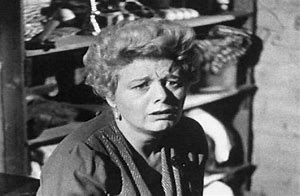
Sorry to rank you so low again, Ms. Winters...but alas, here we are.

This is just an example of another performance where I am little surprised that it got singled out for this kind of recognition.

It isn't that Winters was bad, but I just feel there wasn't as much for her to do. She did have a couple of key moments, like when she lashes out at Anne calling her a "clumsy fool" for ruining her coat and also her response to when the Frank family discovers Hans has been stealing food and she has to defend him.

Petronella is a character who is also kind of unsympathetic at times and seems to be far more willing to take advantage of the Franks despite the truly dangerous and risky arrangement they are currently in. I think Winters DOES excel well at playing these types of characters, but unlike her work in A Patch of Blue, I think Petronella is a more of a fleshed-out character...and yes, she did actually exist but as written in film form, she does work and I think Winters does all she can with her.

It is just simply another case where I can't say the work is particularly Oscar worthy.

_____________________________________

#73 - Lee Grant, Shampoo (1975)
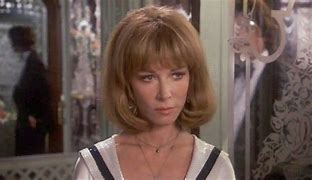
Yet another comedic winner and as much as I love Lee Grant, I just don't think this was a performance that warranted an Oscar.

After having been blacklisted and making a comeback in the 1970 film The Landlord, which would've been a better film for her to win for, Grant finally got the Oscar and the gratification that all of the blacklisting turmoil she went through was now a blight on the past.

Sidenote, The Landlord is about a guy who obtains a property in a Brooklyn neighborhood and is an early example of the concept of gentrification. Even more hilarious, the neighborhood is Park Slope. PARK. SLOPE. 

Anyway, Grant plays Felicia Carr, a wife of a politician who is mostly unhappy and bored with her life, so she starts sleeping with her hairdresser, played by Warren Beatty.

She manages to make the most of her role, ringing out the juice of every line and stealing every moment she is in... but it still just doesn't feel like there is much to the role. 

She gets some nice moments and is, perhaps, the best thing about the movie but it still just doesn't feel like there is much to really connect with.

I am kind of amazed how many of the performances so far just feel like surface-level pieces that don't offer much depth in any way. 

At any rate, I am glad Lee Grant nabbed an Oscar...but let us take a moment to acknowledge Ronee Blakley in Nashville. Although, if I am being honest, they should've put Louise Fletcher here for One Flew Over the Cuckoo's Nest and given her the win.

__________________________________

#72 - Ethel Barrymore, None but the Lonely Heart (1944)

Nowadays, when you hear the surname "Barrymore", your mind immediately goes to Drew.
There was a time when the name "Barrymore" was attached to a family of actors who were highly renowned in the world of theater.

Ethel Barrymore is the one who seems to have the biggest legacy today, if not for her small filmography but she does at least have some name recognition in the theater community as the namesake of her own Broadway theater.

So much has been said about the legend of Ethel Barrymore. Many historians have referred to her as "The First Lady of the American Theatre" (which is also a title that has been given to Helen Hayes), and even if you watch the clip of her as the Mystery Guest on the old game show What's My Line?, you can clearly see the reverence held for her. Host John Daly even says she might have "the most recognizable voice in America". 

When it comes to her film work, I always got the impression that she was always on auto pilot. Keep in mind, it was a very consistent and sturdy and well-oiled auto pilot, but it just always felt the same in how she would approach every role. 

You could say it is an early example of a performer relying a lot on her name and larger than life charisma and personality...which does feel a little cheap, but I wish that Barrymore had the chance to really show us what she was capable of in films because it truly does seem as if us in the modern day are missing out on what "they" of the 40s knew about her caliber of work in the theatre.

_____________________________________

#71 - Gale Sondergaard, Anthony Adverse (1936)

Two little facts: Gale Sondergaard is perhaps best known these days as being the original actress they approached to play The Wicked Witch of the West in The Wizard of Oz. The first approach with that role was they wanted to model the character after the Queen in Snow White & the Seven Dwarves, but then after decision was made to make her ugly, Sondergaard did not want to do "ugly" onscreen and that led us to get the legendary Margaret Hamilton.

The second fact: Sondergaard was the first person to win this award...and much like the many actresses around her on this ranking, I think she falls into a lot of the same traps.

In many ways, this performance is truly a supporting one. This isn't some co-lead poser who got demoted to this category for an easy win; it was exactly the kind of performance that the category was meant to honor.

However, the problem with the role all falls back onto the whole "underwritten" aspect that I have gone into time and time again.

Anthony Adverse is a bloated epic of a film and within its 2 and a half hours of screen time, Sondergaard may appear for about 15-20 minutes. Her character of Faith is another one of those bitchy divas and she is gold-digger to the nth degree...and it is only made all the cattier when you realize she is the MAID. 

When Sondergaard is onscreen, she is deliciously evil and can be very fun to watch but it just feels like that is all we get. Pure evil bitchiness with no layers yet again. 

____________________________________

#70 - Anne Revere, National Velvet (1945)

I already made a reference to Anne Revere when I was talking about archetypes and how they can have varying results when you stay from them. In this case, we have someone who managed to win an Oscar staying within the wheelhouse they were truly known for.

Someone like Anne Revere was very adept at playing the warm and supportive wife and mother...and I feel like no better role captured that warmth better than in National Velvet.

The only reason I am ranking her so low is that it is yet another example of the role not really having enough meat on the bone...but she does do well with what she is given. 

I think my biggest issue is that her character of Mrs. Brown is presented in such a saintly way that she seems like she is almost the poster-child of the perfect mother. She plays it very well, but it leaves the role feeling lack it is...once again...lacking a lot of depth.

In the end though, Revere was an underrated character actress of that era and it was nice to see her get this kind of attention.

_________________________________

#69 - Judi Dench, Shakespeare in Love (1998)


I have already brought up the case of Judi Dench, and it is a shame. It just goes to show how much a "makeup" mentality and getting swept up in the coattails of your film can lead you to win for a performance that is not remarkable.

I don't think I have to prove to anyone that Judi Dench is a stellar actress...and I think that she should've won the Oscar the year before for Mrs. Brown, in which she played Queen Victoria.

A lot was said at the time about the brevity of Dench's performance, including Dench herself when she won, and this may be a slight paraphrase: "I feel for 8 minutes I'm on the screen; I think I should get a little bit of him".

The 8-minute role was that of Queen Elizabeth I, and she gets three scenes and provides moments of dry wit and wisdom. I particularly do love the moment when she leaves one of Shakespeare's plays and encounters a puddle. The men around her are too busy bowing to notice she wants them to cover the puddle...but she plows through it: "Too late, too late..."

It is a role that does require great presence...which goes without saying...and Dench certainly provides that. Still though, there just isn't that much there. Just because Dench was able to make the most of a decently written role shouldn't be warranting the placement of an Oscar on your mantle.

_____________________________________

THOUGHTS ON THE RANKING SO FAR:


When I last ranked these performances, I had pretty much the same opinion that I have now. We have a lot of good to even great actresses here, but I think the true battle that some of these face stems from the roles they are playing.

The biggest negative with a lot of these stems from actresses who gave their role what it needed to succeed (Anne Revere, Judi Dench, Lee Grant), but I just don't think it was truly enough to be considered Oscar worthy. Then you have those who went hard in an over-the-top manner (Renee Zellweger, Mary Astor, Melissa Leo) and those who didn't seem to try enough (Geena Davis, Kim Basinger, Laura Dern).

I am looking forward with proceeding through this rather eclectic roster, especially considering this category has only ever had a repeat winner on TWO occasions and we've already covered both of Shelley Winters' wins, so that means we are still on the lookout for the double Dianne Wiest wins in these future volumes. 

Volume Two is coming up soon!

Monday, March 24, 2025

My UPDATED Ranking of the Best Actress Oscar Winners - Vol. 4 - THE TOP 20


Well, the time has come.

Welcome to my official (for the time being) Top 20 selections for the best of the Best Actress winners!

You are in for a treat...unless someone wants to go into an online battle that one of these performances is immensely overrated which by all means, let me know what you think.

Without further ado, let's dive right in.

--------------------

#20 - Anne Bancroft, The Miracle Worker (1962)


Anne Bancroft is one of those actresses who is closely linked to one particular role these days and it seems like many forget the rest of her filmography. 

And no, this isn't the role. The role in question is Mrs. Robinson from The Graduate.

However, I do think Anne Sullivan in The Miracle Worker is probably her second most famous role.

Much like Judy Holliday winning over Bette Davis and Gloria Swanson, I think Bancroft's win here is a bit overshadowed by Bette Davis once again...except not so much with an additional nominee, but a person who was snubbed.

This was the year of the infamous Bette Davis/Joan Crawford battle for attention after they made Whatever Happened to Baby Jane?

As the story goes, and any true film fan should know it...or you know the gist of it if you watched Ryan Murphy's Feud...Joan Crawford was not nominated while Bette Davis was campaigning hard to become the first actress to win a 3rd Oscar. Crawford, sensing a chance to try to get exposure, asked the other Best Actress nominees if she could accept on their behalf. In the case of Bancroft and Geraldine Page, both were on Broadway and at the time, that was usually considered a sound reason to skip the awards.

As a side note, Crawford also snagged a chance to present Best Director just in case Bette Davis DID win...but Bancroft did and that gave Crawford a moment in borrowed sunlight.

At any rate though, even if I might've voted for Davis or perhaps Katharine Hepburn for Long Day's Journey into Night, I do support this win for Bancroft.

The Miracle Worker is a good piece, and I think it translated well to film...and it is obvious how well Bancroft worked with her co-star Patty Duke. Their commitment to the physicality of the roles was certainly worth praising, and it felt really bold and brash seeing that kind of energy on display in an American film from the early 60s... a time for American cinema that was, in the grand scheme, a rather meek and docile time.

I think this race was truly too close to call, but Bancroft deserved it regardless of who I might've voted for in the end.

_________________________

#19 - Emma Thompson, Howards End (1992)


The art of subtlety. 

It has come up time and time again on this ranking and it is always a matter of subjectivity. The question at hand would be: What is it about certain quieter performances that stand out more than others?

 I don't think that question necessarily has an answer, but a lot of it, at least to me, has to do with how a performer may use their voice and their eyes to truly showcase their emotions. 

In the case of Emma Thompson, it felt like one of those rare cases where critics and the industry were all lined up to coronate her without any hesitation.

Howards End is based on the famous E.M. Forster novel, but my introduction to the material would've been watching this film with my dearly departed Nan who passed away in January 2024. She was a big fan of Merchant/Ivory, and this was her favorite of their catalog.

Thompson is one of those actresses whom I absolutely adore and, not surprisingly, a lot of that is due to her being so versatile as a performer. In this film, she is a warm and comforting presence, but she can just so easily play intense and snarky.

For such a distant kind of British class story, it takes an actress of Thompson's caliber to help make it feel closer to you. 

____________________________

#18 - Diane Keaton, Annie Hall (1977)


Say what you will about Woody Allen, but by golly, he knew what he needed to do...as he often did...to make Diane Keaton truly captivating onscreen.

Considering a lot of his and her chemistry in this film stems from their own relationship that had already ended by that point, it lends a certain poignancy to Annie Hall that film already had enough of on its own. 

I stand by Annie Hall as being an amazing film and that in his time, Woody Allen (despite his many faults and questionable ethics) was churning out wonderful films/scripts with ease. This film, in particular, does arguably represent his best work as an actor and a lot of that has to do with Diane Keaton.

1977 was a banner year for Keaton as she not only had this quirky and eccentric and flat-out lovable turn in Annie Hall, but she also had a much darker turn in Looking for Mr. Goodbar, which was inspired by a true story of a schoolteacher who experiences a late sexual awakening only for it to lead to a tragic end.

By this point, Keaton had already been a fixture for a few years having stood out in the first two Godfather films, particularly Part II and also doing lovely comedic work in two of Allen's earlier efforts: Sleeper and Love & Death. 

In just a few years span, Keaton showed great versatility, but unlike some of her contemporaries...namely Meryl Streep...she never got to tackle drama as often. I do wish she had, because whenever she did, the results were honestly quite lovely. 

That's getting a bit off topic, but suffice it to say, Diane Keaton is a marvelous and giving performer and I do think Woody Allen did a perfect job at showcasing what makes her so irresistible.
___________________________

#17 - Jodie Foster, The Silence of the Lambs (1991)


As I just talked about with Emma Thompson, I could argue that Jodie Foster's performance in The Silence of the Lambs would fall more under the subtle category.

I think what makes me think of it on a different level is that there is a clear undercurrent of darkness and intensity due to the film's subject matter. As a character, Clarice Starling is haunted by her past and haunted by the series of recent murders she is tasked to help solve. 

 A lot of what has made The Silence of the Lambs an iconic film are the scenes between Foster and Anthony Hopkins, and considering we have one of the kings of closeups at the helm, Jonathan Demme was able to really utilize Foster's gifts by zooming in on her face and truly allowing us to watch her come to terms with all of the horror around her and that she can't truly let go from her past. 

Hopkins was only onscreen for roughly 20 minutes and made such a strong impression that I honestly didn't realize for years how brief his screen time was...but a big reason that those scenes work so well are due to Foster. Hopkins is obviously creating an iconic character here, but the pained turmoil that Foster gives in return manages to make the most chilling of scenes have a strong emotional core.

Despite her very well deserved win, I do want to mention some of her fellow nominees which included a very iconic duo: Geena Davis & Susan Sarandon as Thelma & Louise and also the very sensual turn by Laura Dern in Rambling Rose. I think had it not been for Foster, this would've been an easy win for Sarandon.

____________________________

#16 - Olivia Colman, The Favourite (2018)


I debated where exactly to put this performance, because it does come close to straddling that "Is it Leading or is it Supporting?" line and we are truly dealing with some stiff competition at this lofty point in the ranking.

When talking about The Favourite, another banger of a film from Yorgos Lanthimos who gave us Poor Things, it is hard to deny that the tone needing to be captured by the Olivia Colman performance was insanely crucial.

The Favourite may be based on a real Queen, but it is clearly a film that is stylized and fictionalized a great deal. It is also a film that does take on a comical tone, but it is clear that Queen Anne is a tragic figure in her own right. 

Tragicomedy is a kind of genre that is highly difficult to pull off, but not surprisingly, an actress of Colman's prowess was able to do it without any strain. The scene in which she screams at a string quartet on the lawn simply wanting to provide music starts off as hilarious but quickly turns into something truly uncomfortable as she breaks into a delusional crying fit. 

Colman managed to beat Glenn Close that year when many expected that it would be her long overdue coronation, and while there was certainly a sense of disappointment at that loss, it evaporated away in a matter of just a minute or so for me as:

#1 - Colman's self-deprecating speech was one of the best ever, and the audience took to her so much that they gave her a standing ovation as she exited.

#2 - THE PERFORMANCE WAS THE BEST IN THE CATEGORY!

I will say that if someone else deserved to be in this conversation, it was a snubbed actress. This was also the year that Toni Collette's absolutely spellbinding work in Hereditary clearly got treated with the negative bias often given to horror films, even though her performance in the film was mostly rooted in the tragedy of the story rather than the horror.

____________________________________

#15 - Kathy Bates, Misery (1990)


Speaking of horror, let's talk about another truly inspired selection for this prize. 

Kathy Bates winning for Misery is a choice that makes absolute sense to me based on the quality of the performance and how she so seamlessly walked a tightrope between being silly/comedic and sinister. These attributes are what could've made this performance be an absolute disaster, but instead, this seems to have become one of the most beloved wins in this category...or at the very least, highly respected but maybe you might have preferred Anjelica Huston in The Grifters.

It just seems like a rare case where the Academy just got it right to a point that you can't believe it actually happened for a role like this. Aside from Huston, this category also included Meryl Streep for Postcards from the Edge, Joanne Woodward for Mr. & Mrs. Bridge, and perhaps a performance that is even more iconic than Bates': Julia Roberts in Pretty Woman. 

It is kind of crazy to see that Streep was basically an afterthought in this race. The major critics' prizes were actually divided between Huston and Woodward. Bates and Roberts both won the Globes (the SAG awards didn't exist at that time), so in theory, you could argue that most of them had a shot to win that night. 

Bates' win has aged very well. Even when I first watched the film, it somehow didn't register with me that she won for it even though I definitely would've read it somewhere at that point that she had. I said to myself "In a just world, this would be an Oscar winning performance". That kind of statement with no knowledge of the Oscar results very seldom actually led to me discovering the person actually won. In maybe just 2-3 cases, justice was served.

A very psychotic and oddly hilarious and unnerving performance.

_____________________________

#14 - Faye Dunaway, Network (1976)


Back in 2018, writer Lee Hall and director Ivo van Hove's stage adaptation of Network came to Broadway and despite a lot of the chaotic nature surrounding that production, you had Bryan Cranston anchoring the whole thing with fantastic interpretation of Peter Finch's Oscar winning role of Howard Beale. 

On the opposite end, you had Tatiana Maslany playing the role of Diana Christensen. She is undoubtedly a great actress, but the new take on the role felt very cold and monotone in its approach. It truly made you appreciate what Faye Dunaway brought to the table in the classic 1976 film.

Make no mistake: Diana is a villain...but what made Dunaway so captivating in the role was the fiery passion. You truly couldn't help but get swept up in the maniacal power-hungry nature as we watch this strong woman go for achieving the best ratings on television all at the expense of what is one man's nervous breakdown. It's all so compelling that it is no surprise when William Holden falls in love with her despite the age gap...even though talking about TV schedules during sex seems more prone to get her to orgasm than the actual sex itself. 

Network is a satire that has aged so well that unfortunately in today's society, it almost feels too tame or just like a straightforward drama to the point where even the idea that a man could be murdered on live television "because he had lousy ratings" feels not too far off from the psychotic news cycle we've been subjected to lately. 

Dunaway leads this ensemble with one of the most compelling antiheroines in cinematic history and it does make for one of the best wins ever. However, I do want to single out one other actress: Liv Ullman gives an equally fantastic performance in Ingmar Bergman's Face to Face.

_____________________________

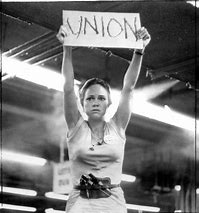
#13 - Sally Field, Norma Rae (1979)


Even though actresses like Golde Hawn and Cloris Leachman were able to have success in Supporting Actress prior to this, the door for actresses mostly known for their TV work finding prestigious film success was kicked wide open by Sally Field with her captivating work as the titular Union-organizing firecracker in Norma Rae.

While I never responded as strongly to Norma Rae as a film despite absolutely loving its leftist politics, the film works well enough thanks to Sally Field. The film does move at a sluggish pace and director Martin Ritt really plays up the "podunk" atmosphere in a way that is just step or two above the offensive nonsense Ron Howard gave to Hillbilly Elegy...but I will say despite his faults, he knew what he was doing when he cast Field. 

This was a role that several high-profile actresses turned down for one reason or another. In a cheeky coincidence, 3 of the other 4 Best Actress nominees that year were among that list: Jill Clayburgh, Jane Fonda, and Marsha Mason. 

Field had mostly been known as a TV sitcom star for her work as the titular boy-crazy surfer girl in Gidget and more infamously The Flying Nun, in which she played the dainty Sister Bertrille, whose nun habit can cause her to catch flight with high winds...although even on that show, her character became a nun on principle after she got arrested during a Free Speech protest and came to Puerto Rico to assist with a convent devoted to helping the underprivileged communities there.

Nevertheless, Field was still seen as some hybrid of perky teen girl meets an aviating convent dweller...but that is until Field was cast in the 1976 TV movie Sybil, based on a true story of a woman named Shirley Ardell Mason who suffered from Dissociative Identity Disorder due to extensive sexual abuse by her own mother. In the film, Field is a marvel navigating upwards of 12 different personalities and it led to an Emmy Award.

She still wasn't getting many chances in the cinema world until Martin Ritt knew she would have what it takes...and yes, she killed it. One other key point: I am pretty sure that this performance was the very first instance in which every film award (there were significantly a lot less back then) for Best Actress went to Field. No such a sweep had occurred prior, and even the Actress prize at Cannes went to Field. 

A true career defining performance from a legend of an actress.
__________________________

#12 - Sissy Spacek, Coal Miner's Daughter (1980)


The trend is exhausting. Every year, we read about "so and so will be playing so and so" and then the buzz takes off into directions like "Will they win an Oscar?" or "Why couldn't they cast this person?" or "Can they sing?" or "They look nothing like them!"

When Coal Miner's Daughter came out in 1980, the musical biopic trend was not exactly a thing yet, but the eventual results were very well received as it went on to do rather well at the box office, received multiple Oscar nominations including Best Picture, and netted Sissy Spacek the Best Actress win after having been seen as something of an unusual "IT Girl" of 1970s cinema with her work in films like Badlands, Carrie, Welcome to LA, and 3 Women. 

So how did this actress on the indie fringe manage to get cast in a high-profile biopic? 

Loretta Lynn, herself.

When asked about casting, Lynn saw a headshot of Sissy Spacek not even knowing anything about her and said, "That's who should play me".

I consider this a case where fate and divine intervention are apparent, because what Spacek achieved in this film is quite possibly the benchmark of a musical biopic performance.

She extensively worked to nail Lynn's eastern Kentucky accent...which she did; worked hard to sing the songs live and still keep Lynn's sound intact...which she did; she wanted to capture everything from how Lynn carried herself onstage down to how she would hold her microphone...which she did.

And on top of all that, Spacek was 30 when she made this film and somehow managed to convince as a 13 year old Loretta Lynn in the beginning of the film. It is absolutely insane how much she ended up taking to this role like a glove. 

I will say that Spacek did have one fellow nominee who came close to rivaling her: Mary Tyler Moore in Ordinary People, who was taking on a dramatic role after having been known as a sitcom star for nearly 20 years at that point. 

While I prefer Ordinary People as a film, I also think Spacek was the rightful winner here. Moore could also have been shifted to Supporting based on her screentime, but that is a whole other debate.

Spacek's achievement here was monumental and this made for one of the most deserving acting wins this category has ever seen.
________________________________

#11 - Vivien Leigh, Gone with the Wind (1939)


In my original ranking, this was the line I used to open with when discussing my opinion of Vivien Leigh in Gone with the Wind: "I wouldn't be surprised if some find this ranking to be too low...but I would say that being #8 is certainly nothing to sneeze at."

Well...I decided to give her a shift downward. I still feel the same about her as I did before, and I highly commend her work and what she was able to achieve...but there are just other performances I feel more passionate about. 

One of those performances, as many of you already know, just happens to be another of hers so stay tuned for that! 

It is considered "in vogue" these days to kind of bash Gone with the Wind, but I have never been that big of a fan of the film. I admired it for its scope and for some of its performances, but it is a truly bloated and problematic movie.

Like a beacon, Vivien Leigh makes it worth seeing.

Scarlett O'Hara is not exactly a heroine you necessarily root for...but I think Leigh was truly the right person for this role because she had the skills to truly make a problematic character like O'Hara compelling to watch...similar to how Dunaway was able to make us enjoy watching Diana in Network...although Diana was truly more of a villain.

I do think Leigh suffers a little from the material, but her work does speak for itself...and it is so often discussed that I feel like I can't add much to the praise...or the discourse.

________________________________

#10 - Cate Blanchett, Blue Jasmine (2013)


It is interesting that around the time of Blue Jasmine, we were still not fully considering Woody Allen as a pariah. Even just 3 years before this, he won a Best Original Screenplay Oscar for Midnight in Paris.

There was also a sense that Blue Jasmine was one of his better films, but I never really bought into that narrative. When putting it up against films he had made between 1992-2018, then yeah...it is sort of one of the best by default. At its core, Blue Jasmine is basically a rehashing of A Streetcar Named Desire with influences of the Bernie Madoff/Ponzi Scheme scandal thrown in for good measure.

Much like Streetcar though, we do get a juicy role for the leading lady, and it is glorious. 

Cate Blanchett would get my vote as the finest actress working today and I think this is the greatest performance of her career to date. That's a bold statement to make, but I am willing to stick with that assessment. While the film does tend to be filled with some of Woody Allen's typical heavy-handed trends when he tries to tackle drama, Blanchett is able to bring out so much with this role as a maniacal, obsessive, and neurotic woman who is totally unlikable but still seems like a human being. 

Her performance is the kind that just makes you feel utterly exhausted as you watch it, but in the best way possible. Within minutes of watching her onscreen, you can pretty much feel her neuroses pouring over you, every irritable snap and twitch and manic response. 

She makes the film a must-see experience, and frankly without her, I am not sure it would've reached those heights. I adored Cate Blanchett prior to this performance, but this was when I knew we were witness to a true legend.

________________________________

#9 - Sophia Loren, Two Women (1961)


This is another one of those examples where the movie surrounding the actress is not quite meeting her level, so the movie becomes a showcase for the actress and the main reason to see the movie.

Two Women is a short film and sometimes even an emotionally difficult movie to watch, nor does it have the most impressive screenplay nor is the direction up to the usual caliber of Vittorio De Sica.

The film works mainly because of Sophia Loren, who became the first performer to win for a performance in a foreign language.

You do have to wonder how much her beauty influenced some of the sexist male voters, but in the end, her performance is pretty close to perfect, and she gets to showcase a wide range of emotions.

To this day, she is only one of two female actors (the other one is coming up shortly) to win the Best Actress Oscar for a foreign language performance...and only one of 7 in any acting category.

I don't mean to sound like a snob, but if the Academy actually gave the attention to foreign films and performances in the way they should have, this list would look A LOT different right now. 

________________________________

#8 - Anna Magnani, The Rose Tattoo (1955)


Earthy. Volcanic. Passionate. Intense.

These words are just a few of the kind of adjectives that were used to describe Italian actress Anna Magnani, who had risen to prominence on a worldwide scale after her work in Roberto Rossellini's Rome: Open City in 1945. 

In the decade following, she managed to make more of a name for herself in the United States and began to learn English. Around that same time, playwright Tennessee Williams hoped that Magnani would star in his new play The Rose Tattoo on Broadway, but she simply did not trust herself with the English language yet.

When a film adaptation came into fruition later on, Magnani was now up to the challenge...and we received a truly wonderful gift.

I think it is fair to say that The Rose Tattoo isn't as known or performed as frequently as some of Williams' other efforts like A Streetcar Named Desire or The Glass Menagerie, but I do think a lot of what makes the material work is how good of a Serafina you have.

Magnani was definitive...and she never failed to give a character her all. I have called out many times that it took Hollywood a lot of time to catch up with the rest of the world in terms of the high standard of films it was churning out. Magnani turning to films in the English language truly showcased a step forward in what was truly possible with acting on film. Everything felt real with her, and she certainly stood out as something different than the other actresses receiving the most spotlight during that time. 

    She was ahead of her time, and I wish more people would talk about her today.
___________________________

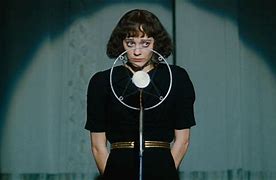
#7 - Marion Cotillard, La Vie en Rose (2007)


If I were to pick an Oscar win by a performer that truly caused such immense joy for me when their name was called, I think the top of that list would be Marion Cotillard.

Going into the Oscars, there was certainly an expectation that Cotillard could overtake Julie Christie as the winner after her win at BAFTA (Julie Christie's home turf) showed a surge of last-minute surge of support for her.

The biggest hurdle for Cotillard was that her movie was not widely seen in terms of box office, and it was a foreign film.

While a movie like Parasite finally winning Best Picture in 2020 and the wins by Youn Yuh-jung for Minari in 2021 and Zoe Saldana winning for Emilia Perez in 2025 show that the tides could change some for the better, it still seems like performances in a foreign language have a significant hurdle to overcome.

Even in the case of Parasite, none of the performers from it gained major traction for an Oscar nomination, which is truly a disgrace when you see who actually WON Oscars in most of the acting categories that year. 

Cotillard's win makes sense on paper for its transformative nature and its volcanic emotional toll, but it does feel like a random outlier still due to the fact it was a performance in French; the first and so for only French performance to date to do so.

As I discussed with Sophia Loren, I think the glamour angle did help a lot with Cotillard too...because it does seem like this category in recent years does lean towards ingenues more often than to actresses of a certain age. 

That isn't to discount Cotillard, of course, because the performance is more than worthy to be praised from now and until the cows come home.

________________________________

#6 - Katharine Hepburn, The Lion in Winter (1968)


Katharine Hepburn may have won 4 Oscars, but as I stated when I ranked her very first win for Morning Glory as one of the weakest in Oscar history, she is one of the prime examples of someone winning for the wrong roles. 

THIS was the only one of her wins I supported...but if I am ranking her #6, that should go without saying. In fact, this is actually a slight demotion as on the original list, I ranked her as my #2!

This is by no means to be a slam at Hepburn's work, but I will say that my top 6 has shifted around a few times just because these performances are certainly of extremely high quality, but they are also incredibly varied in their styles that is hard to truly compare them side by side.

The remarkable thing about Hepburn in this role is that she isn't British like her character is supposed to be or like her co-stars actually are...but she still somehow works so well in this world.

This is the perfect role to showcase not just the great acting chops that Hepburn had, but it was a great star turn to show off her immense charisma.

Despite the very distinct persona that Hepburn often conveyed as an actress, she did have a lot more depth than met the eye...and for the lady to win FOUR Oscars, it is obvious I don't need to convince anybody that she was truly beloved. 

As many already know, Hepburn was the one of the halves of the infamous Best Actress tie along with Streisand for Funny Girl. Not surprisingly, I do think Hepburn deserved this win alone...but I do want to acknowledge some of the other contenders as they gave some lovely performances like Vanessa Redgrave in Isadora and also a snubbed performance that didn't manage to overcome the stiff competition: Mia Farrow in Rosemary's Baby.
___________________________________

#5 - Maggie Smith, The Prime of Miss Jean Brodie (1969)


Admittedly, my top 10 isn't much of a departure from my last list. I bumped Leigh for Gone with the Wind off in favor of Anna Magnani and in terms of my top 5, the new addition is the late great Dame Maggie Smith, who was originally #7.

In fact, Smith has taken a small but mighty journey up this list. When I first drafted the original ranking a couple of years ago, Smith was only around #17-18 but as I began writing about her and some of the other contenders, I found myself thinking about her work in a way that I knew meant she belonged higher. She then became my #12 and then my #10 and eventually my #7. Even when drafting this ranking, I even considered putting her at #1 but decided against it primarily due to just barely preferring the remaining 4 for various reasons.

While other dames like Helen Mirren and Judi Dench would become more celebrated in the US as they got older, Maggie Smith made her mark while she was in her 30s. 

While known mostly these days as the Dowager Countess on Downton Abbey and Professor McGonagall in the Harry Potter series, I first discovered Smith as the Mother Superior in Sister Act...and I can recall my mom saying that Smith was such a good actress and that growing up, she was considered one of the greatest.

When you look at her work in a movie like The Prime of Miss Jean Brodie, you can clearly see why. 

As the titular Brodie, Smith is truly remarkable at playing such a truly chaotic free spirit who seems to challenge her students and any kind of authority. She is a woman on a mission, and we hear it often: "Little girls, I am in the business of putting old heads on young shoulders, and all my pupils are the creme de la creme. Give me a girl at an impressionable age and she is mine for life".

Even typing it out, I could CLEARLY hear it in my head. 

Her voice and how she uses it is simply like some sort of unique and priceless instrument.

 If you want to see a great example, check out the final scene she shares with Pamela Franklin. Both are splendid in the scene but just watch how Smith handles everything being thrown in her face as to how her actions led to some truly horrendous consequences...AND how well she modulates her voice.

________________________________

#4 - Charlize Theron, Monster (2003)


Tale as old as time. Gorgeous actress "de-glams" and gets an Oscar. 

Well, yes...that is true. The real question is if the performance is actually there?

Oh, it is ABSOLUTELY THERE. 

This isn't just a case of an actress of great beauty relying strictly on make-up to get her character across; this was Charlize Theron simply giving herself over to a truly complicated real-life serial killer and proving to the world she could simply act with the best of them.

Going into that Oscar season, I remember the talk just being rabid about Theron. Keep in mind, this was a woman who started off her career in movies that were either syrupy schlock (The Cider House Rules) or entertaining fluff (The Italian Job). 

It just goes to show you that sometimes you cannot know what any performer is truly capable of...and in the 20 years since, I feel like Theron has managed to straddle the field between populist films and indies rather well. 

Her work in movies like Tully or Young Adult show great dark comedy chops, and she managed to play a convincing Megyn Kelly in Bombshell, although I am not sure that performance was necessarily on par with her best work despite getting a nomination for it.

Here though, this was a true marvel. It's an uncomfortable film and an uncomfortable performance...and despite the great makeup, she more than earns this on her own. Also, shout-out to her co-star Christina Ricci, with whom her chemistry is superb!
_____________________________________

#3 - Vivien Leigh, A Streetcar Named Desire (1951)


One of the most British women to have ever...well...been British....managed to entrench herself into legendary status by playing not just one southern belle, but TWO of them.

12 years after her star-making turn in Gone with the Wind, which we did just discuss and I doubt you forgot already, Leigh got a chance to play Blanche DuBois in the film adaptation of Tennessee Williams' A Streetcar Named Desire. Leigh joining the project was a bit of hurdle in the sense that of the 4 main leads of the Broadway production, 3 of them got the reprise their roles.

Leigh replaced Jessica Tandy and in the process, a classically trained actor was now running toe-to-toe-to-toe with 3 performers who were straight from the world of Lee Strasberg and the Method.

This is simply just a truly iconic role, and I sort of wish that we could've seen her do the role at a time when they weren't so worried about the censorship of the material. 

What ended up working so well with this dynamic was how the other-worldly and presentational style of Leigh clashed with the realistic and brutalist nature of Brando. Considering how Blanche is living in something of a fantasy world, her heightened nature ends up being exactly what the film and role needed. 

Watching her scenes with the others, particularly Brando, are fascinating as it truly feels like Streetcar is where the seeds are planted as to where American cinema can go...even if arguably it'll take another 15 or so years for a lot of this to truly come to light and lead to the blossoming quality of Hollywood in the 1970s.

I would be remiss if I forgot to mention Cate Blanchett, as her work in Blue Jasmine is essentially a response to that of Blanche DuBois...and even she herself would play the role onstage a couple of years before she tackled the Jasmine role. Blanchett's take is clearly more modern, but Leigh was very groundbreaking for her time.

_____________________________________

#2 - Meryl Streep, Sophie's Choice (1982)


Yeah, this performance is a legend for a reason.

Her accent work, her mastery of the Polish and German languages, her emotional depth, the brimming inner life she is able to convey with she connects with Peter MacNichol, her despair when dealing with the abusive behavior of Kevin Kline, and of course, the scene in which she has to make "the choice".

Streep is simply radiant in this role. Any time she appears onscreen, at least during the Brooklyn portions, she is like a pure burst of light.

When we watch her in the flashbacks leading up to the Holocaust and from when she first arrives in America, she seems like such a fragile, hollow shell.

Many have said that Streep is an actress that seems to be very calculating in how she performs her scenes. In some ways, I can understand that critique but I don't know if I see that in this performance.

This was also the year that Jessica Lange was up for Frances, a performance that not only truly announced the intense vitality of her as an actress (in a similar scenario to that of Charlize Theron), but one that some feel was the rightful winner.

Honestly, I think Streep deserved this one. It is a cliche to say but I do truly consider it to be one of the greatest performances ever captured on film. She gets big splashy moments (though they don't dominate the film) and all of her monologues are truly a master class. Maybe I am being a bit cheeky by not selecting her as my #1 slot, but I am actually going to stick with the same actress I chose as #1 on my previous list.

___________________________________

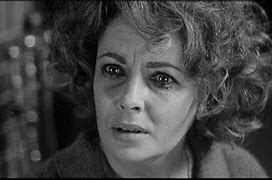
#1 - Elizabeth Taylor, Who's Afraid of Virginia Woolf? (1966)


I think the reason I adore this performance so much, aside from the fact that it is part of a truly monumental adaptation of one of the greatest stageplays ever written, is that this is a performance that should've been a disaster.

It isn't that I have absolutely zero faith in Taylor as an actress...her low-ranking performance in Butterfield 8 not withstanding...but this is a clear case of what was truly stunt casting. While her then-husband Richard Burton was closer to being age appropriate for the role of George, the role of Martha was written to be a woman in her early 50s while Taylor was just about to turn 34 when she was first approached to play it.

Taylor knew the deal here. She reportedly said that the idea of her playing Martha was "a stretch" and she didn't think she should or could do it. She was persuaded mostly because the material was just too damn good...but thanks to her persistence, she was adamant that a director who could work with her to ensure the best possible performance would be chosen.

This led to the legendary Mike Nichols making his film directorial debut after having made a splash directing for theatre and for being part of one of comedy's greatest duos: Nichols and (Elaine) May. 

The results were simply extraordinary. While the playwright, Edward Albee, had reservations and only considered her to be quite good (he found Burton to be incredible, however...which he was), there is no denying for me that Taylor was able to achieve greatness under the hand of Mike Nichols.

A lot of the usual tropes that get voters excited were on full display here as Taylor gained weight and "de-glammed" to appear nearly 20 years older than her actual age...and considering she is playing a truly brash and uncouth person; she is walking yet another tightrope similar to Faye Dunaway and Cate Blanchett where she has to make us stay invested in this woman.

Stunt-casting in various forms doesn't always work beyond maybe the simple fact of selling tickets, but in this case, it led to us getting one of the finest performances ever captured onscreen.

I do want to talk about the final moments of the film/play and how I relate it to Taylor. As much as I adore this material, to the point where I have called it my favorite play in the past, I do find myself not liking the ending as much.

I won't go into the context of the scene here unless someone reading this hasn't seen it, but the final lines of the show are George asking an emotionally devasted Martha "Who's afraid of Virginia Woolf?" to which she replies: "I am, George. I am."

It is just one of those lines/moments that feels drenched in a certain kind of pretentiousness...but I would argue that Taylor's delivery of this might be my favorite that I have seen including those I have seen done live in the theatre; some clearly trying to emulate how she said the line.

For a performance that was truly in-your-face and volatile for the majority of the time, her quiet desperation in this moment hits me hard.

If there was ever a film that deserved to potentially win for acting Oscars in one night, I think Who's Afraid of Virginia Woolf? would be the prime example along with A Streetcar Named Desire.
_____________________________________

MY FINAL THOUGHTS:


Aside from a small handful of actresses either shifting up and down the list by 10 or more slots, the majority of them more or less stayed within a few spots of where they originally were on my old list. Some of them (Cate Blanchett at #10 and Taylor at #1 come to mind) actually remained in the same slot they were before.

I still stand by my opinion that a lot of these performances, including ones I ranked fairly low are still pretty good by their own standards, but they have that unfortunate stigma of being chosen as the best of the best from their given year.

When I did my rankings for this category, Supporting Actress, and Best Picture, I realized that I had more vitriol for the weaker Best Picture winners than I did a lot of the performances. I am curious to see how this will go when I do my re-ranking of these categories again.

I have already started drafting my Supporting Actress list so that is what you will need to be on the lookout for next! Best Picture will follow, but I do still intend to do Actor and Supporting Actor for the very first time. I just want to revisit some of those performances first.

Thank you for reading along and hopefully I will have the next list up for you all soon!

If you haven't checked out the rest of this ranking and want to do it in the wrong order because life made it happen that way, here are the links to do so below!


SO...I Am Officially a YouTuber! (AND A POSSIBLE FAREWELL TO THE BLOG)

It has been a long time coming, but I have finally started the YouTube channel I kept wanting to create for the last several years! The chan...